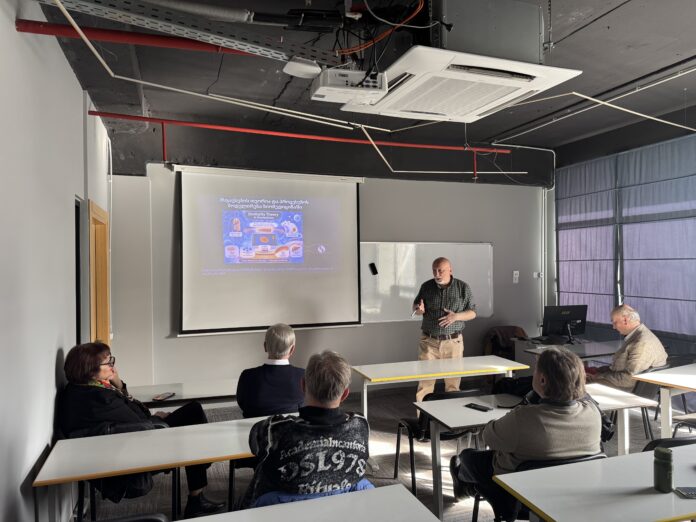
A scientific seminar titled “Application of Similarity Theory and In Silico Modeling in Biomedicine and Bioengineering” was held at the University of Georgia, dedicated to one of the most innovative directions in modern science—the digital transformation of medical research. The seminar explored how scientists use computer simulations and mathematical equations to model complex biological processes, including oncological cryosurgery and bacteriophage therapy, which significantly reduces the costs of preclinical studies and promotes the development of personalized medicine.
What does In Silico modeling mean, how does this method make the creation of new drugs cheaper and faster, and what clinical perspectives does it open up in the fight against oncology or infectious diseases? We spoke about these and other important issues with the author of the seminar, Professor Levan Gulua, Head of the Biomedical Bachelor’s Program at the School of Health Sciences at the University of Georgia.
Mr. Levan, to explain it simply, what does In Silico modeling mean in medicine? How do computer simulations help scientists test a new drug or treatment method faster and more cheaply?
Imagine that instead of a real laboratory or a human body, we create an exact digital twin of living tissue, a tumor, or the gastrointestinal tract in a computer. The term In Silico (referring to computer silicon chips) means testing biological and medical processes through computer simulations, using special mathematical equations and software (such as FEBio and Python), before conducting the experiment in a test tube (In Vitro) or on a living organism (In Vivo).
As for how this method accelerates and reduces the cost of the testing process, there are several key factors:
First of all, it allows for the preliminary exclusion of unsuccessful options. Instead of scientists conducting hundreds of expensive tests on animals and blindly searching for the right path, the computer tests the viability of an idea in advance. For example, when we study how to deliver beneficial viruses (bacteriophages) to the intestine using probiotics (the “Trojan horse” approach), the simulation shows us before the trial whether they will survive the acidic environment of the stomach. This drastically reduces the number of laboratory experiments and financial costs.
The second important factor is the preliminary calculation of exact dosage and time. A computer model allows us to calculate, before a drug enters the body, how deeply a nanoparticle will penetrate tumor tissue, or exactly how many minutes (for example, 31 minutes) it takes to freeze a liver tumor (cryoablation) so that the tumor is completely destroyed without damaging healthy tissue.
In addition, this method ensures a safe transition from animals to humans. Thanks to “Similarity Theory” and mathematical scaling, we can accurately translate data obtained from mice to the human body (calculating the human equivalent dose). This helps us avoid dosing errors, which delay research for years in traditional pharmacology.
The main point is simple: In Silico modeling does not replace real experiments, but it gives us a “map” that helps scientists reach their goal much faster, cheaper, and safely.
One of the main topics of the seminar is liver tumor cryosurgery. Where does the role of computer modeling come in here?
During cryosurgical ablation of the liver (when the tumor is frozen using a special cryoprobe), computer and mathematical modeling plays a crucial role in planning the exact time and parameters of the procedure. The critical goal is for the tumor cells to reach exactly -20°C in vivo (which is necessary for their complete destruction—apoptosis/necrosis). To predict thermal dynamics, the modeling uses transient heat transfer equations, Biot (Bi) and Fourier (Fo) numbers, as well as Heisler’s theoretical nomograms. Furthermore, the model allows bioengineers and clinicians to calculate the exact freezing time in advance (for instance, exactly 31 minutes was calculated for tissue with a half-thickness of 1.5 cm) to ensure complete ablation of the tumor without unnecessary damage to healthy tissues.
I also want to ask you about nanocarriers and drug delivery systems—what do these approaches change for patients in clinical practice?
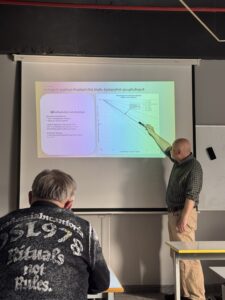
Approaches based on nanotechnologies and targeted delivery systems (such as bioactive nano-polyphenols, pH-responsive micellar nanocarriers, or the delivery of bacteriophages via the “Trojan horse” mechanism) change several essential factors in practice.
First and foremost, there is high bioavailability and targeting: traditional drugs break down quickly in the body, whereas nano-encapsulation (biocomposites ranging from 10–45 nm in size) stabilizes the substances and efficiently ensures their penetration into tumor tissue due to the so-called EPR effect and their response to the microenvironment (e.g., the acidic pH 6.0 environment of the tumor).
Toxicity and side effects are significantly reduced: nanocomposites decrease overall body toxicity and protect healthy tissues, while the probiotic protection of bacteriophages (the “Trojan horse” mechanism) ensures they are delivered harmlessly through the aggressive acidic environment of the stomach (pH 2–3) directly to intestinal pathogens.
In clinical practice, these methods increase the Tumor Growth Inhibition (TGI) rate and successfully overcome severe barriers such as resistance to standard chemotherapeutic agents (Cisplatin, Doxorubicin). Furthermore, by using allometric scaling (BSA) and predicting Human Equivalent Doses (HED), doctors are provided with precise tools to plan optimal and safe therapeutic doses (e.g., 200–450 mg/day) for the patient.
A few days ago, I read an opinion that nowadays antibiotic resistance is a bigger problem for the world than terrorism. Phage therapy is one of the main hopes in this regard. How much does computer simulation simplify seeing and predicting how a phage will survive and destroy pathogenic bacteria once it enters the body?
Computer simulation (In Silico) indeed radically simplifies and accelerates the study of phage survival and the process of pathogen destruction. For example, when predicting how the stomach’s aggressive barrier will be overcome—using the “Trojan horse” model discussed in the presentation (a kinetic system created in the Python/Anaconda environment)—we can calculate and graphically visualize in advance how a free phage is destroyed in the stomach’s acidic environment, whereas a protected phage bound to a probiotic maintains a high survival rate (about 90%) after the gastric phase. Additionally, the simulation shows the dynamics of pathogen destruction (lysis)—how the phage is released in the intestinal phase and the timeframe in which it causes the targeted infection and destruction of pathogenic bacteria (E. coli). All of this allows scientists to know the exact behavior of the system before starting laboratory trials.
Ultimately, what is the main goal of these studies for Georgia and the world?
The primary goal of these studies is, first and foremost, to overcome antibiotic resistance: against the backdrop of traditional antibiotics losing their power, the aim is to develop alternative, highly effective therapies based on bacteriophages. Additionally, computer modeling reduces both the number of experiments required on living organisms and financial costs. The integration of Georgia’s scientific potential is also important: Georgia is a traditional center for phage therapy, and linking these methods with modern computer engineering further strengthens the country’s role in global medicine.
How realistic is it that in the near future, when a patient visits a clinic, they will be prescribed not a standard, template-based treatment, but a fully personalized therapy that is computationally modeled exactly for their body?
The integrated approach (Similarity Theory, computer modeling, and programming-based kinetics) is already being used to plan complex biological processes (e.g., diffusion of nanoparticles in a tumor, pH-responsive release, or phage delivery). However, clinical translation has its own challenges: for a patient to receive a “digital dose” tailored specifically to their body immediately upon arriving at the clinic, we must rapidly identify and reflect each patient’s individual physiological parameters (tissue diffusivity, flow rate, metabolic clearance) in the model. In conclusion: although transitioning from standard template-based treatments to fully personalized digital medicine takes time, this framework of clinical translation is already being actively built, and in the near future, it will become a primary tool in oncology and the treatment of resistant infections.