


The American Association of Clinical Endocrinology (AACE) has released the updated 2026 Algorithm for the Management of Type 2 Diabetes (T2D) in adults. Building upon the 2023 version, this document incorporates recent clinical evidence (including the SURMOUNT-OSA, SURMOUNT-2, SELECT, STEP-HFpEF DM, SUMMIT, and FLOW trials, among others). Additionally, the text reflects new recommendations for the management of dyslipidemia and Adiposity-Based Chronic Disease (ABCD).
Diabetes Classification
The most significant update in the 2026 algorithm is a completely new model for classifying diabetes mellitus. This methodology mandates that clinicians follow a step-by-step process to rule out non-Type 2 causes during diagnosis.
Confirmation: Initially, the specialist must confirm the disease using standard criteria (FPG ≥126 mg/dL, A1C ≥6.5%, etc.).
Assessment: This is followed by evaluating features characteristic of T2D, specifically excess weight, obesity, or symptoms of insulin resistance.
Differential Diagnosis: If a patient presents with atypical signs—such as being lean, experiencing ketosis, or having an immediate need for insulin—testing for Type 1 Diabetes (T1D) markers, specifically autoantibodies and C-peptide, is required.
Secondary Factors: Finally, the clinician considers secondary causes, including pancreatic pathologies or MODY (Maturity-Onset Diabetes of the Young).
Earlier algorithms often automatically categorized adult patients into the Type 2 group, significantly increasing the risk of misdiagnosis. In one study, nearly 40% of late-onset T1D cases were misdiagnosed as Type 2, eventually leading to severe complications like ketoacidosis. The new recommendation emphasizes that re-evaluating the diagnosis is essential at any time, even for those with a long-standing T2D diagnosis. This approach ensures precision in treatment, such as the timely initiation of insulin for T1D/LADA or genetic testing for MODY, thereby optimizing long-term management and complication prevention.
Enhanced Emphasis on Continuous Glucose Monitoring (CGM)
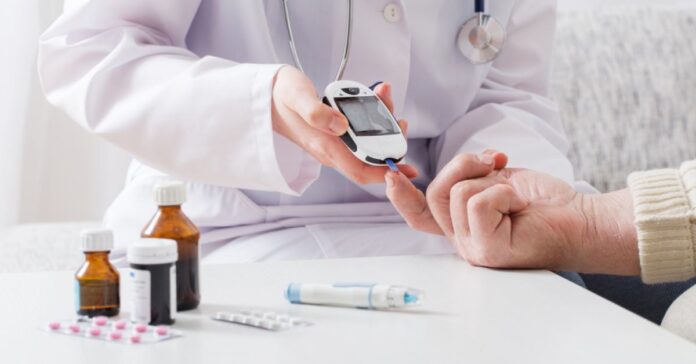
While CGM was featured in the 2023 algorithm, the 2026 version elevates it to a “highly recommended” component. This guidance applies to all adults aiming to improve their glycemic metrics. It is particularly critical for individuals using basal insulin, multiple daily injections (MDI), or insulin pumps, as well as those prone to hypoglycemic episodes.
Clinical studies highlight the role of CGM in:
Increasing Time in Range (TIR >70%, 70-180 mg/dL).
Reducing A1C levels.
Preventing severe hypoglycemia.
Positively influencing patient behavior regarding diet and physical activity.
In a shift from previous versions, several metrics have been added alongside A1C ≤6.5% for dose adjustment and goal setting: Time in Range (TIR), Time Below Range (<4% <70 mg/dL), Glycemic Variability (<33% CV), and the Glucose Management Indicator (GMI). These additions address the fact that A1C alone does not always provide an accurate picture, especially in cases of kidney disease or hemoglobinopathies.
Comorbidity- and Complication-Centric Management
The algorithm for glycemic control centered on comorbidities has been further refined since 2023. Based on new research, this model determines the hierarchy of treatment according to heart failure, chronic kidney disease (CKD), atherosclerotic cardiovascular disease (ASCVD) or stroke risk, MASLD (Metabolic Dysfunction-Associated Steatotic Liver Disease), and now Obstructive Sleep Apnea (OSA):
Heart Failure (HF): Regardless of ejection fraction, SGLT2 inhibitors (e.g., dapagliflozin, empagliflozin) remains the first-line choice. Based on STEP-HFpEF DM and SUMMIT data, GLP-1 and GIP/GLP-1 receptor agonists(specifically semaglutide and tirzepatide) have been added for treating obesity-related HFpEF.
Chronic Kidney Disease (CKD): New guidelines have lowered the threshold for initiating SGLT2i to achieve cardiorenal benefits (e.g., eGFR ≥20 mL/min/1.73 m² for empagliflozin). Additionally, combined therapy with finerenone has been introduced for treating albuminuria (UACR ≥30 mg/g) based on FIGARO-DKD and FIDELIO-DKD data. Notably, the FLOW trial supports the efficacy of semaglutide (GLP-1 RA) even at low filtration rates (eGFR 15).
ASCVD/Stroke: Priority is given to GLP-1 RAs with proven efficacy, such as liraglutide, semaglutide, and dulaglutide. Furthermore, SURPASS-CVOT results indicate that tirzepatide demonstrates similarly high outcomes in this area.
MASLD: Affecting approximately 65% of those with T2D, semaglutide has gained FDA support for the regression of MASH (Metabolic Dysfunction-Associated Steatohepatitis) based on the ESSENCE trial, showing 63% efficacy compared to 34% for placebo. Tirzepatide also showed high disease reversal rates (40-60%) in Phase 3 trials.
Sleep Apnea (OSA): Based on the SURMOUNT-OSA study, the guideline supports the use of tirzepatide, a recommendation that stands even if the patient does not have T2D.
This therapeutic algorithm moves from the foundational principles of 2023 to a research-backed, action-oriented hierarchy that functions independently of A1C levels.
Optimized Dyslipidemia, Hypertension, and Prediabetes Algorithms
Dyslipidemia: Aligned with the 2025 AACE guidelines, this section refines the use of statins (high-intensity for most) and LDL-C targets (<70 mg/dL generally; <55 mg/dL remains a point of discussion post-IMPROVE-IT). It includes tactics for managing statin intolerance and re-trialing. Icosapent ethyl is introduced for triglycerides (TG 150-499 mg/dL), and olesarsen for chylomicronemia.
Hypertension: The target remains <130/80 mmHg. However, screening for primary aldosteronism is now included, as it affects 10-20% of T2D patients. The cardiorenal benefits of finerenone are also emphasized.
Prediabetes: The weight loss target has been increased to 7-10%. To achieve this, the guideline considers specialized devices, surgical methods, and the use of tirzepatide for OSA. Significant emphasis is placed on ABCD screening, moving beyond the traditional lifestyle-only approach.
Insulin Therapy and Supportive Tools
Glucose-Centered Management: This scheme describes the initiation of treatment in the absence of comorbidities. In cases of obesity, the use of Metformin and GLP-1/Tirzepatide is prioritized. The focus is on safe agents with low hypoglycemic risk. For high A1C levels (>7.5-9%), treatment begins with combination therapy.
Insulin: This section clarifies basal dosing, CGM-based titration, and once-weekly insulins (including icodec). While icodec showed improved A1C/TIR in trials, it is currently not FDA-authorized in the US.
Supportive Tools: New models for obesity and updated vaccination schedules round out the toolkit. A central focus is placed on cost and accessibility, addressing daily barriers more explicitly than in previous editions.
In conclusion, these updates effectively assist clinicians in the complex management of Type 2 Diabetes. The new approach prioritizes overall clinical outcomes and quality of life over the singular pursuit of glycated hemoglobin control.
The full guideline can be found at the following link: AACE
