


In the history of medical science, breakthroughs that fundamentally alter long-established beliefs and treatment standards are rare but monumental. This is precisely the turning point marked by the historic decision of Japan’s Ministry of Health, Labour and Welfare, which approved therapeutic products made from reprogrammed cells for commercial sale and medical use for the first time in the world. This step transitions regenerative medicine from theory into real clinical application, offering a beacon of hope for millions of people suffering from progressive, fatal diseases, such as cardiovascular disorders and Parkinson’s disease.
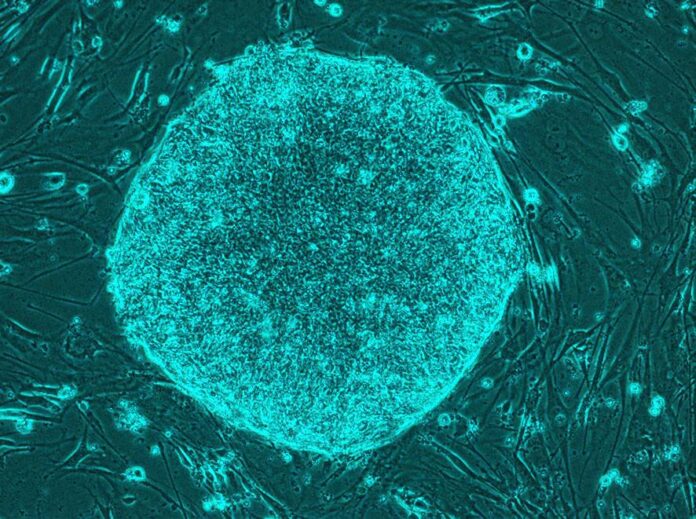
This revolutionary technology is based on induced pluripotent stem cells (iPSCs), a discovery that transformed biological science two decades ago. In 2006, Japanese scientist Shinya Yamanaka conducted experiments on mouse cells, later replicated on human cells, demonstrating that an adult, already specialized cell can be reverted back to its original embryonic state. For this discovery, Yamanaka was awarded the Nobel Prize in 2012. However, the path from a laboratory breakthrough to actual clinical practice and an official medication available in pharmacy or hospital networks turned out to be long, arduous, and filled with multifaceted safety evaluations.
The authorization granted by the Japanese regulatory body covers two specific medical products aimed at treating different severe pathologies:
-
Amebri (CTB01 / RVT-1001): Developed through a collaboration between Sumitomo Pharma and Kyoto University. This therapy is designed for patients with Parkinson’s disease. During this illness, a massive die-off of dopamine-producing neurons occurs in the brain, leading to motor dysfunction, tremors, and a loss of movement control. With this new method, adult cells taken from healthy donors are laboratory-transformed into pluripotent cells, which are then used to derive precursor nerve cells. Through neurosurgical intervention, millions of these cells are implanted into the damaged area of the patient’s brain, where they successfully integrate, mature, and begin naturally producing dopamine.
-
“ReHeart”: Created by a startup based at Osaka University, this product aims to treat severe heart failure caused by ischemic cardiomyopathy. In this case, thin, living sheets of heart muscle cells are grown from the reprogrammed cells. Surgeons place these unique patches directly onto the surface of the damaged heart. Clinical observations have shown that these sheets not only mechanically reinforce the heart wall but also promote the formation of new blood vessels, drastically improving blood supply to the organ and partially restoring the original ejection fraction.
Importantly, both therapies rely on the allogeneic method, meaning the cells are produced not from the patient themselves, but from pre-selected, thoroughly screened healthy donors. Using a patient’s own cells—known as the autologous approach—is extremely expensive and requires months of individual preparation for each person. In cases of acute heart failure or rapidly progressing diseases, such delay is often fatal. The creation of donor banks at Kyoto University allowed scientists to pre-manufacture and store cell lines that are genetically compatible with a large portion of the population, sharply reducing the risk of immune rejection and making the treatment immediately available.
Japan’s approval of these products was made possible by the country’s unique, accelerated regulatory framework. The Ministry granted conditional and time-limited authorization. This means that since small-scale early clinical trials demonstrated absolute safety and early signs of efficacy, the state permitted the companies to begin selling the products and treating patients. In parallel, however, they are required to conduct continuous monitoring and gather additional, large-scale data over the next seven years to secure a final, permanent license. This approach allows people in critical conditions to avoid waiting decades for bureaucratic processes and to receive treatment exactly when it is most effective.
Trial Results
The results obtained within the framework of clinical trials are impressive. For instance, a two-year observation of Parkinson’s disease patients showed that the transplanted cells adapted well to their environment, showing no adverse side effects or risk of tumor formation—which had been the scientists’ primary fear in the early stages. Most patients experienced significant improvements in motor functions and a reduction in “off-periods” when traditional medications stopped working. In the case of the heart patches, patients were able to return to an active life, as the damaged zones of their heart muscle were partially restored and strengthened.
Naturally, this monumental success comes with certain challenges. The global medical community is closely watching this Japanese experiment. Many Western experts, including representatives from the U.S. Food and Drug Administration (FDA), traditionally take a more cautious stance, demanding long-term studies on thousands of control subjects before allowing such therapies onto the market. Consequently, this treatment will only be available in Japanese clinics for the foreseeable future, potentially triggering a new wave of medical tourism.
At the same time, the mass production and standardization of cells involve immense technological difficulties. A specialized manufacturing center built in Osaka—the world’s first commercial plant for producing medications based on induced stem cells—utilizes top-tier robotic and sterile systems to ensure the uniformity and safety of each batch. The high cost of production remains a financial barrier for now, though prices are naturally expected to decrease as the technology is refined.
Simply put, this step taken by Japan is unprecedented; therefore, it should not be viewed merely as the approval of two new drugs. It is a conceptual victory proving that reprogramming human cells and using them to restore damaged organs is no longer science fiction, but real, functioning medicine. If previously we could only fight chronic diseases symptomatically or through radical interventions, today we can talk about the full biological regeneration of diseased or aging tissues. This success paves the way for developing similar methods to defeat blindness, spinal cord injuries, diabetes, and many other currently incurable ailments, completely transforming the future of humanity and average life expectancy.
