


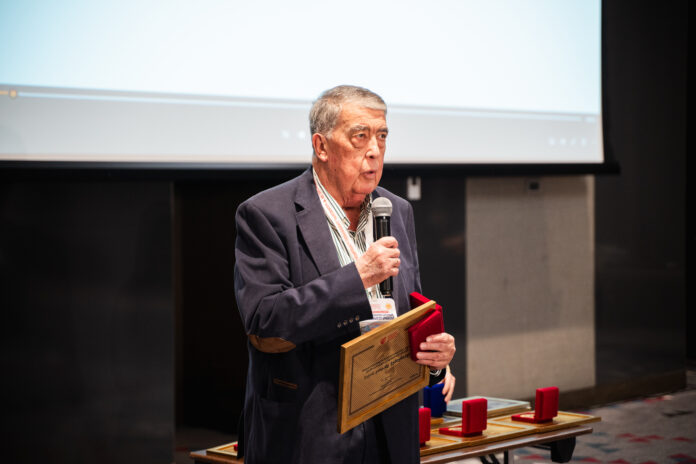
On October 23–24, the 10th Congress of Georgian Cardiologists was held, which also marked the 35th anniversary of the founding of the Society of Cardiologists and the 80th anniversary of the field’s establishment as an institution.
Within the framework of the event, for their significant contribution to the development of the field since the end of the 20th century, doctors were presented with awards named after Academician Mikheil Tsinamdzghvrishvili and Gulnara Chapidze.
One of them is cardiologist Professor Vakhtang Tchumburidze, who was awarded the Mikheil Tsinamdzghvrishvili Medal in the nomination “Meritorious Cardiologist.”
Mr. Vakhtang answered our questions about the fundamental changes implemented in Georgian cardiology since the 1980s and modern capabilities.
Mr. Vakhtang, over the past 35 years, what was the main turning point that determined the development of Georgian cardiology and its existence in its current form?
In fact, we dedicated these 35 years to building a real, strong bridge with the European Society of Cardiology, so that we could become a full-fledged part of their programs. To travel often to their conferences in order to directly understand and adopt the main ideology of modern cardiology. This was a fundamental turning point compared to the experience we learned from the Soviet period.
I myself was a witness to those great changes, seeing how old approaches were changing and how we were implementing innovative — invasive or non-invasive — technologies. And I think that today’s generation of Georgian cardiologists looks completely different in terms of professionalism, mentality, and global vision.
What major innovations and medical approaches became decisive in the process of improving the quality of patient treatment and reducing cardiovascular mortality?
First and foremost, it was strictly necessary to introduce interventional cardiology and elevate surgical treatment to a qualitatively new level. Along with this, clinical trials and the implementation of modern pharmacological approaches played a decisive role. All of the above served a main goal — to reduce cardiovascular mortality in Georgia.
Today, it was already highlighted at the congress that mortality caused by infarction has decreased from 25% to 7%, which is considered a great success both worldwide and specifically in our reality. Despite this, challenges still remain — especially in the direction of treating hypertension, heart failure, and disease prevention, which requires further progress and effort from us.
What will be your message to young colleagues, and what do you consider most important for their future development?
You know what, I am delighted with the young doctors. During this period, several generations have already formed, and they are exceptionally active. The scale of their education, as well as their involvement in scientific activities, whether clinical or experimental cardiology, is very broad and versatile.
They have far more opportunities than we had in our time, and this is completely clear. I have great hope that they will use this resource to the maximum in order to elevate Georgian cardiology to an even higher level so that it fully complies with European and international standards. I am confident it will be so, because I see great enthusiasm and determination in them.
