


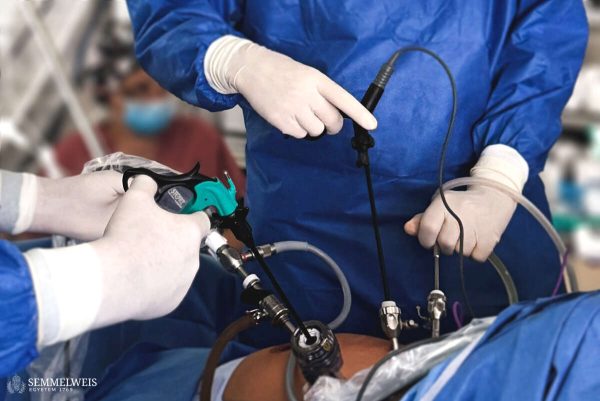
A specialized surgical team at Semmelweis University restored a young woman’s mobility after removing a rare schwannoma from the lesser pelvis, using intraoperative nerve monitoring to protect the nerves responsible for movement and pelvic function. The case drew international interest because it brought together gynecologic laparoscopy, neurosurgery, and electrophysiological monitoring in a procedure that is still uncommon even in major European centers.
The tumor was a schwannoma, also called a neurinoma, a benign nerve-sheath tumor that can arise anywhere peripheral nerves are found. In this case, it developed behind the uterus in the retroperitoneal space of the lesser pelvis, compressing the nerve near the sacrum and causing severe pain radiating into the right leg.
That presentation is easy to mistake for a spine or degenerative nerve problem, which is part of why these tumors can be difficult to diagnose. According to the Semmelweis team, the location also made the operation particularly delicate because the area contains nerves involved in leg function, as well as bowel, bladder, vaginal, and reproductive function.
Why neuromonitoring mattered
The surgery lasted about five hours and was performed laparoscopically by the neuropelveology team in close collaboration with neurosurgeons and intraoperative neurophysiology specialists. During the procedure, the team used a 32-channel neuromonitor to identify nerve bundles and distinguish them from the tumor wall, helping them avoid nerve injury while removing the mass in pieces.
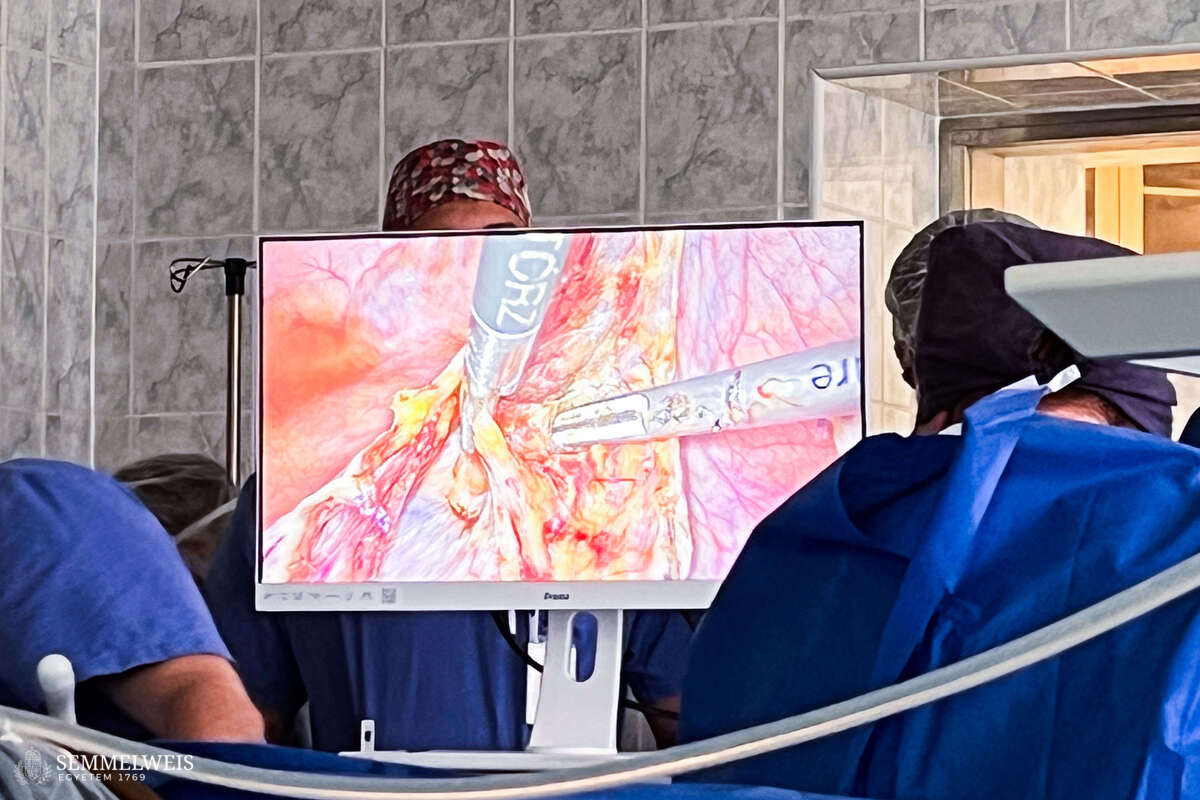
That approach matters because the goal was not only to remove the tumor, but also to preserve fertility and prevent neurological deficits. The surgeons said the tumor was compressing its nerve of origin and beginning to affect another nerve root, making functional preservation especially important.
Semmelweis University says this kind of operation is part of its neuropelveology program, which combines pelvic surgery with nerve-focused monitoring. The team noted that it performs only a small number of these complex planned cases each quarter and that such procedures are rare even across Europe.
To support that work, the university recently acquired a mobile neuromonitoring device. The team expects it to be useful not only for schwannoma cases, but also for endometriosis involving pelvic nerves and for other complex pelvic conditions where scarring, fibrosis, or prior treatment can make nerve preservation difficult.
The patient recovered quickly after the operation and was discharged the next day, pain-free and without lower-limb paralysis. Her follow-up plan includes MRI scans at three months and one year.
The case is notable because it shows how much can be gained when highly specialized pelvic surgery is paired with real-time nerve monitoring. It also highlights a broader trend in surgery: increasingly, the best outcomes come from collaboration across disciplines rather than from any single specialty working alone.
Source: Semmelweis University
