There are clinics that specialize narrowly, and there are those that handle the outcomes that fall beyond the scope of such specialization. This is precisely why a children’s hospital tells a story far beyond medical statistics – it clearly reflects the distribution of professional resources in a country, the flow of critically ill patients, and the extent to which a system can prevent a child’s medical care from being limited by geographical or logistical barriers.
This is what makes the M. Iashvili Children’s Central Hospital of particular importance to Georgia—it is one of the few places in the country where a comprehensive clinical response can be found for the most complex pediatric cases.
Today, Iashvili Clinic stands as the country’s only tertiary, multidisciplinary pediatric referral hospital, uniting pediatric onco-hematology services, neurosurgery, toxicology, thoracic surgery, and spine surgery. Operating 24/7, the clinic manages the most severe and complex pediatric patient flows. Furthermore, its international partnership with a pathomorphological laboratory in the Netherlands, its management of academic bases for leading universities, and its creation of a stress-free environment for young patients establish the benchmark for how a modern referral center should function.
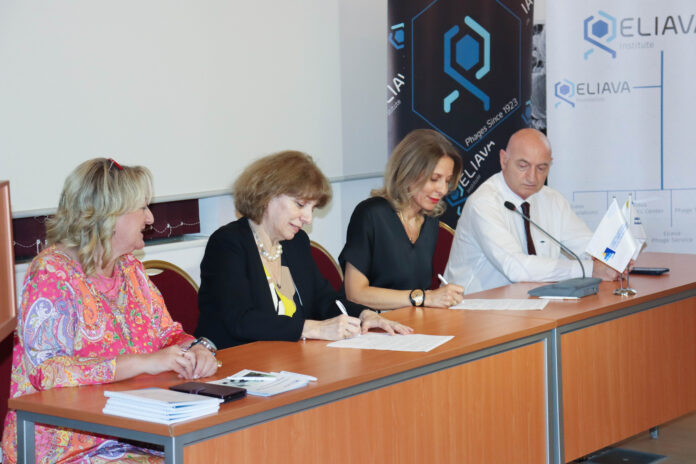
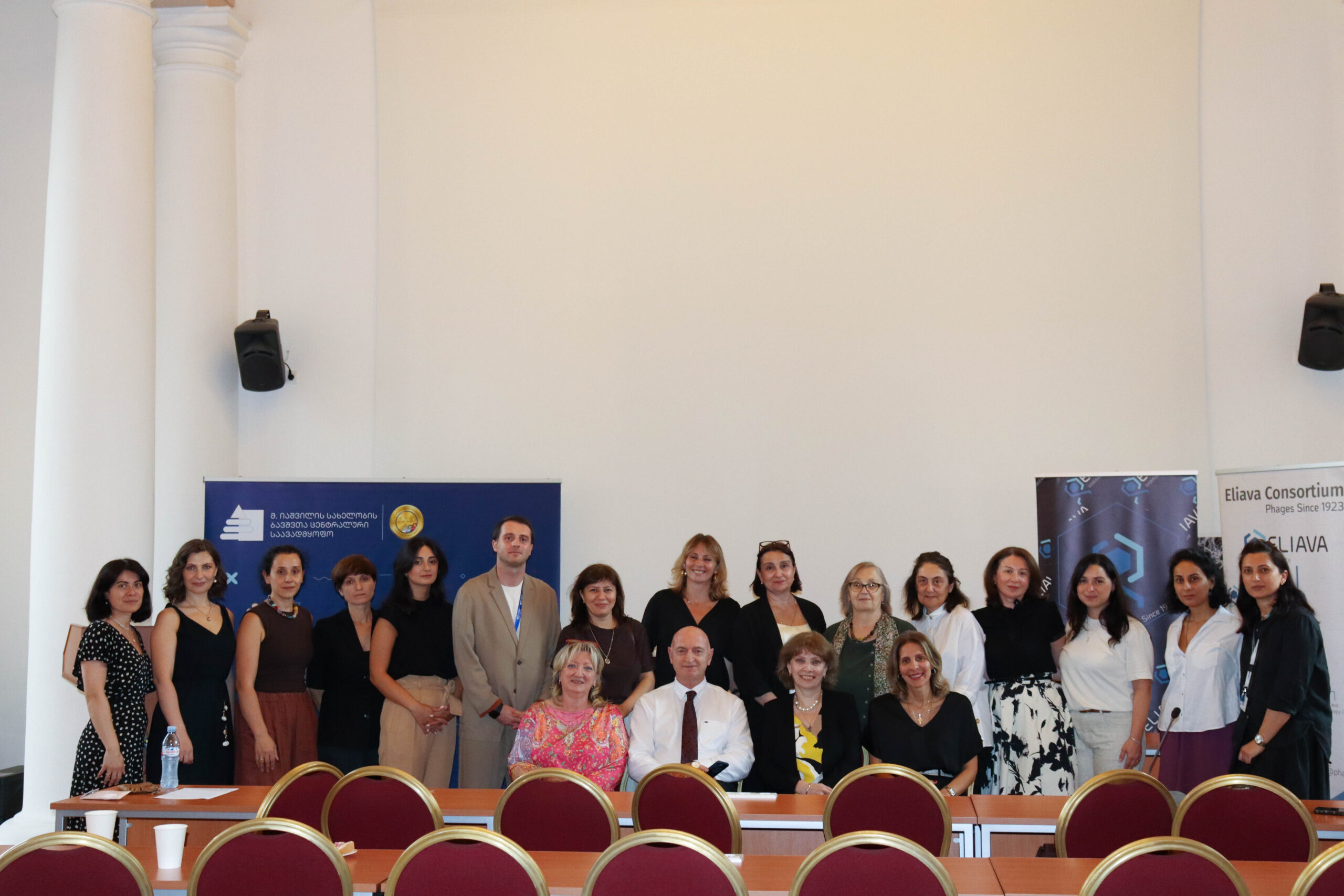
Against the backdrop of this scale and continuous development, taking a strategic step aimed at fundamentally altering the outlook for treating complex infections and drug-resistant cases became entirely logical: as a result, an official memorandum of cooperation was signed between the George Eliava Institute of Bacteriophages, Microbiology and Virology and the M. Iashvili Children’s Central Hospital.
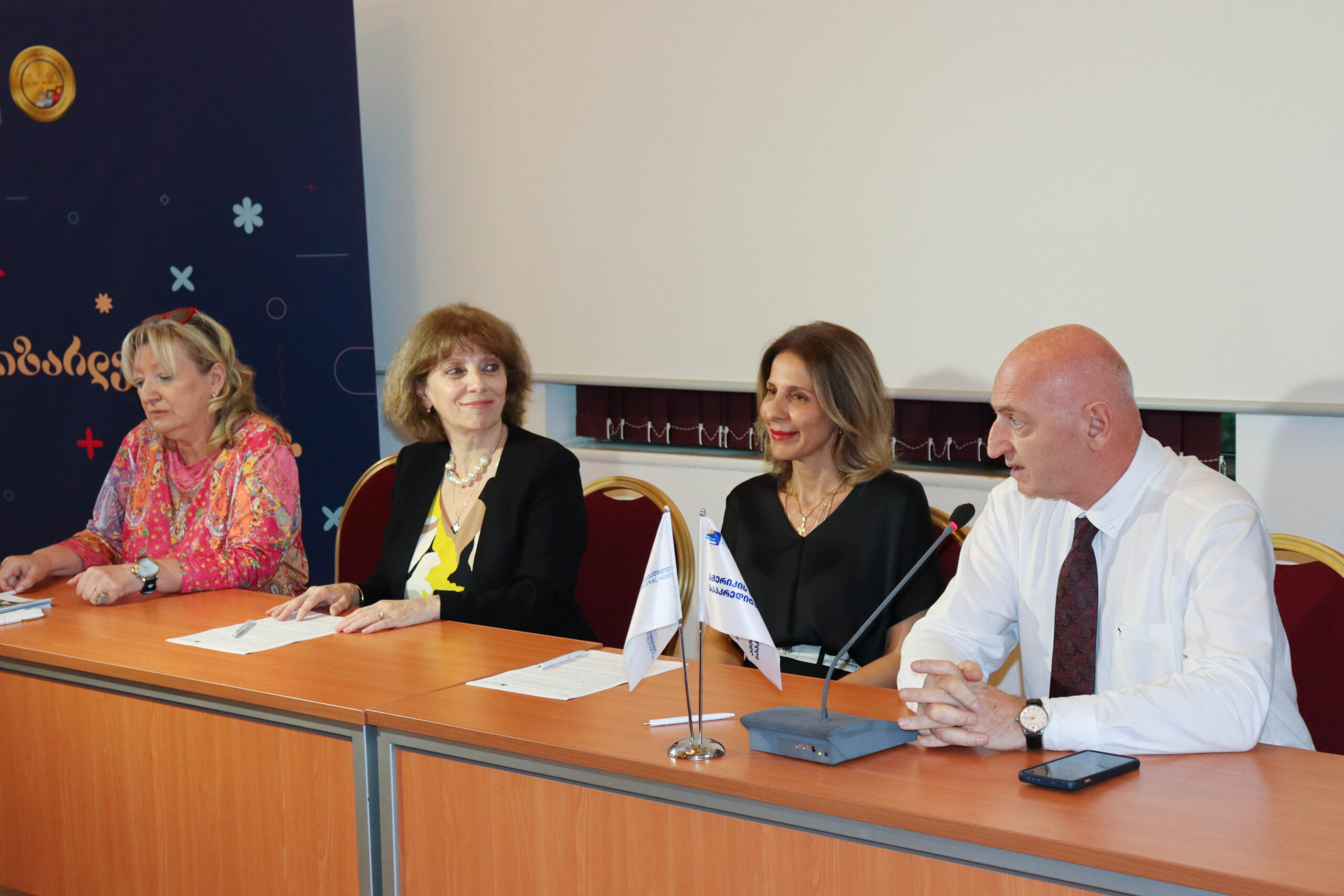
As the clinic’s Medical Director, Ivane Chkhaidze, points out, the primary practical outcome of this memorandum will be the active integration of bacteriophages into pediatric practice:
“One of the key practical outcomes resulting from today’s signing is the active use of phages in pediatric practice. Phage therapy today represents one of the world’s most promising avenues for mitigating the grave risks posed by antibiotic resistance. This is a global challenge whose scale and threat are often compared even to terrorism—both in terms of the harm inflicted and high mortality rates, as well as modern medicine’s inability to effectively combat fully drug-resistant pathogens.
Iashvili Clinic is precisely the venue where the most complex clinical cases converge—where standard antibiotic therapy for fighting infections, even using the latest and most expensive drugs, often proves powerless. However, this is not merely a local challenge for Georgia or a single clinic; it is a global reality in addressing which we believe the Eliava Institute—a unique facility recognized by numerous countries worldwide—can make a major contribution.”
It is at this critical threshold that theoretical science and daily clinical practice intersect. When standard therapeutic resources are exhausted, medicine requires not simply an alternative, but a personalized, foundational approach.
As Ivane Chkhaidze explains, this inter-institutional collaboration imparts a completely new practical dimension to the process. The application of phage therapy becomes possible on an individualized basis—tailored to each patient and the most severe diagnoses. This pertains to those critical cases where treatment proceeds in full compliance with protocols and the strictest standards, yet outcomes remain critical due to bacterial resistance.
This local integration initiated within a pediatric hospital transcends the boundaries of a single institution. Accumulating practical experience at Iashvili Hospital and integrating the unique achievements of Georgian science into global projects opens new opportunities—especially given that the Eliava Institute already maintains successful and close collaborations with European, specifically French, colleagues.
However, scientific recognition and international collaboration require more than practice alone—they demand rigorous academic methodology, documentation of research, and publication on high-ranking medical platforms, so that the world’s leading clinicians better understand the unique resource Georgia possesses.
As Professor Chkhaidze explains, the goal is precisely to establish this global visibility and academic standard:“Publications in high-impact medical journals are exactly what we need so much—both for the country and for promoting phage therapy. Today, there are only a few countries in the world capable of offering phages to doctors, and one of them is the Eliava Institute.”
In this process, bringing up a new generation of clinicians and researchers is also of paramount importance, as a scarcity of educational and scientific programs remains one of the primary challenges facing the country’s healthcare system.
In Ivane Chkhaidze’s assessment, the signed document serves to address the precise problems facing the discipline today:”We have already launched a joint doctoral program in collaboration with French colleagues. We believe that in about a year we will be able to present our first results, and this will mark an important beginning. Doctoral, educational, and scientific programs represent the exact directions whose shortage affects the country most, and today offers a genuine opportunity to eliminate this gap.”
If we move beyond clinical scale and strategic vision back to the daily reality at the patient’s bedside, the true weight of this collaboration becomes especially vivid. Antibiotic resistance is not a distant or abstract threat—it has become a daily, severe, and painful challenge in intensive care units.
As Nino Solomonia, Head of the Department of Critical Care Medicine for Infants and Neonates, notes, standing on the front lines of this massive crisis gives the memorandum its true, transformative power:
“This challenge does not concern our field alone—it is a global problem of modern medicine. That is why today is special: although we have maintained continuous contact with this remarkable institute, the pediatric clinic is now signing an official memorandum with the Eliava Institute of Bacteriophages.
This means that numerous problems caused by the complications of antibacterial therapy and high resistance will become surmountable in the future through joint scientific research and the implementation of practical experience.
By signing an agreement of this scale, Iashvili Clinic acts as a trailblazer. I sincerely hope that this collaboration will extend beyond the country’s borders, engage international experts, and accomplish a great deal of good for our patients’ health.”
To ensure that this practical experience and these global aspirations rest on a solid foundation, adhering to the strict requirements of clinical trials and organizational standards is essential. The main guarantor of this process is the Eliava Institute, which ensures that every innovative step is fully safe, evidence-based, and aligned with high scientific standards.
According to Dea Nizharadze, Clinical Director of the Eliava Phage Therapy Center, the institute maintains close ties at the international level—with the World Health Organization and leading bodies—yet the interest demonstrated toward this method by the Georgian medical community is particularly valuable to them:
“I am delighted that several clinics expressed a desire to actively incorporate phage therapy into their practice, though Iashvili Clinic turned out to be the very first. Launching this collaboration with the country’s largest pediatric hospital is especially meaningful and symbolic for us.
I am glad that, against the backdrop of international recognition and close cooperation with the World Health Organization, the Georgian medical community has also actively begun speaking about phages. I have great hope that this large-scale memorandum will lay the groundwork for many new and successful endeavors.”
It is particularly symbolic that this collaboration originates in the pediatric sector—preventing antibiotic resistance and preserving the microbiome serve as the essential foundation for the health of future generations.
As for the method itself, bacteriophages have predominantly been used in clinical practice when all other resources were exhausted. However, according to the Clinical Director of the Eliava Phage Therapy Center, modern scientific vision aims to fundamentally transform this approach:
“A great deal of research is underway in this direction, and we are, of course, actively involved in these processes. Naturally, this is our main goal. It is understandable that for many patients, phages represent a ‘last resort’—mostly when resistance has already set in, making phage therapy a truly unique solution for them. But demonstrating that phages possess other functions and that their application is possible both for preventive purposes and during the course of treatment—this is a vital message for present and future medicine.”
There is nothing novel in the shared vision of these physicians—phages existed beforehand, the clinical need was evident, and informal collaboration had been ongoing for a long time. However, the memorandum was equivalent not to a new discovery, but to a principled decision: the country’s primary pediatric hospital openly declared its readiness to utilize in its daily operations the unique resource that Georgia has preserved for a century, rather than leaving it merely as an item of national pride popular abroad.
A certain historical irony lies precisely in this—for decades, the Eliava Phage Therapy Center was less visible within its own country than beyond its borders. In Ivane Chkhaidze’s assessment, we have transitioned from the isolated reality of the past to a point where the institute’s century-long experience is appropriately valued on the international stage. This breakthrough is not merely a matter of national pride; it serves as a reminder that the path of medical innovation does not always flow from global centers to the periphery—sometimes it originates precisely where local, century-old knowledge has accumulated, acquiring global significance only later.