


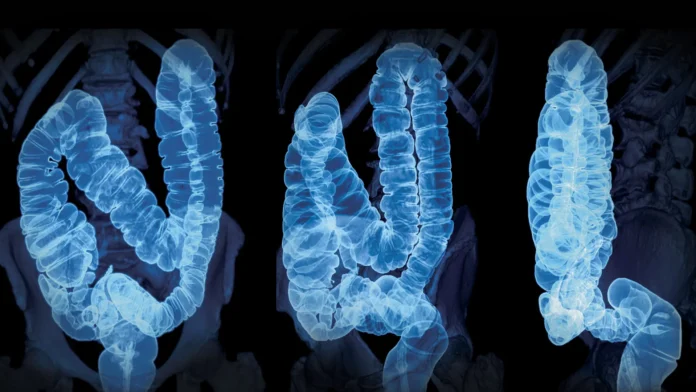
The 2026 American College of Gastroenterology guideline moves diverticulitis care further away from routine, one-size-fits-all treatment. Its central message is selective management: confirm the diagnosis carefully, reserve antibiotics and colonoscopy for patients most likely to benefit, focus prevention on overall lifestyle rather than restrictive diets or unproven medications, and make elective surgery a quality-of-life decision—not a decision based on episode count alone.
The guideline is primarily designed for outpatient gastroenterology care after an episode of colonic diverticulitis. It reviewed evidence published through January 30, 2025 and presents 14 recommendations, alongside practical key concepts not formally graded with GRADE methodology.
The major updates
These directions align with the broader evolution toward individualized diverticulitis care, but the new guideline provides a particularly clear, evidence-based framework for outpatient follow-up, recurrence prevention, medication use, and surgical decision-making.
Antibiotics: selective, not routine
The most clinically important recommendation is against routine antibiotics for low-risk acute uncomplicated diverticulitis. This is a conditional recommendation supported by moderate-certainty evidence. Randomized trials involving 1,809 patients found little or no benefit of antibiotics for mortality, progression to complicated diverticulitis, surgery, readmission, or recurrence in selected patients with mild left-sided uncomplicated disease.
This does not mean antibiotics are no longer used in diverticulitis. The guideline supports antibiotic treatment for patients with:
Immunocompromise or medical frailty
Significant comorbidity
Systemic inflammatory features or a concerning clinical presentation
Vomiting or symptoms lasting longer than 5 days
C-reactive protein above 140 mg/L
Fluid collection or a longer inflamed colonic segment on imaging
Inability to ensure reliable outpatient follow-up
A need for hospital-level care
About 5% of people diagnosed with acute uncomplicated diverticulitis develop a complication within three months, most often in the first 10 days. Risk stratification—not simply the label “uncomplicated”—therefore remains essential.
When outpatient antibiotics are indicated, the guideline lists several options and notes that amoxicillin-clavulanate appears as effective as metronidazole plus a fluoroquinolone while potentially avoiding some fluoroquinolone-associated harms, including Clostridioides difficile infection. Typical treatment duration is 4–7 days.
Colonoscopy: narrower, risk-based follow-up
The guideline recommends colonoscopy after recovery from complicated diverticulitis to exclude colorectal cancer or advanced neoplasia. This is a strong recommendation with moderate-certainty evidence.
The rationale is that colon cancer can occasionally be misdiagnosed as diverticulitis, particularly in patients with a complicated presentation. In pooled observational data, complicated diverticulitis was associated with about sixfold greater odds of colorectal cancer than uncomplicated diverticulitis.
For uncomplicated diverticulitis, the recommendation is more selective. Colonoscopy is suggested only when a patient:
Has alarm symptoms, such as unintentional weight loss, iron-deficiency anemia, rectal bleeding, a change in bowel habits, or persistent abdominal pain; or
Is not current with recommended colorectal cancer screening.
This avoids unnecessary endoscopy in people with CT-confirmed uncomplicated disease who have no concerning features and are already up to date with high-quality screening. Colonoscopy should generally wait at least 6–8 weeks after an acute episode because active inflammation can make examination difficult and may increase procedural risk.
Prevention: lifestyle over restrictions
The guideline shifts attention away from narrowly focused food prohibitions and toward overall cardiometabolic health.
It suggests that people with a history of diverticulitis:
Follow a dietary pattern rich in fruits, vegetables, whole grains, and legumes.
Limit red meat, processed or refined grains, trans fats, and sweets.
Stay physically active.
Pursue weight loss when overweight or obese.
Stop smoking.
Avoid heavy alcohol intake.
Avoid regular NSAID use when there is no compelling clinical indication.
Most evidence for these measures comes from observational studies of incident diverticulitis rather than recurrence. The guideline is transparent that the certainty of evidence is low or very low for several recommendations. Nonetheless, these measures have broader health benefits and are reasonable components of recurrence-risk counseling.
A clear end to food myths
The guideline specifically advises against avoiding nuts, seeds, corn, or popcorn to prevent recurrence. Large prospective cohorts have not shown that these foods increase diverticulitis risk.
Supplemental fiber may be appropriate for some patients, but the guideline stresses that it should not be viewed as a replacement for an overall high-quality dietary pattern.
Prevention drugs: what not to use
The guideline gives unusually direct recommendations against three commonly discussed recurrence-prevention strategies:
Mesalamine: Strong recommendation against use, supported by moderate-certainty evidence. Multiple randomized trials failed to show a reduction in recurrence, and discontinuation due to adverse events was more common than with placebo.
Probiotics: Recommendation against use for preventing recurrence. Evidence of benefit is lacking, and the cited randomized study found no advantage.
Rifaximin: Recommendation against use for recurrence prevention. A small, methodologically limited open-label study suggested possible benefit, but the evidence is insufficient to support routine use.
This is an important practical update. Patients with recurrent symptoms are often offered long-term or cyclic therapies in the hope of preventing future episodes, but current evidence does not support these medications for that purpose.
Surgery: quality of life, not episode count
The guideline firmly rejects the historical rule of recommending elective colectomy after a set number of uncomplicated episodes. Neither two episodes, three episodes, nor young age alone should determine the need for surgery.
Instead, surgical referral is suggested for patients with recurrent uncomplicated diverticulitis that significantly impairs quality of life. The decision should follow shared discussion of the expected benefits, limitations, and risks.
Elective resection reduces—but does not eliminate—recurrence. The guideline cites a 5-year recurrence risk of about 15% after elective colectomy, compared with approximately 60% without surgery. Small randomized trials found improved quality of life for some patients, but not all: in the DIRECT trial, about 30% of surgical patients had no improvement or worse quality of life.
The potential harms are substantial and include infection, anastomotic leak, bowel dysfunction, incisional hernia, adhesive obstruction, stricture, and, in some circumstances, a permanent ostomy. Persistent abdominal pain is also possible after surgery.
This recommendation applies to recurrent uncomplicated disease. Patients with strictures, fistulas, chronic or smoldering diverticulitis, abscess, or perforation require different, individualized surgical assessment.
Diagnostic and follow-up points
Although not all are formal GRADE recommendations, the guideline emphasizes several practical points:
Use CT, particularly at a first presentation, because clinical evaluation alone frequently misclassifies diverticulitis and CT helps confirm the diagnosis, identify complications, and define anatomy before surgery.
Do not assume recurrent disease becomes more dangerous. The first presentation carries the greatest risk of complicated diverticulitis; recurrence itself does not increase the risk of future complicated disease.
Evaluate persistent symptoms. More than one-third of patients report continuing pain or altered bowel habits 1–2 years after an episode. Cross-sectional imaging and colonoscopy may be needed to assess for complications, cancer, inflammatory bowel disease, strictures, fistulas, or a disorder of gut–brain interaction.
Distinguish recurrence from smoldering diverticulitis. Smoldering disease involves inflammation persisting for weeks to months, rather than discrete episodes separated by symptom-free intervals.
Source: AJG
