


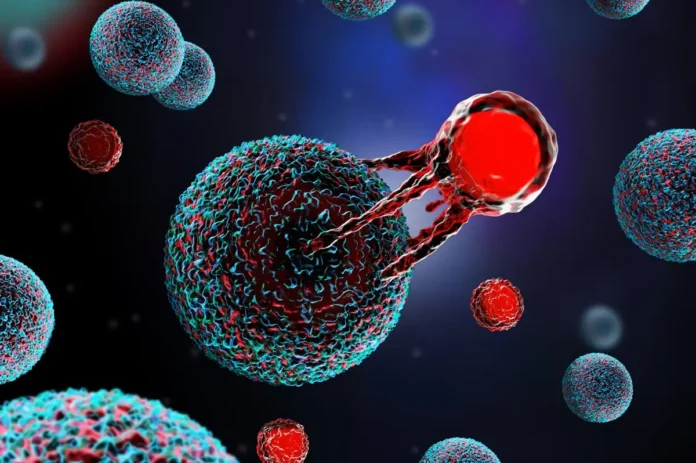
A new type of immunotherapy is showing promising results in the treatment of recurrent glioblastoma, one of the most aggressive and fatal brain tumors. The first-phase results of a clinical trial published in Nature Medicine confirm that so-called CAR-T cell therapy is safe for patients and has significant clinical potential.
CAR-T therapy involves genetically modifying a patient’s own immune (T) cells so that they can recognize and destroy cancer cells. The new study focuses on a form of this therapy that “trains” immune cells to target the B7-H3 protein, as this molecule is found in high levels in most glioblastomas.
Standard treatment for glioblastoma involves a combination of surgery and chemotherapy, but in most cases the disease returns in a much more treatment-resistant form. The situation is further complicated by the fact that modern drugs cannot cross the blood-brain barrier, meaning that patients with recurrent disease generally have a life expectancy of less than one year.
As part of the study, researchers genetically modified the T cells of 15 patients whose tumors were resistant to standard treatment and, bypassing the blood-brain barrier, delivered the cells directly into the tumor site in the brain using a specialized catheter. The procedure was performed at three different dose levels to assess its safety.
The results showed that most participants tolerated the therapy well, while the reported side effects could be easily managed with clinical intervention. Most importantly, tumor growth was halted or the tumor size decreased in more than half of the patients. In one case, a complete remission was observed, and this effect was maintained for three years.
Researchers at Yale University note that seeing such a clinical effect in a Phase 1 trial is highly encouraging, particularly for patients who have no other treatment options. According to the scientists, one of the technology’s main advantages is that the therapy uses the patient’s own biological material, making the process considerably safer.
An international scientific team is now preparing for Phase 2 clinical trials, which will involve a much larger number of patients. At the same time, researchers are working on further genetic engineering of CAR-T cells to make the therapy more effective at destroying cancer cells and ensure that the response lasts longer.
