


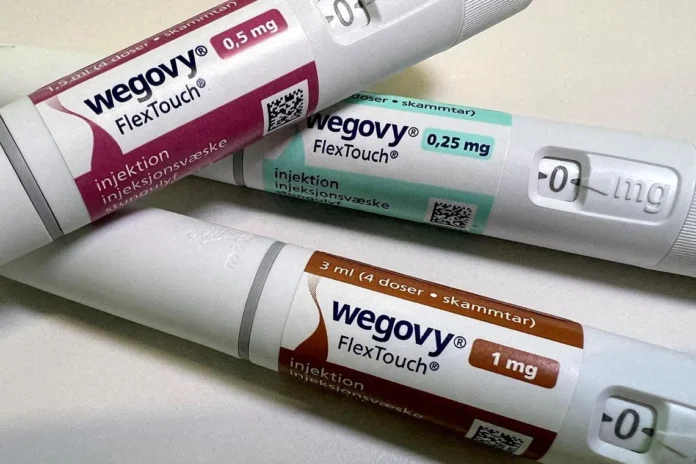
According to the latest Gallup data, 11% of US adults are currently taking GLP-1 medications for weight loss—nearly four times the rate from two years ago (3%). Meanwhile, the obesity rate in the United States has dropped from 39.9% to 36.4%.
No pharmacological intervention in history has gained popularity so rapidly among otherwise healthy individuals. Experts are calling this process an “uncontrolled clinical trial” that already involves 28 million people. Whether or not you ever plan to take these medications, the initial findings of this experiment certainly demand attention.
Data analysis points to four key takeaways:
Lesson 1: The issue wasn’t willpower—it was appetite For decades, the fitness industry insisted that weight loss was purely a matter of willpower. Yet a drug that simply suppresses hunger drove a 15% reduction in body weight in clinical trials. This settled an age-old debate: most people struggling to lose weight aren’t “weak”—they are simply hungry, and over the long term, hunger always wins. A caloric deficit remains the core mechanism of weight loss; the medication just made sustaining that deficit tolerable.
Lesson 2: Muscle is lost alongside fat Up to 40% of the lost weight coming from lean muscle mass is a real and serious concern. The mechanism is straightforward: when appetite drops sharply, protein intake drops with it, causing sedentary individuals to shed muscle along with fat. Among 63 leading medical experts surveyed, 76% cited muscle loss as one of the primary risks associated with GLP-1 drugs. The solution remains unchanged: resistance training and consuming roughly 1.5 to 2.2 grams of protein per kilogram of body weight.
Lesson 3: The drug doesn’t replace exercise—it encourages it There was an assumption that the medication would make people sedentary and replace gym workouts. The data shows the exact opposite: individuals taking these drugs spend four times more on fitness, walk more often, engage in more cardio, and consume more protein. Rather than a substitute for exercise, the drug has acted as a catalyst—a springboard toward a healthier lifestyle.
Lesson 4: No one knows the long-term endgame What happens to those 28 million people when they stop taking the medication? Clinical trials show that within a year of discontinuation, a significant portion of the lost weight returns. What their muscle mass, newly formed habits, or metabolic health will look like in 10 years remains unknown, as these drugs have never been used at this scale across a full decade.
For those already participating in this massive “experiment,” the primary guidance is straightforward: train three times a week, monitor your protein intake, and avoid judging progress solely by the number on the scale. And for those not taking the drugs, the central lesson remains intact: learn to manage hunger first, and the rest of the weight-loss process becomes significantly more manageable.
