


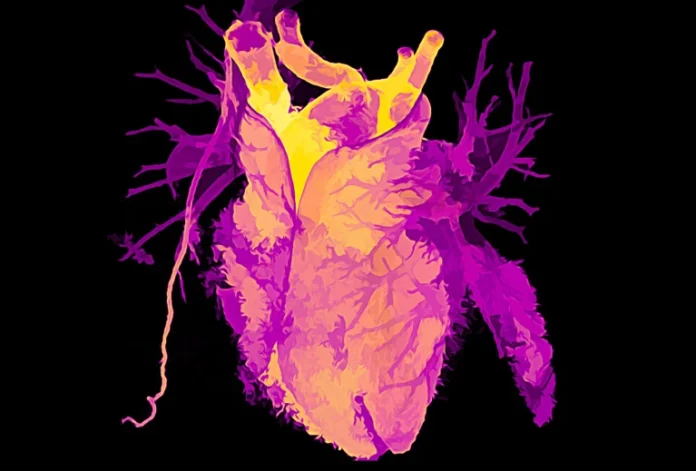
What happens to organs after transplantation? The biological age of a transplanted heart may change under the influence of the recipient’s age. According to a study conducted at Harvard University, a young donor’s heart ages more rapidly in an older recipient, while an older donor’s heart becomes somewhat younger in a younger recipient.
To investigate this, the researchers first conducted experiments in mice. They transplanted hearts from young mice into older mice and, conversely, hearts from older mice into young mice. Several months later, they assessed age-related changes in the transplanted hearts and found that their biological age gradually moved closer to that of the recipient.
The researchers then examined cases of heart transplantation in humans. They analyzed data from 11 donors and recipients with substantial age differences. When an older donor’s heart was transplanted into a younger recipient, the age difference ranged from 8 to 24 years, while in cases where a young donor’s heart was transplanted into an older recipient, the age difference ranged from 38 to 50 years.
To assess the biological age of the organ, the researchers examined DNA methylation levels. Methylation is a process in which methyl groups are added to certain regions of DNA, affecting gene activity. As people age, methylation levels change at different sites across the DNA, and certain patterns of these changes can be used to estimate biological age. Using this method, the analysis of transplanted human hearts also showed that their biological age moved closer to the recipient’s age.
Interestingly, the effect was one-directional and was limited to the transplanted heart: the recipient’s systemic environment changed the biological age of the transplanted heart, but the transplanted heart did not alter the biological age of the recipient.
The researchers also analyzed medical data from hundreds of patients one year after transplantation. Heart rate, the thickness of the posterior wall of the heart, and exercise capacity were more strongly associated with the recipient’s age than with the donor’s age, although not all functional measures reflected this pattern.
Because of the shortage of suitable organs for transplantation, hundreds of people die each year while waiting for a new organ. The findings could potentially help reduce the scale of this problem in the future. If further research confirms that the biological age of a transplanted organ changes under the influence of the recipient’s body, organs from older donors could potentially also be used for transplantation, increasing the number of organs available for transplant.
