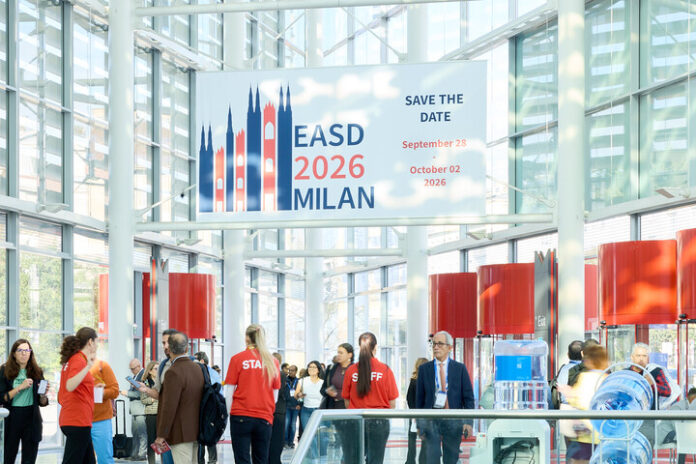
The 62nd Annual Meeting of the European Association for the Study of Diabetes is entering its final stage in Milan, where researchers, clinicians, people living with diabetes, health professionals and industry representatives have spent the week examining how diabetes prevention and treatment are changing. Held from 28 September to 2 October at Allianz MiCo, the meeting has brought together more than 15,000 participants and returned to Italy for the first time in 18 years.
This year’s meeting has been marked by a clear shift away from viewing diabetes treatment only through blood-glucose levels. The major discussions have increasingly focused on earlier intervention, protection of the heart and kidneys, obesity and liver disease, personalised treatment, new technologies and the practical challenge of making advances available to patients.
The event has also been accessible beyond the conference centre. All scientific sessions have been livestreamed for registered virtual delegates, with recordings available on demand through the Virtual Meeting platform until 30 October.
Earlier treatment and person-centred care
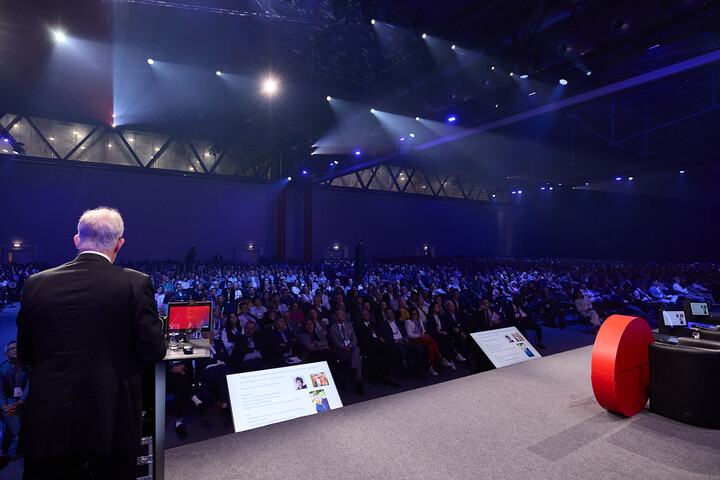
One of the most important policy developments presented in Milan has been the new ADA/EASD consensus report on the management of type 2 diabetes. The document strengthens the move toward person-centred care and supports considering highly effective treatments earlier, including combinations of medicines when clinically appropriate.
The direction is significant because it challenges the traditional model in which treatment is intensified gradually, one medicine at a time, after earlier options stop working. Sessions at EASD examined both sides of that debate: whether early intensive combination treatment could reduce complications and preserve metabolic health, and when a stepwise approach may still be more appropriate.
The meeting’s broader message has been that treatment choices should reflect more than HbA1c. Cardiovascular disease, kidney function, obesity, fatty liver disease, hypoglycaemia risk, age, sex, treatment preferences and the person’s ability to access care all need to be considered. Reports from the meeting described this as a move from a strictly “gluco-centric” approach toward a model that addresses the full cardiometabolic profile of each patient.
New evidence on obesity and diabetes medicines
The development of incretin-based treatments has been one of the dominant themes of EASD 2026. Researchers presented new data on GLP-1 receptor agonists, dual and triple agonists, oral therapies and medicines designed to affect body weight, glucose control and cardiovascular or renal risk at the same time.
The programme included results from the TRIUMPH-2 phase 3 trial of retatrutide in people with obesity and type 2 diabetes. Retatrutide acts on GIP, GLP-1 and glucagon receptors and is part of a new generation of medicines being studied for their potential effects on both diabetes and obesity. The programme also included the SURPASS-EARLY analysis of tirzepatide, which examined beta-cell function and insulin sensitivity after two years of treatment.
Other presentations focused on oral GLP-1 treatment. The ACHIEVE programme examined orforglipron, an oral GLP-1 medicine, with discussions addressing metabolic efficacy and cardiorenal safety in type 2 diabetes. Data from the SYNCHRONIZE phase 3 studies examined survodutide, a glucagon/GLP-1 dual agonist, in people with obesity and type 2 diabetes. A separate phase 2 presentation considered CT-868, a GLP-1/GIP receptor agonist, in people with type 1 diabetes.
These findings remain part of an evolving evidence base rather than a final answer to the obesity and diabetes crisis. Speakers repeatedly returned to questions of long-term adherence, weight regain, preservation of muscle mass, affordability, access and the identification of the right medicine for the right patient.
New insulin and technology

Insulin development was another important area of the meeting. Presentations included studies of once-weekly insulin candidates, ultra-long-acting insulin, ultra-rapid insulin and hepatic-directed insulin. The SUPER-1 and SUPER-2 studies compared once-weekly insulin GZR4 with daily insulin regimens in people with type 2 diabetes, while other research examined once-daily GZR33 and the OPTI-2 study of hepatic-directed insulin lispro in type 1 diabetes.
Technology sessions addressed the growing role of continuous glucose monitoring, automated insulin delivery, hospital-based diabetes technology and continuous ketone monitoring. The discussion is moving beyond whether devices work in controlled trials and toward how they can be used safely in hospitals, older adults, people with different levels of digital access and health systems with limited resources.
Artificial intelligence was also a prominent subject. The session “AI in diabetes 2026: from agentic systems to responsible deployment” addressed the transition from experimental tools to systems that might support clinical work and self-management. The central issue was not simply what AI can do, but how it can be validated, supervised and integrated without worsening inequality or weakening the relationship between patients and healthcare professionals.
Type 1 diabetes: prediction, prevention and replacement
Type 1 diabetes research received particular attention from the opening day. In the Claude Bernard Lecture, Anette-Gabriele Ziegler presented “Type 1 diabetes: a new beginning,” drawing on work involving prediction, early diagnosis and prevention.
Her research has helped establish the idea that type 1 diabetes can be identified through stages before the appearance of severe clinical symptoms. The programme highlighted prospective studies, biomarker development, population screening and prevention trials, including the POInT trial of antigen-specific immunotherapy in genetically at-risk infants. The long-term aim is to move from treating established disease toward identifying and modifying the disease process earlier.
On Friday, the programme is scheduled to address stem-cell-derived islets in clinical trials and the possibility of moving toward a functional cure for type 1 diabetes. Other sessions have explored experimental immunology, pancreatic islet development, beta-cell protection and the use of induced pluripotent stem-cell technologies. The programme lists a first-in-human transplantation study of an iPSC-derived universal islet product as a late-breaking abstract, although such early findings require careful follow-up before their clinical significance can be established.
MASLD, cardiovascular and kidney disease
Diabetes was repeatedly discussed as a multisystem disease. Sessions on metabolic dysfunction-associated steatotic liver disease, or MASLD, examined the biological subtypes of liver disease, the people most likely to progress and emerging treatments. A joint EASD–EASL session brought together early approvals, real-world evidence and new therapies for MASLD care.
Cardiovascular and kidney protection were equally prominent. Researchers discussed cardiovascular risk before the diagnosis of type 2 diabetes, cardiorenal disease trajectories, heart failure and the role of SGLT2 inhibitors and incretin-based treatments. A joint EASD–European Society of Cardiology session scheduled for the final day focuses on advancing cardiovascular protection with incretin therapies and SGLT2 inhibitors.
The meeting also included research on diabetic kidney disease, including new mechanistic insights, and a joint diabetes-and-kidney session involving EASD, the European Cystic Fibrosis Society and the International Society of Nephrology. The direction is clear: diabetes care is increasingly being judged by whether it prevents heart, kidney and liver complications, not only by whether it lowers glucose.
Georgia’s Representation at the Milan Summit
Endocrinologist Natalia Asatiani, whose professional work has focused on diabetes and pregnancy for years, is representing Georgia at the meeting. Featured in the EASD 2026 program, her presentation addresses a critical clinical issue—the correlation between pregnancy outcomes and microalbuminuria during the first and second trimesters in women with pre-existing diabetes. Notably, Natalia Asatiani actively collaborates with the Diabetes Society of Georgia and leads initiatives in gestational diabetes management, including the Georgian-Israeli Diabetes and Pregnancy Program. Her research aligns seamlessly with the congress’s primary cardiorenal focus, as the risks of developing diabetes-related kidney disease during pregnancy demand precise and timely evaluation.
Workshops, discussions and educational activities
EASD 2026 has offered considerably more than plenary lectures and clinical trial presentations. Its educational programme included expert e-learning sessions on technology, type 1 diabetes screening, obesity, the organ systems affected by type 2 diabetes and hypoglycaemia.

The short oral discussion format allowed researchers to present work in focused topic areas, including young-onset diabetes, early detection of type 1 diabetes, immune mechanisms, incretin therapies, MASLD, obesity pharmacotherapy, omics technologies and energy metabolism. Lab Talks with leading researchers, including Zachary Gerhart-Hines, Charlotte Ling and C. Ronald Kahn, gave participants a closer look at laboratory discoveries and their possible clinical implications.
Early-career researchers were supported through the EFSD-NNF Future Leaders Symposium, the Rising Star Symposium and a session on the transition from postdoctoral research to leading an independent laboratory. The programme also included an EASD–ADA implementation session focused on closing gaps between recommendations and actual diabetes care.
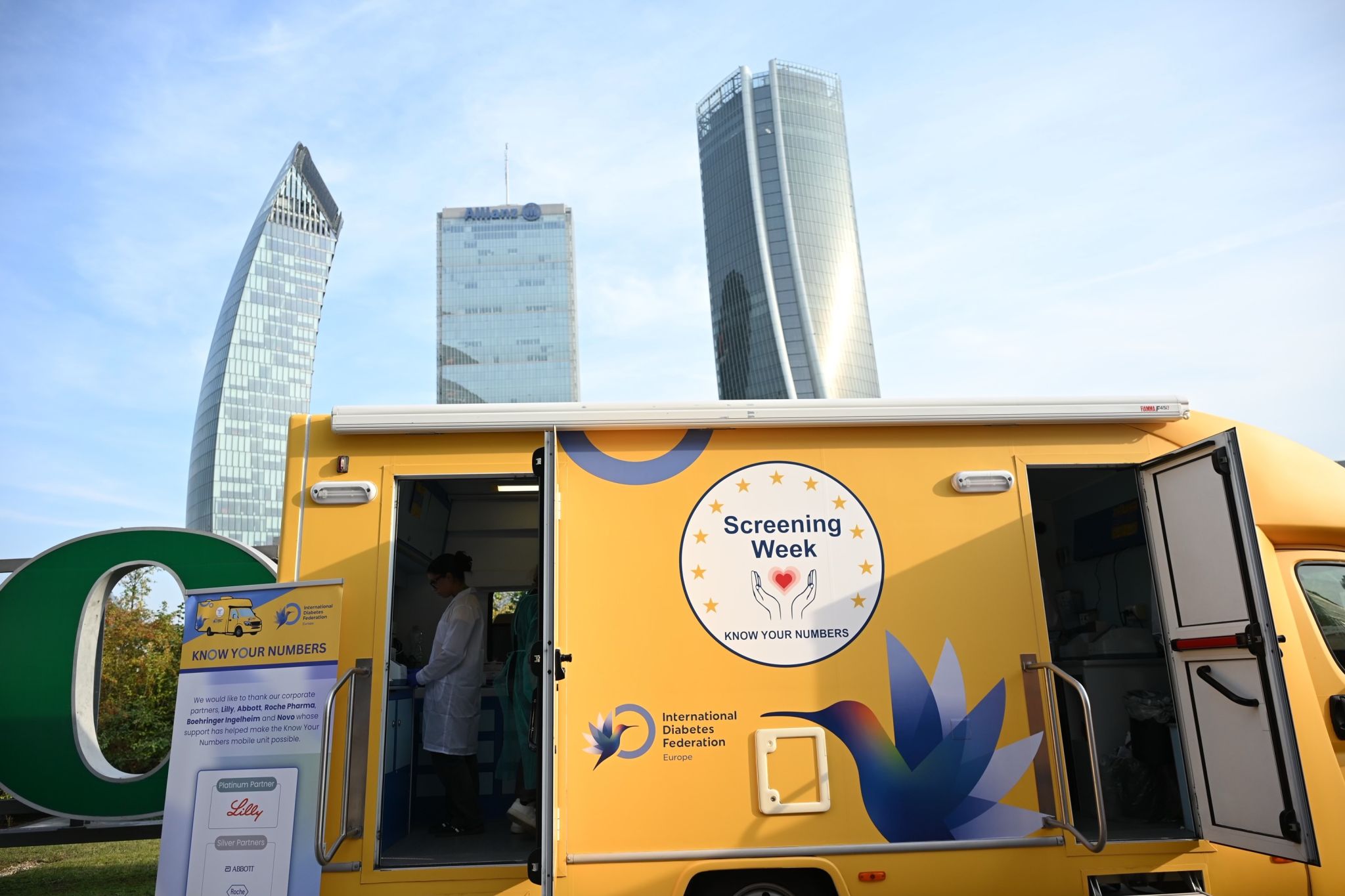
An important public-facing and professional-development discussion took place through the IDF Europe symposium, “What is the future of diabetes education in the AI era?” The session brought together people living with diabetes, healthcare professionals, educators and digital-health specialists. It examined how AI might support self-management and education while ensuring that care remains equitable, understandable and centred on the person rather than the technology.
The main message from Milan
The strongest message emerging from EASD 2026 is that diabetes treatment is entering a more complex but potentially more effective phase. New medicines may influence glucose, weight, cardiovascular risk, kidney function and liver disease simultaneously; screening may identify type 1 diabetes before symptoms appear; technology may make monitoring more continuous; and AI may support education and clinical decision-making.
But the meeting has also made clear that scientific progress alone is not enough. Researchers and clinicians must still address treatment access, affordability, adherence, unequal health systems, safe implementation and the needs of people whose lives cannot be reduced to laboratory values.
With 2,250 abstracts submitted and 1,418 accepted, EASD 2026 has presented a wide range of new evidence across diabetes research and care. The final assessment of many studies will depend on peer-reviewed publication and longer follow-up, but the direction of travel is already visible: earlier diagnosis, earlier effective treatment, broader protection from complications and a more individualised approach to diabetes care.
Source: EASD