


On October 23–24, the 10th Anniversary Congress of the Georgian Society of Cardiology was held. At the event, leading Georgian and international specialists discussed key directions in cardiology — ranging from prevention and cardiac rehabilitation to acute ischemic diseases and imaging studies.
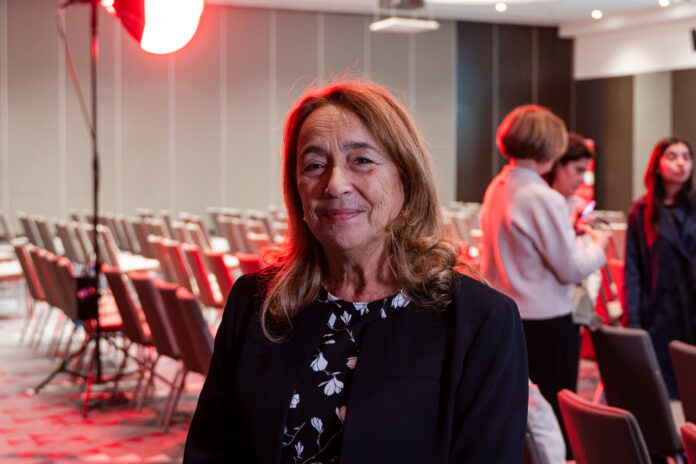
Professor Ana Abreu, former President of the European Association of Preventive Cardiology (EAPC), spoke to us about the significance of this year’s congress and the latest updates introduced in preventive cardiology and cardiac rehabilitation.
In the context of updated European guidelines on prevention and cardiac rehabilitation, what are the key innovations and major updates being presented today?
These guidelines are only cardiac rehabilitation. We will have others on prevention in 2028. It’s the first time that cardiac rehabilitation is out of prevention in the guidelines. Usually it was integrated, and this means that, finally, it was really considered very important and not only one more strategy of prevention.
First, cardiac rehabilitation is not anymore considered like an exercise intervention—it is a comprehensive strategy of secondary prevention. Because cardiac rehabilitation started by being called exercise-based cardiac rehabilitation. This was the name, exercise-based. Now it’s not exercise-based. It includes exercise, but it includes the management of risk factors like diabetes, obesity, and so on, the psychological component, the nutritional component, and the adherence component with all the pharmacology.
There is a list of components which are considered equally important as exercise, as well as education of the patient to increase health literacy. This bunch of components is dealt with by a multidisciplinary team. This is very important, not only the cardiologist or the exercise expert.
Which patient groups are now eligible for cardiac rehabilitation under these updated recommendations?
We also widen the scope for patients. It was considered an intervention for myocardial infarction patients, and now it’s for all cardiovascular disease that is considered stabilized. Only unstable patients cannot do the exercise component and the rest. So, we do it for any cardiovascular disease patient with acute or chronic disease, since that patient is stabilized and without high risk for doing the exercise.
Which specific patient populations are now prioritized for inclusion?
The third point is the inclusion of people who usually were excluded from rehabilitation and who are the ones who can benefit more. For instance, elderly people, who many times didn’t do rehabilitation—now they are the ones who should really do it. Women, many times excluded, need to be inserted in rehabilitation.
Also, people with a lot of comorbidities—for instance, obesity, cancer, or a previous stroke—people used to say: “Oh, she’s too sick.” No! If she’s stabilized, we should do her rehabilitation. Inclusion of people independently of being in a worse health state, because they will benefit from that.
What is the core objective of modern cardiac rehabilitation regarding patient outcomes?
It is centered on quality of life more than on mortality. We know already that it decreases mortality. Now what we want is not only that people do not die, we want that people feel well. We want to increase the quality of life and the functioning, physical and psychical, in life.
How do these guidelines approach personalization and program tailoring?
Another point that is very important is being centered in the patient. Meaning that we don’t have a program where a doctor says: “You are going to do this.” No! We plan with the patient, we listen to the patient—what he likes, what he doesn’t like, the preferences—and we try to create a plan adapted to the patient on a shared decision basis. It is a process personalized and centered in the patient.
Then, tailoring the program, namely the exercise—meaning that for each patient, you have a different kind of exercise program. It’s like a recipe. You can have a general structure, but for instance, if this person is too frail, with low muscle mass, you need to increase more the exercises that will increase movement and put more protein in the diet. You need to look at all the factors of the patient in order to tailor—it’s like tailoring a suit: which physical activity suits, which exercise, which nutrition, which psychological support.
What is the new expectation regarding program evaluation in these guidelines?
The evaluation of quality indicators is very important. You could do a program and continue doing programs to many patients, but now, you need to have quality indicators and make sure that your programs are really improving your patients. You need to evaluate them and see if they fit inside the quality indicators.
What is the value of holding this congress in Georgia and having direct interaction with international experts?
I think it’s very important. When you are doing an intervention, in this case rehabilitation, you need to explain how you do it to other people. Of course you can read it in the book, in the guidelines, or in a paper, but it’s completely different when you have somebody who is doing that for a certain time and who can answer your questions, your doubts, and explain some points.
One of the objectives of congresses is exactly this interaction with the speakers. The questions and answers and the discussion are even more important than the presentation, because you cannot ask a recorded presentation how do you prescribe the exercise. If I am here and somebody asks me, I can answer and facilitate the process.
While we are starting about rehabilitation in different societies and countries, at the same time we are increasing awareness for the importance of rehabilitation. All hospitals and clinics need to have it, because otherwise the patient will not be well treated. It’s an ethical problem when you know that there is something that will decrease the mortality of your patient and you don’t do it.
How has your collaboration with Georgian cardiologists developed over time?
I met some doctors from Georgia at the European Society of Cardiology Congress, and some years ago we did a cardiac rehabilitation course in Baku where there were doctors from Georgia. So we had interaction at the ESC and at the European Association of Preventive Cardiology (EAPC).
There was this need for continuation and connection, and the connection is mutual because we are also learning at the ESC how people are doing in different countries. In the EAPC, we have the Preventive Implementation Coordinators (PIC) committee, and there is a representative from Georgia. We meet at the ESC congresses to discuss cardiovascular risk, how to implement prevention and rehabilitation, and how to get better outcomes in heart failure and hypertension across different strategies.
Each country has its own culture, problems, and barriers, but some issues are transversal to all countries. For instance, women underutilize cardiac rehabilitation in all countries—even in the Nordic countries where there is theoretically more equality, women still underutilize rehabilitation compared to men. So this shared discussion is very important.
