


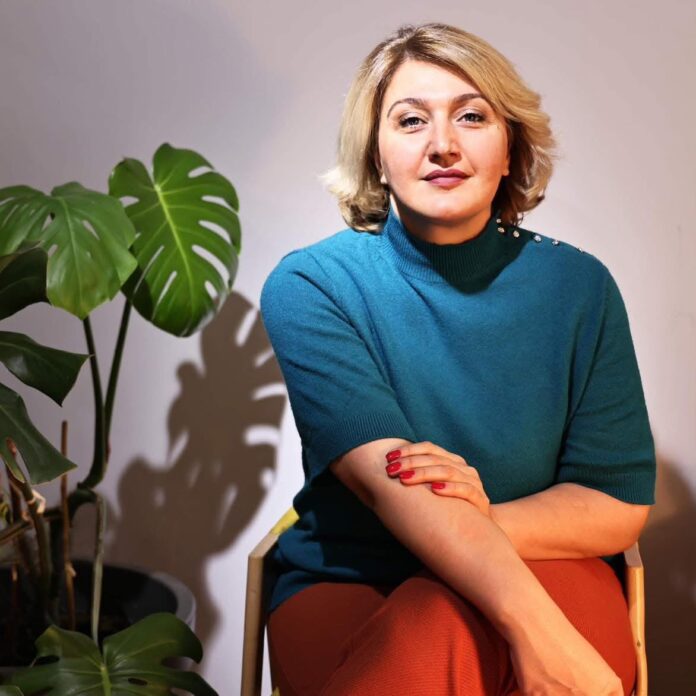
At the annual General Assembly of the European Down Syndrome Association (EDSA), a new Governing Board was elected. Among the six members of the board is Georgia’s representative, Lia Tabatadze.
Lia Tabatadze, founder of the Georgian Down Syndrome Association and newly elected board member of EDSA, spoke with us about Georgia’s success within the European structure, current challenges, and the importance of creating an accessible environment for persons with disabilities.
First of all, congratulations on this achievement. What does serving on the Governing Board of the European Down Syndrome Association mean for you and for Georgia as a whole?
Thank you very much. First and foremost, it means that the work of the Georgian Down Syndrome Association and the effort we have invested over the years have been recognized. We managed to raise awareness at the national level and create opportunities for our children’s development — so that they can live independent, fulfilled, and recognized lives. We achieved this through the joint efforts of our team, the social enterprise Babale, and the Down Syndrome Foundation — with empty hands and full hearts.
We were recognized as a strong institution with valuable experience to offer and collaborate with. This recognition began three years ago when we became a full member of the European Down Syndrome Association, and now, three years later, I have been elected to the Governing Board. There are only six members on the board, and one of them represents Georgia. Given that the Association brings together 43 organizations from more than 30 countries, this is truly a significant achievement for our organization and our country.
Especially in a context where we find ourselves distancing from the European Union on a daily basis, remaining part of this family at the organizational level is vital for us. It gives us a direct connection and an opportunity to exchange our accrued experience. My election signifies that EDSA values Georgia’s and my personal experience in working to improve the lives of people with Down syndrome across Europe.
What challenges do we currently face in Georgia in this regard, and what changes does membership in the European Down Syndrome Association bring?
Raising awareness is an ongoing process — a principle also emphasized in the UN Convention on the Rights of Persons with Disabilities. We must continuously remind society through various means that these individuals exist, have rights, and desire the same quality of life as any fully integrated member of society — recognition, independence, meaningful work, family, and education.
In Georgia, we still lack state programs specifically tailored to the unique needs of people with Down syndrome. They rely on general services where their specific requirements are often overlooked. While we often speak of tactile paving for the visually impaired or ramps for wheelchair users, people with Down syndrome need easy-to-read materials and accessible signage to navigate environments, find information, and understand it effectively. Our primary focus within the European Association will be to work on simplifying information and improving its accessibility.
When multiple organizations unite around a single goal, support grows, donors take interest, and funding opportunities emerge. Although organizations in our country currently face a complex legislative environment — making future developments hard to predict — we will do our utmost to implement the resources and benefits of the European Association here in Georgia to support the country’s development.
The EDSA General Assembly was held in Istanbul, where you were elected to the Governing Board. An international summit also took place as part of the event, where the Georgian delegation delivered several presentations. Who represented Georgia at the summit, and what were your key messages?
Alongside the General Assembly, the International Inclusive Education Summit was organized jointly by EDSA and the Down Syndrome Association of Turkey. Our association was represented at the summit by a strong delegation.
One of the speakers was Gigo Shiukashvili, co-founder of our association and the heart of our foundation. Drawing from his personal journey, he addressed the barriers and challenges surrounding inclusive education in Georgia. He highlighted the importance of lifelong learning, noting: “I am 31 years old today, but I still need education, and the state is obligated to provide the services I need to develop in my areas of interest.”
Tenth-grade student Theodora Gelashvili also delivered her very first international presentation, sharing how inclusive education is implemented in practice directly inside the classroom.
Additionally, Keti Arjevanidze, head of the education direction at the Georgian Down Syndrome Association, presented an overview of the national context — illustrating how the state system functions and how our organization responds to these challenges.
