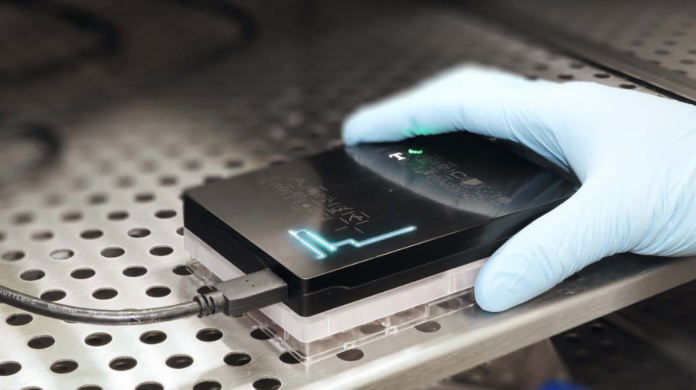
Using the Resipher system, scientists can continuously monitor how much oxygen cells consume over days or weeks (“mitochondrial respiration”) to produce energy—without having to add dyes or replace media during the process.
Monitoring is carried out via Resipher’s sensing lid. This is particularly important considering that conventional assays reflect the state of cells only at a single point in time. Continuous monitoring, by contrast, reveals gradual changes—such as how a new drug affects cellular energy over time.
Study Results:
In an experiment conducted on heart cells, the device detected a drug’s toxic effects even when the cells appeared completely healthy visually under a microscope. This effect persisted for 6 days after the drug was removed.
This monitoring method is valuable for drug safety testing, as well as for studying metabolism and various diseases.
Resipher operates across three main workflows: continuous, long-term monitoring of baseline respiration; bioenergetic profiling using electron transport chain (ETC) modulators (oligomycin, FCCP, uncouplers, rotenone/antimycin A) to measure basal respiration, ATP-linked respiration, maximal respiration, spare capacity, and coupling efficiency (the link between oxygen consumption and ATP synthesis); as well as substrate utilization studies.
Source: The scientist