


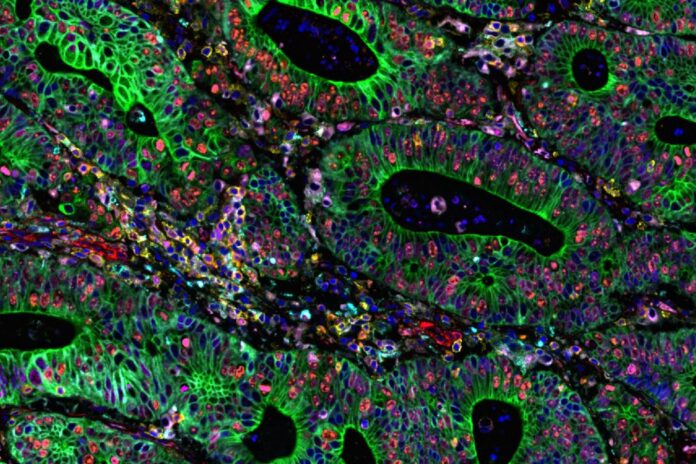
For decades, hematoxylin-eosin staining and standard immunohistochemistry have represented the gold standard of clinical pathology. Although these methods formed the foundation of modern medicine, they possess fundamental limitations when it comes to contemporary personalized medicine. Conventional immunohistochemistry is typically limited to evaluating only one or two markers per slide, which severely restricts the study of interactions between different cell populations under the conditions of limited biopsy material.
The tumor microenvironment is characterized by extreme heterogeneity, where immune cells, stroma, and tumor architecture are in constant dynamic communication. To capture the full picture of these interactions, it became necessary to develop next-generation technologies, among which multiplex immunofluorescence has taken a leading position. This method provides researchers and clinicians with the opportunity to go beyond simple morphological observation and move toward detailed molecular mapping of spatial tissue organization.
The Technological Essence of Multiplex Immunofluorescence
From a technological standpoint, multiplex immunofluorescence relies on the use of specific antibodies and fluorophores, allowing dozens of different proteins to be identified within a single fixed tissue section. Various methodologies, such as cyclic staining or spectral unmixing, eliminate the problem of signal overlap, which constituted a major challenge in the early stages of development. The result is a high-resolution digital image where each cell is characterized by its unique molecular profile.
This approach significantly increases the volume of obtained information, as a single slide allows for the simultaneous analysis of immune infiltration, cell proximity, and functional status without compromising tissue integrity. This framework is particularly important in cancer immunotherapy, where the presence of a single biomarker, such as PD-L1 expression, is not always sufficient to predict treatment efficacy. With multiplex imaging, it is possible to determine precisely how close cytotoxic T-lymphocytes are to tumor cells, which correlates directly with the patient’s therapeutic response.
Clinical Significance and Future Perspectives
The integration of this method into clinical pathology substantially improves diagnostic quality and opens new avenues for personalized therapy planning. The parallel development of digital pathology and artificial intelligence algorithms further enhances the potential of multiplex analysis, as computer programs can process the spatial coordinates and signal intensities of millions of cells in seconds. This eliminates human error and subjectivity, which often accompany traditional visual assessment.
Although the large-scale implementation of this technology still requires the refinement of standardization processes and cost optimization, its advantages are clear. Multiplex immunofluorescence serves as a bridge between fundamental science and practical medicine, promising to completely transform our understanding of the molecular architecture of diseases.
