


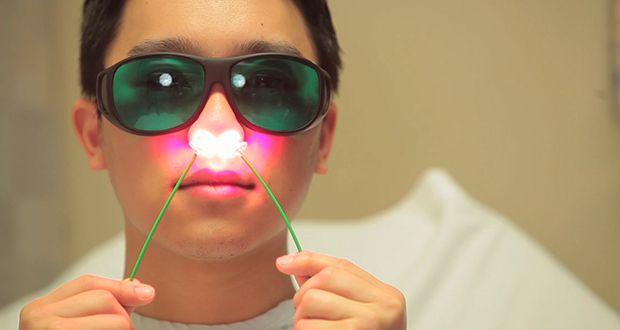
Nasal photodisinfection represents an innovative and growing approach in modern surgical practice, which has recently garnered significant attention in clinical circles. During surgical interventions, particularly complex procedures such as endoscopic transsphenoidal neurosurgical manipulations performed directly through the nasal cavity, the risk of postoperative infections remains a constant challenge. Traditional antibiotic therapy is often insufficient to fully eradicate local bacterial colonization, and it carries the inherent risk of resistance development. In this context, clinical studies published in June demonstrated that the use of specific light therapy in the preoperative period reduced surgical site infections by an impressive seventy-eight point five percent.
The working principle of this technology is based on photodynamic antimicrobial therapy, which differs completely from classical pharmacological approaches. At the beginning of the procedure, a specific light-sensitive substance, a so-called photosensitizer, is placed on the patient’s nasal mucosa, selectively binding to the cell membranes of pathogenic microorganisms. Subsequently, a small fiber-optic activator is placed in the nasal cavity, emitting low-intensity red light of a specific wavelength. Under the influence of light energy, the activated photosensitizer triggers the local generation of reactive oxygen species, specifically singlet oxygen. These highly toxic molecules instantly disrupt the cell walls of bacteria, fungi, and viruses, leading to their immediate destruction before the surgeon makes the actual incision.
One of the primary advantages of this method is that microorganisms cannot develop resistance to it, as the destruction of cellular structures occurs via physical-chemical means rather than through action on specific receptors. Furthermore, the procedure is entirely painless, does not damage healthy human tissue, and is completed in just a few minutes, right before the patient is brought into the operating suite. The pilot program conducted at Leeds Teaching Hospitals confirmed that this simple, low-cost, and non-invasive intervention drastically reduces hospital stay days and protects patients from severe complications such as meningitis or other postoperative neuroinfections.
The success of this technology lays the foundation for its much broader application in medical practice. The integration of nasal photodisinfection is possible not only in neurosurgery but also in any elective or emergency surgical intervention, including major orthopedic surgeries such as joint replacement, or cardiac surgery, where nasal colonization with Staphylococcus aureus is considered one of the primary sources of infection spread. The results of this study show that photodisinfection possesses all the prerequisites to become a global standard in infection prevention in the near future and significantly reduce the necessity of prophylactic antibiotic use.
