


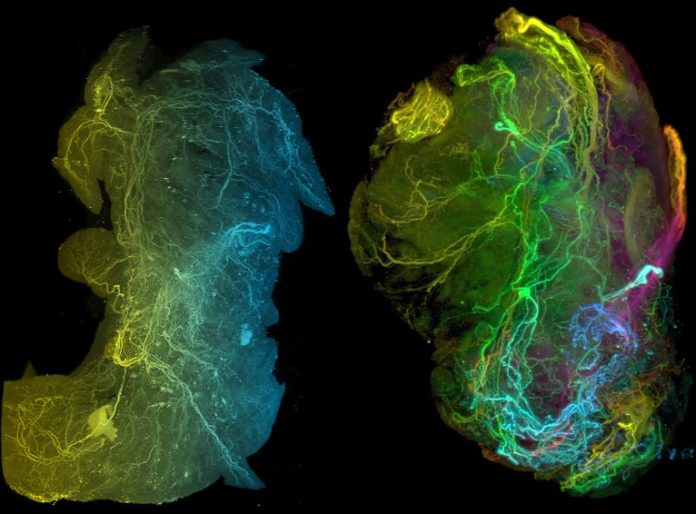
Scientists at Cold Spring Harbor Laboratory (CSHL) have discovered that the nervous system plays an active role in the development of pancreatic cancer even before the tumor is formed. While the phenomenon of “perineural invasion”—where cancer cells use nerves for metastasis—was already known, this new study shows that nerves and tumor-promoting cells called fibroblasts (specifically, myCAFs) create a kind of “vicious cycle.”
Using an innovative 3D visualization technique (whole-mount immunofluorescence), researchers observed a dense network of nerve fibers tightly clinging to and surrounding damaged areas. The study revealed the mechanism of interaction: myCAFs send signals to attract sympathetic nervous system fibers.
In response, these nerves release the neurotransmitter norepinephrine, which triggers an increase in calcium levels within the fibroblasts. This process further activates the myCAFs, promoting the growth of precancerous lesions and attracting even more nerves.
Experiments showed that breaking this connection is crucial: when scientists “deactivated” the sympathetic nervous system using a neurotoxin, fibroblast activation decreased, and tumor growth was slowed by nearly 50%. Since these processes occur at a very early stage of the disease, blocking this cycle opens up new therapeutic possibilities.
Scientists suggest that drugs already used in clinical practice (such as doxazosin) may prove effective in combination with standard chemotherapy. The next step is to find more precise ways to block this “dialogue,” offering new hope in the fight against pancreatic cancer.
