


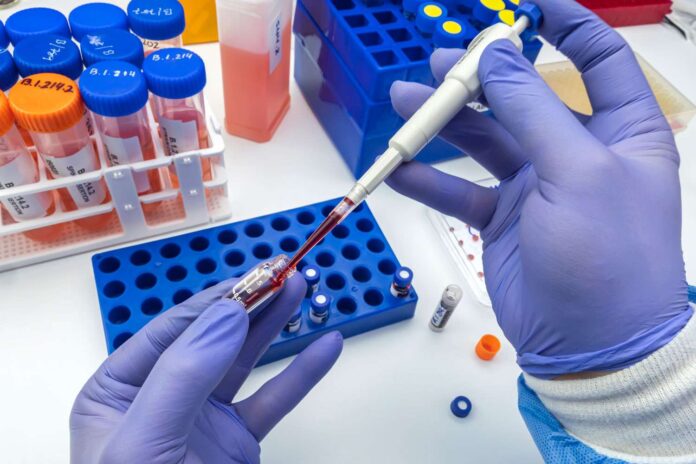
The American Cancer Society (ACS) has updated its official colorectal cancer screening guidelines, adding a blood-based test to its list of recommendations for the first time in history. The new alternative, the Shield test—developed by biotech company Guardant Health and approved by the FDA—is designed for individuals aged 45 and older at average risk for the disease who, for various reasons, completely decline traditional screening methods.
In addition to the blood test, new and much more advanced versions of stool-based laboratory tests, specifically Cologuard Plus and ColoSense, have been added to the updated list of methods. These are specialized, non-invasive tests that allow patients to conveniently collect sample specimens at home and then mail them to a laboratory. During lab analysis, these advanced technologies detect with high accuracy specific molecular markers and biomarkers directly associated with colorectal tumors.
Despite these significant updates, experts emphasize that the blood test is not a “first choice” and cannot replace a colonoscopy, which remains the unrivaled “gold standard” of diagnostics. The blood test has lower sensitivity and may miss early-stage tumors or precancerous polyps. However, specialists note that for those who refuse a colonoscopy or stool sampling due to fear, discomfort, or other barriers, this new blood test is the best opportunity to avoid missing out on screening entirely.
Expanding the scope of screening and offering more alternatives is critically important, as colorectal cancer is currently the leading cause of oncology-related deaths among individuals under the age of 50. Since the five-year survival rate exceeds 90% when the disease is detected at an early stage (Stage I and II), the primary goal of medical professionals is to avoid losing vulnerable groups who previously underwent no screening at all while waiting for the “ideal” method. Oncologists hope that these new, reality-adapted guidelines will facilitate early-stage cancer detection and, consequently, save more lives.
