


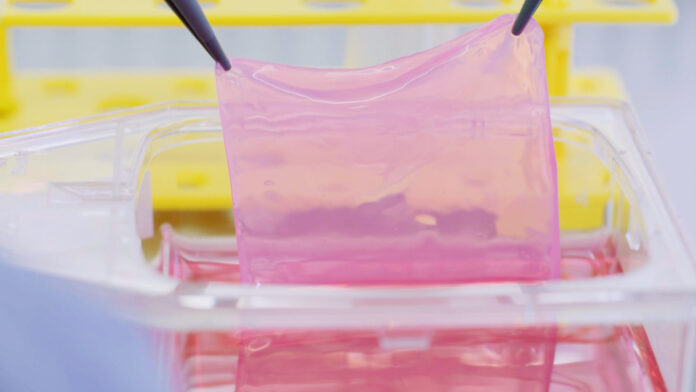
Researchers at the University of Zurich have spent 15 years striving to create biological tissue that, rather than merely covering a wound surface, becomes an organic part of the patient’s body. The result of this long-term quest is denovoSkin: a bioengineered, living transplant derived from the patient’s own cells. This technology offers comprehensive rehabilitation to those for whom severe burns have become an insurmountable physical and psychological barrier.
The traditional treatment method, autotransplantation (grafting skin taken from the patient’s healthy areas), is the only way to sustain life in critical cases. However, this method is accompanied by significant clinical complications. The primary challenges include the deficit of donor tissue and post-healing fibrous changes. The resulting thick scarring limits limb mobility. Furthermore, pathological tightness is common in children, as traditional transplants fail to maintain elasticity as the body grows.
In contrast to existing approaches, denovoSkin creates elastic tissue with a minimal risk of scarring. This personalized transplant radically improves the patient’s quality of life, as the restored skin closely approximates natural skin both functionally and aesthetically.
How is denovoSkin Created?
Within the University of Zurich clinical setting, the treatment process follows strictly defined medical standards. Once the patient’s vital signs stabilize and damaged areas are cleared of necrotic tissue, the most complex stage—skin restoration—begins. It is at this critical moment that denovoSkin technology demonstrates its advantage.
Scientists have created a bilayer biological structure from cells grown in a specialized hydrogel, consisting of an upper protective layer and a lower elastic scaffold. Clinical studies confirm that this innovative construction merges perfectly with the organism and integrates naturally into the patient’s body. Its paramount advantage is that, unlike traditional transplants, this living tissue expands in parallel with the anatomical growth of pediatric patients.
The path from laboratory research to clinical practice was long and consistent. Fundamental research beginning in the 2000s led to the first significant success in 2014, when bioengineered skin was transplanted into ten children. This successful precedent led to the founding of the company Cutiss AG, transforming a scientific initiative into a high-tech industrial platform.
Today, denovoSkin is in the decisive stage of clinical trials. As of the spring of 2025, the third phase of the study began in 20 leading medical centers across Europe, where the technology is now being tested in adult patients as well.
From a healthy skin sample roughly the size of a postage stamp, several large-scale transplants are grown under laboratory conditions within four weeks. As the project’s authors explain, the primary advantage of this method is personalization. Since the tissue is created from the patient’s own cells, the body accepts it organically, and the risk of autoimmune reaction or graft rejection is practically non-existent.
To increase production speed, automated systems are being implemented to replace labor-intensive manual work with robotic processes. Simultaneously, scientists are already working on creating next-generation grafts that will possess their own blood vessels and pigment cells. This will make the transplant even more functional and as close to natural skin as possible.
Source: University Zurich
