


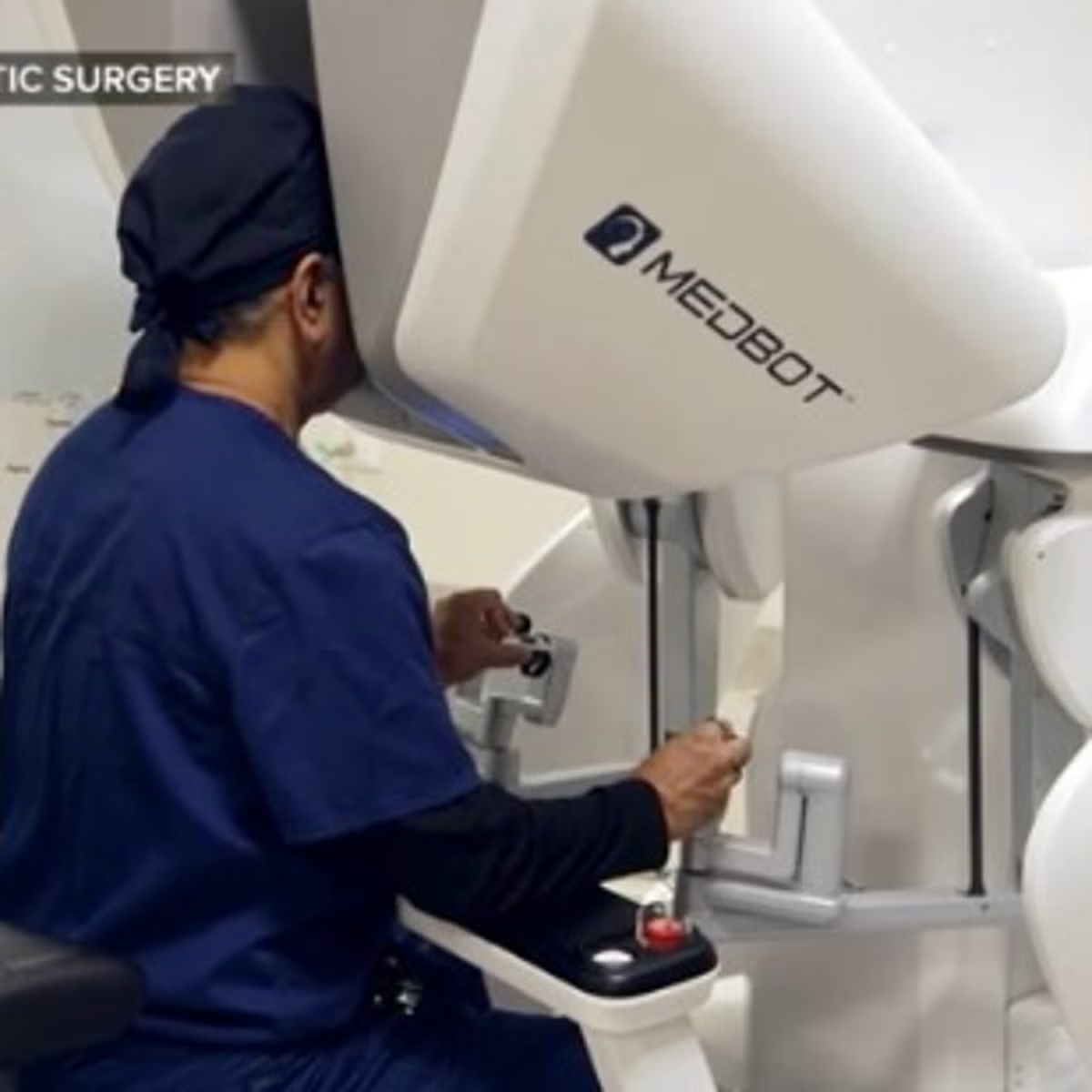
It is no secret to anyone that technological progress is providing surgery with entirely new possibilities. A unique operation performed recently has once again demonstrated just how far medical technology has advanced. For the first time in history, a British surgeon was able to perform a robotic operation while being located thousands of kilometers away from the patient.
The operation was conducted by the renowned urologist and one of the leading specialists in robotic surgery, Prokar Dasgupta. He heads the robotic surgery program at “The London Clinic.”
The uniqueness of the operation lay in the fact that the surgeon was in London, while the patient was approximately 2,400 kilometers away, somewhere on the Gibraltar peninsula. This event is a significant step in medicine, as it confirms that through the use of high-tech communication and robotic surgical systems, it is possible to perform surgery remotely, as if the surgeon were directly in the operating room. Experts assess that while such technologies were previously only written about, practical examples are becoming increasingly frequent. Such technologies will undoubtedly play an important role in the future, especially in regions where highly qualified surgeons are less accessible.
The procedure was a robot-assisted prostatectomy. Although the main part of the operation was performed remotely, a standby medical team was present in the operating room next to the patient. Their task was to monitor the patient’s condition and intervene directly in the surgical process if necessary.
How the Remote Operation Was Carried Out
The operation was made possible through a modern robotic surgical platform and a high-speed internet connection. A special fiber-optic network, backed by an additional 5G backup system, ensured nearly instantaneous data transmission.
The surgeon’s hand movements were transmitted from a control console located in London to the robot’s mechanical arms, which performed the operation inside the patient’s body. The system latency averaged 30 milliseconds, which is so minimal that performing the operation feels practically as natural to the surgeon as if they were physically present in the OR.
The robotic system was equipped with a high-definition 3D camera, allowing the surgeon to see the operative field in great detail. The robot’s instruments are much more stable and precise than the human hand—they can move with microscopic precision while simultaneously eliminating natural hand tremors.
Why This Operation is Important
This case, like other significant similar operations conducted in the recent past, is one of the most important examples in the development of telesurgery. Telesurgery refers to performing a surgical operation remotely when the surgeon and the patient are in different geographical locations.
This approach can be particularly vital for countries and regions where the specialists needed for complex operations are unavailable. Through telesurgery, it is possible for the world’s best surgeons to operate on a patient in any country without the patient having to travel. Another major advantage is that patients will no longer have to travel long distances for complex procedures or to have a preferred operator perform the surgery. They will be able to receive treatment in their own country or region, while the operation is performed remotely by a specialist who may be in another part of the world.
Future Perspectives of This Technology
Experts estimate that if telecommunication technologies and robotic systems continue to develop, such operations may become more common in the future. International medical networks could be established where clinics from different countries are connected, and complex operations are performed by the world’s best specialists.
Such a system will help reduce global healthcare inequality, as highly qualified medical assistance will become more accessible to patients living in various regions of the world. According to many, the development of robotic surgery and telesurgery represents the next great stage of surgery. If these technologies are widely implemented, it is possible that in the coming decades, remotely performed operations will become as common as laparoscopic or locally performed robotic surgeries are today.
source:
