


We often immediately associate epilepsy with convulsive seizures—a stereotype that frequently leads to these two distinct concepts being treated as synonyms. In the public eye, a seizure is confined to a single, dramatic physical presentation: involuntary, uncontrollable paroxysmal muscle contractions. The reality, however, is far more complex and unexpected.
Focal epilepsy, which originates in a strictly defined area or neural network of the brain, can manifest in paradoxical and unusual ways: involuntary speech, unprompted vocal sounds, and even the humming of musical fragments.
A new systematic review has brought together decades of clinical cases to address a key question: do these unusual semiological manifestations help clinicians localize the epileptogenic zone? The findings provide valuable clues, though no single behavior can serve as an exact standalone map of the brain. Accurately interpreting these signs requires a multimodal approach evaluated alongside video-EEG, MRI, intracranial EEG when indicated, and other clinical data.
Distinct Behaviors, Distinct Terminology
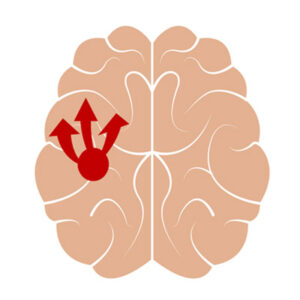
A focal seizure arises within a localized region of the brain. Its clinical manifestations—seizure semiology—depend largely on the specific brain areas and neural networks engaged during the ictal event.
The review draws clear distinctions between phenomena that may appear similar on the surface but are fundamentally different:
Verbal Automatisms: Stereotypical, repetitive words, phrases, or sentences uttered during a seizure.
Vocal Automatisms: Non-linguistic, wordless vocalizations, such as grunting, groaning, screaming, or other repetitive sounds.
Ictal Singing and Humming: Musical behaviors—such as singing or humming melodic phrases—initiated during the seizure itself.
Ictal Speech: The preservation or production of intelligible, communicative speech during a seizure. The authors emphasize that speech itself is not an automatism; it qualifies as a verbal automatism only when it becomes strictly stereotypical and perseverative.
An Important Nuance: The review strictly differentiates true vocal automatisms from secondary mechanical sounds. Sounds produced during tonic, clonic, or tonic-clonic phases, as well as those associated with ictal apnea, are not considered vocal automatisms. Cries or moans caused by forced expiration through vocal cords, mechanical airway movements, or mass muscle contraction represent entirely distinct physiological events and share nothing in common with true ictal vocalizations.
What the Review Encompassed
The authors conducted a systematic review in accordance with PRISMA guidelines. They searched PubMed and Embase databases for peer-reviewed literature with available abstracts published up to February 8, 2026. Ultimately, 44 studies were included in the qualitative and quantitative synthesis.
The evidence base was diverse, incorporating video-EEG studies, surgical cohorts, individual case reports, and case series. The authors evaluated the risk of bias (selection and detection bias) and assessed the diagnostic certainty with which each study established the epileptogenic zone.
This methodological rigor is essential because the behavior observed during a seizure does not inherently prove where the discharge began. A seizure can propagate rapidly through interconnected neural networks, and the area responsible for generating a specific behavior—the symptomatogenic zone—may not coincide with the primary epileptogenic zone where the seizure originates.
Vocal Automatisms
Vocal automatisms (groaning, screaming, grunting, etc.) were the most extensively studied phenomena in the review.
Across pooled data from five frontal lobe epilepsy (FLE) studies, the proportion of patients presenting with vocal automatisms was 41% (95% CI: 36%–47%). In eight temporal lobe epilepsy (TLE) studies, the pooled estimate was 30%(95% CI: 22%–37%).
Based on this analysis, vocal automatisms occur significantly more frequently in frontal lobe epilepsy than in temporal lobe epilepsy. However, because data among TLE cohorts showed substantial heterogeneity, these figures reflect a general clinical tendency rather than an absolute diagnostic rule for an individual patient.
What Triggers These Sounds?
Such vocalizations involve a widely distributed network responsible for laryngeal and vocal-motor control. Studies identified several implicated regions, including:
Supplementary motor area (SMA)
Cingulate cortex
Primary motor cortex
Orbitofrontal and frontopolar regions
Amygdala and hippocampus
This broad anatomical distribution underlines the primary caveat: while vocal automatisms provide a general network clue, they cannot reliably pinpoint a single, discrete cortical region.
Left versus Right Lateralization
The analysis identified a weak, non-significant trend toward vocal automatisms presenting more frequently in left-sided compared to right-sided epilepsy. However, statistical variability remains too high to draw firm lateralizing conclusions.
Practical Takeaway: Vocal automatisms may raise clinical suspicion for frontal lobe involvement, but they do not reliably establish the side of seizure onset, nor do they isolate the specific sub-lobar focus on their own.
Verbal Automatisms
Evidence regarding verbal automatisms was more limited, relying primarily on smaller cohorts and case reports that precluded broad meta-analytic pooling. Nevertheless, the available data reveal a consistent pattern:
Temporal Lobe Localization: The vast majority of reported cases were associated with temporal lobe epilepsy (present in 31 of 183 TLE patients, compared to only a single patient with frontal lobe epilepsy).
Non-Dominant Hemisphere: Right-sided lesions (typically the non-dominant hemisphere for language) were reported more frequently than left-sided lesions.
One of the most intriguing findings involves foreign-language verbal automatisms. In the described cases, patients were right-handed and had non-dominant temporal lobe epilepsy. The proposed mechanism suggests that ictal propagation disrupts native language networks in the dominant hemisphere while releasing or activating secondary linguistic representations within the non-dominant hemisphere. Given the rarity of these cases, this remains an interesting pathophysiological insight rather than a routine localizing rule.
Palilalia
The review also evaluated ictal palilalia—the involuntary, perseverative repetition of words, phrases, or sentences. In some instances, a patient initiates voluntary speech that transitions during the ictal discharge into an automatic, perseverative loop. The defining feature remains its strictly repetitive, stereotypical character rather than the speech act itself.
Singing and Humming
Ictal singing and humming are rare clinical phenomena. Because data are derived mainly from small series and single case reports, defining their precise localizing value remains challenging.
Why Is Singing a Complex Process?
Singing is a multifaceted behavior integrating pitch, rhythm, vocal motor output, and the retrieval of learned lyrical memory. These functions are distributed across an extensive bi-hemispheric musical network that includes:
Superior temporal cortex
Temporoparietal junction
Cingulate cortex
Bilateral premotor areas
Due to this widespread network representation, ictal singing offers limited standalone localizing and lateralizing value—it cannot readily isolate a specific lobe or hemisphere. The same applies to humming, which arises at the intersection of overlapping musical and vocal motor pathways.
One larger comparative study noted that humming occurred more frequently in temporal lobe seizures, whereas singing was more often linked to frontal lobe foci, particularly when involving the right prefrontal cortex. While these observations offer helpful starting hypotheses, they are not yet consistent enough to serve as independent diagnostic markers.
Challenges in Clinical Interpretation
Seizure semiology provides rich diagnostic information, but individual behaviors must be evaluated strictly in context. A specific ictal behavior may reflect:
The primary epileptogenic zone of origin.
The symptomatogenic zone activated during seizure propagation.
Release or disinhibition of a pre-existing motor or behavioral program.
Activation of an entire distributed network rather than an isolated cortical focus.
A complex interplay between ictal and interictal functional states.
Vocal automatisms clearly illustrate this complexity. They frequently emerge when seizure discharges disrupt inhibitory control within the distributed vocalization network, releasing stereotyped motor subroutines. Because multiple distinct cortical inputs can trigger this downstream network, the semiology serves as a broad network indicator rather than a pinpoint anatomical marker. A single behavior can manifest across entirely different epilepsy syndromes, and its diagnostic utility emerges only when integrated into the broader clinical picture.
Summary of Clinical Takeaways
Vocal Automatisms: Moderate-certainty evidence links them preferentially to frontal lobe epilepsy (with a weak, statistically non-significant trend toward left-sided lateralization).
Verbal Automatisms: Low-certainty evidence points primarily to temporal lobe epilepsy and non-dominant hemispheric involvement, though comprehensive datasets remain limited.
Foreign Language Automatisms: Rare, paradoxical phenomena linked in isolated reports to non-dominant temporal lobe or amygdala engagement.
Ictal Singing and Humming: Low-certainty evidence with limited standalone localizing value, reflecting the broad and bilateral cortical representation of musical networks.
Their Role in Clinical Practice
These semiological clues are most valuable during the presurgical evaluation of patients with drug-resistant focal epilepsy. They assist epileptology teams in generating localization hypotheses and planning intracranial monitoring strategies, though they can never replace objective diagnostic modalities (video-EEG, high-resolution MRI, PET/SPECT, and neuropsychological assessment).
Eyewitness descriptions or smartphone video recorded by family members can provide crucial diagnostic detail—especially when a stereotyped vocal or verbal pattern is captured. Nevertheless, the presence of humming, singing, speech, or vocalization does not independently establish a diagnosis, prove epileptogenicity, or define the resection boundary on its own; it represents one intriguing piece of a larger diagnostic mosaic.
Methodological Limitations
The conclusions of this review are constrained by the quality and design of the available literature:
Scarce and Case-Level Data: Verbal automatisms, singing, and humming are documented primarily in small case series and individual reports. While critical for identifying rare phenomena, these publications carry inherent reporting and publication biases that limit broad generalizability.
Methodological Heterogeneity: Meta-analyses demonstrated significant heterogeneity across comparisons, driven by varying inclusion criteria, terminology, classification frameworks, and localization standards among original studies.
Hemispheric Dominance Assumptions: Several included studies assumed left-sided foci to be dominant and right-sided foci to be non-dominant. While a common practical proxy, this assumption is imperfect: language and musical network lateralization vary across individuals, and hand preference alone cannot fully determine cerebral dominance.
Source: Epileptic Disorders
