


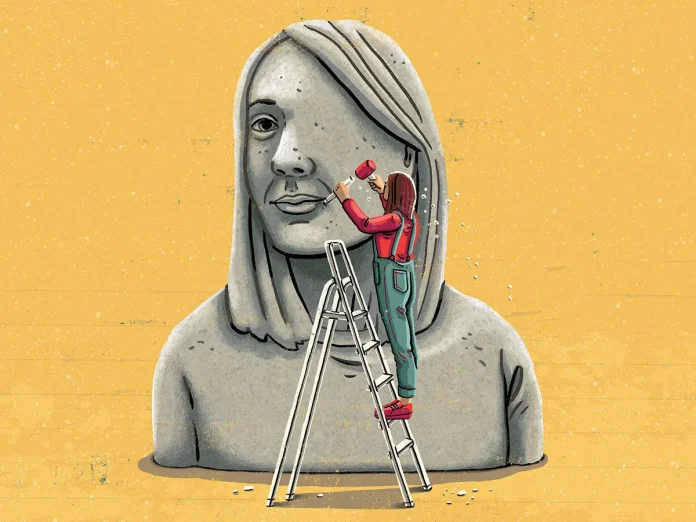
The debate over the extent to which our environment defines our personality is one of the oldest puzzles in science and philosophy. Modern research in cross-cultural psychology confirms that culture shapes not only superficial habits but also the fundamental principles of brain function and the individual’s moral compass.
Geneticists and psychologists frequently utilize twin studies to determine the heritability of various traits. This research has demonstrated that personality traits, such as extraversion, are only about 40% genetically determined, while the remaining 60% is shaped by environmental factors.
Cross-cultural psychology has established that individuals from different cultures perceive the physical world differently. For instance, Westerners tend to focus more on individual objects (analytic perception), whereas East Asians pay more attention to the overall context and the relationships between objects (holistic perception).
Brain imaging (MRI) has shown that in Westerners, the “self-reflection” center is activated only when thinking about oneself. In contrast, among Chinese participants, this same area was equally active when thinking about both themselves and their mothers.
A large-scale study in 2022 revealed a link between cultural values and personality profiles. In “tight” or disciplined cultures, such as India and Germany, individuals score higher in conscientiousness (organization). Conversely, in individualistic cultures like Canada and Norway, there are higher levels of agreeableness and openness to experience.
From a philosophical perspective, while our DNA remains unchanged, our values and mechanisms for perceiving the world would be entirely different had we been raised in a different country or social setting.
Our personality is the result of the dual influence of genetic code and social environment, where culture plays a decisive role even in shaping the brain’s operational principles. Although portions of intelligence and temperament are hereditary, environmental factors significantly determine our extraversion, organizational skills, and cognitive frameworks. This implies that if we were raised in a different society, our identity, moral compass, and even our brain’s neural pathways would be radically different.
