


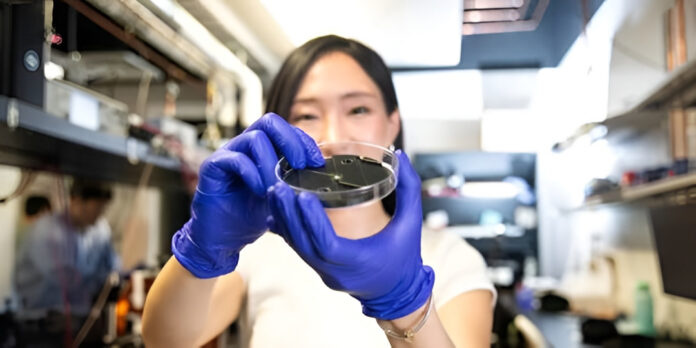
A University of Florida research team is developing a minimally invasive technology that could eventually help detect endometriosis earlier and more precisely. The project, led by electrical and computer engineering professor Laura Kim, Ph.D., has received a three-year NIH Trailblazer Award and brings together expertise in quantum sensing, biomedical engineering, and gynecology.
Addressing a persistent diagnostic gap
Endometriosis is a chronic inflammatory disease in which tissue resembling the uterine lining grows outside the uterus. It can cause pelvic pain, painful menstruation, pain during sex, infertility, and other symptoms, but its presentation varies considerably between individuals.
Diagnosis is often delayed. Symptoms may be attributed to other gynecological or gastrointestinal conditions, and current diagnostic pathways do not provide a simple, reliable, noninvasive test for early disease. In many cases, confirmation has traditionally depended on surgical visualization, usually through laparoscopy, although clinical assessment and imaging also play important roles in evaluating patients.
The UF project is designed to address this gap—not by offering a diagnostic test that is already available, but by investigating whether a new type of biological measurement can provide an earlier signal of disease.
How the technology works
Kim’s team is developing a diamond-based quantum-sensing platform capable of detecting very subtle magnetic signals at microscopic scales. The sensors are intended to measure biological signatures that are difficult to access with conventional diagnostic tools.
The technology uses the unusual sensing properties of engineered diamond. Tiny defects within the diamond can act as quantum probes, responding to changes in their surroundings and allowing researchers to detect magnetic information. Similar diamond-based sensors are being investigated for biological and cellular measurements, but the UF project will apply Kim’s technology to biomedical research—and endometriosis—in a new clinical context.
The researchers hope that signals associated with endometriosis-related tissue could eventually be measured more directly and quantitatively. At this stage, however, the project is focused on developing and evaluating the platform. It has not yet demonstrated that the sensor can diagnose endometriosis in patients or replace surgery.
A cross-disciplinary project
The research team includes Jon Dobson, Ph.D., an emeritus professor of biomedical engineering, and Amira Quevedo, M.D., an assistant professor in obstetrics and gynecology. Quevedo will serve as the primary clinical researcher, helping determine how the technology can be evaluated using tissue from participants with endometriosis and supporting recruitment through the UF Health Center of Excellence in Complex Endometriosis Care.
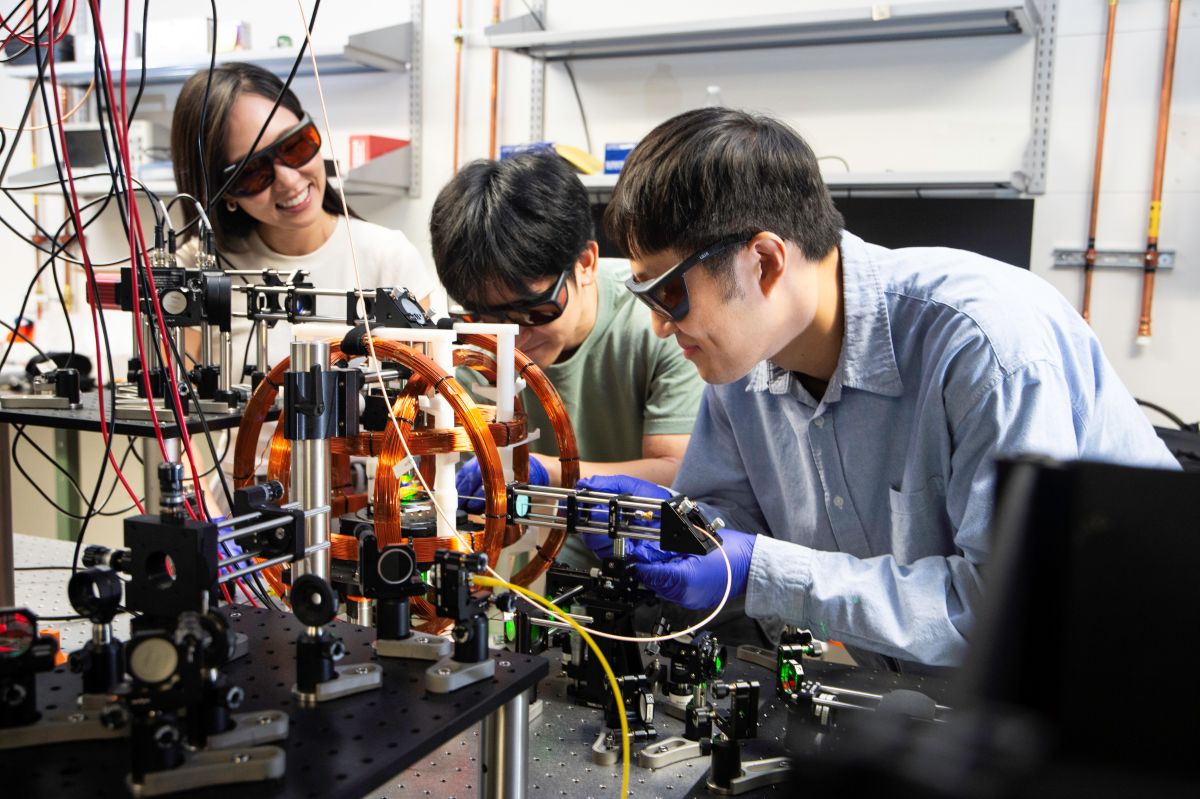
This collaboration is central to the project. Engineering expertise is needed to develop and refine the sensor, while clinical expertise is required to identify meaningful biological questions, obtain appropriate samples, and evaluate whether the technology could eventually fit into real-world gynecological care.
The researchers describe endometriosis as the first clinical application of the platform, while also seeing potential for broader use in magnetic and metabolic diagnostics in women’s health.
What earlier diagnosis could change
Earlier diagnosis could shorten the period during which patients experience symptoms without a clear explanation. It could also allow clinicians to begin appropriate treatment and monitoring sooner, potentially reducing the cumulative effects of untreated disease.
However, earlier detection would not automatically solve every challenge. Endometriosis is biologically and clinically diverse, and a useful diagnostic tool would need to distinguish disease-related signals from normal tissue variation and other causes of pelvic symptoms. It would also need to be evaluated for accuracy across different stages and forms of disease.
The project’s goal is therefore ambitious but still exploratory: to develop a platform that might support a simpler, more quantitative approach to diagnosis. The three-year NIH award will provide time to determine whether the technology can move from an engineering concept toward a clinically meaningful tool.
Source: University of Florida
