


Scientists at Michigan State University (MSU) have made a significant breakthrough in treating atrial fibrillation (AFib), an irregular and often rapid heart rhythm. After an approximately 30-year pause in developing new methods for this condition, the MSU research team has developed a novel, accurate model of human heart organoids, which allows for studying the condition and testing new therapies.
Around 60 million people worldwide suffer from AFib, yet current treatments often only combat the symptoms rather than the underlying mechanisms of the disease. Creating new medications has been challenging because, until now, there was no precise human heart model available for research.
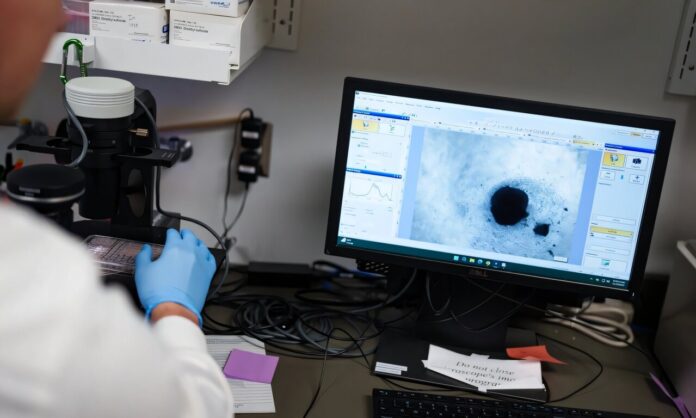
Since 2020, MSU researchers have been creating and perfecting small, working models of the human heart, known as organoids. These three-dimensional organic structures, about the size of a lentil, are so accurate that they allow researchers to study heart development, diseases, and responses to medication. Their rhythmic beating is visible even to the naked eye.
In the latest study, published in Cell, the research team was able to incorporate immune cells into the organoids. This step makes the models more physiologically accurate. They were then able to initiate an inflammatory process in the organoids, which triggered an irregular heart rhythm—mimicking atrial fibrillation.
This new model allowed scientists to directly study living human heart tissue. When an anti-inflammatory drug was introduced into the organoids with the irregular rhythm, the heart rhythm partially normalized. This confirms that inflammation is one of the key mechanisms driving the development of arrhythmias.
The model provides a platform for testing new therapies for heart diseases caused by inflammation. The researchers demonstrated that therapeutic intervention restores a normal heart rhythm. It will also help bring more, safer, and cheaper medications to the market. MSU researchers are already collaborating with pharmaceutical companies to screen compounds and ensure they won’t cause heart damage while preventing arrhythmia.
The long-term vision is to create personalized heart models from patient cells for precision medicine, with the ultimate goal being to generate heart tissues ready for transplantation.
