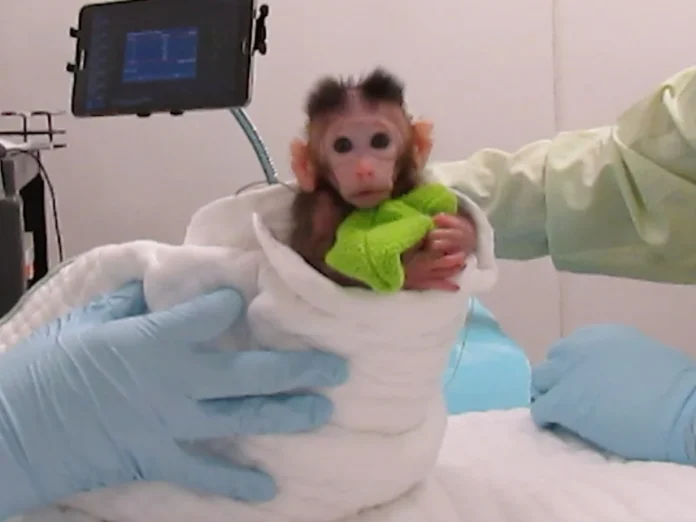
Modern medicine often remains silent about the cruelty hidden behind the closed doors of laboratories. Animal rights organization PETA has recently released unprecedented undercover footage showing disturbing experiments conducted on newborn macaques at the University of Washington in the United States. The footage reveals a reality that, according to the organization, scientists have kept secret for years.
Between 2014 and 2020, researchers injected a neurotoxin into 32 pregnant monkeys. Immediately after birth, 28 of their infants were taken away from their mothers. The footage shows the infants having their heads shaved, electrodes attached to them, and neurological tests performed. Under severe stress, the monkeys cling to blankets on metal tables and scream. After the experiments ended, the researchers killed all the animals involved. Notably, the project received $4.2 million in funding from the US government.
Experts have strongly criticized the ethics and outcomes of the research. Primatologists explain that separating infants from their mothers undermines their immune systems and psychological well-being, potentially compromising the validity of the test results from the outset. The university defends its work, arguing that the research is necessary for public health. However, these particular experiments have not led to changes in official medical treatment protocols for humans.
After completing its investigations into the effects of the toxin, the laboratory continued acquiring young monkeys and testing them for HIV and other viruses. In one experiment, 25 monkeys that had been artificially infected experienced severe suffering and weight loss, after which the researchers also dissected them.
Some scientists openly acknowledge that, because of the biological differences between humans and monkeys, such experiments rarely prove effective and fail to deliver meaningful medical breakthroughs. Today, medicine worldwide is increasingly adopting alternative, non-animal methods, including computer modeling and organs-on-chips. Nevertheless, more than 106,000 monkeys remain subjects of experimentation in American laboratories. PETA is calling for the immediate closure of research centers conducting such experiments.