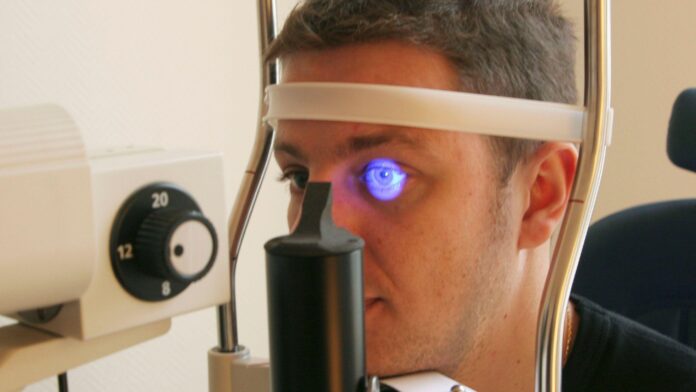
Doctors have long suspected that the eye is more than just an organ of vision and serves as a kind of mirror reflecting overall health. Now, with the help of artificial intelligence (AI), this metaphor is becoming a precise clinical tool. A major project is launching in the UK to use routine eye scans to detect diabetes and cardiovascular diseases at an early stage.
The process is simple in principle but technologically quite sophisticated. The technology will examine the tiny blood vessels and nerve tissue at the back of the eye. AI will combine this visual data with patients’ National Health Service (NHS) medical records and identify microscopic changes that can appear long before symptoms develop. In simple terms, the algorithm will detect things that are almost impossible for doctors or traditional diagnostic methods to identify.
To implement this innovative project, the Northern Ophthalmic Research and Innovation Centre (NORI), based at the University of Sunderland, has received £12.2 million in funding from the UK government. NORI is one of five new high-tech hubs established across the country to radically improve disease diagnosis.
Although the system will initially focus on diabetes and heart disease, its potential is much broader. In the future, the approach could also be expanded to assess the risks of dementia and stroke. According to Matthew Campbell, co-director of NORI, the investment will help create a new healthcare ecosystem, enabling the technology to be further developed not only locally but also introduced to international markets.
“Earlier diagnosis means better outcomes for patients and reduced pressure on the healthcare system,” said UK Science Minister Chris McDonald during his visit to the research centre.