


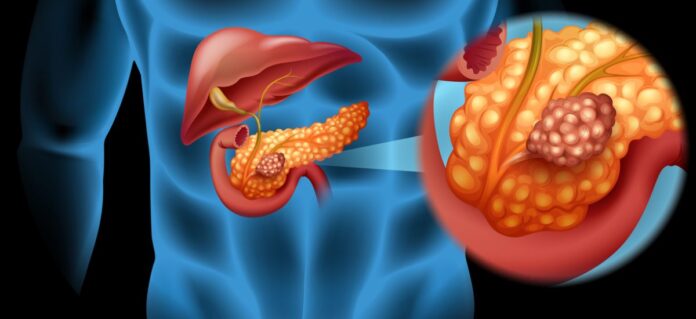
According to a new study published in the journal Cancer Cell, an experimental drug developed by scientists at the South Korean company MedPacto eliminated aggressive pancreatic tumors in mice and left behind long-lasting immune memory. The new approach breaks down the protective barrier created by tumors from within, allowing the immune system to attack cancer cells.
Many solid tumors — including pancreatic, breast, colorectal, and lung cancers — protect themselves with a dense wall of scar tissue. This barrier prevents the immune system’s killer T cells from penetrating the tumor, which is why currently available immunotherapy drugs help only a small proportion of patients with solid tumors.
The signaling molecule TGF-β plays a central role in building this protective wall and suppressing immune cells. Although inhibitors targeting this molecule already existed, they failed to deliver the desired results in clinical trials: safe doses could not block TGF-β inside tumors, while higher doses interfered with the normal functioning of healthy tissues.
The scientists developed an innovative blocker called FEBP-sTβRII, which can selectively bind to a form of the protein fibronectin that is abundant in tumors but rarely found in healthy tissue. As a result, the drug accumulates directly inside tumors, remains there for days, and does not damage healthy cells. Once the barrier is broken down, T cells can penetrate the tumor and launch a massive attack against cancer alongside neighboring immune cells.
Experiments in mice showed that, in one aggressive form of pancreatic cancer, the therapy completely eliminated tumors in 75% of the mice. Furthermore, 7 out of 8 mice were still alive 270 days after treatment ended. The drug also slowed tumor growth and lung metastasis in the most difficult-to-treat form of breast cancer — triple-negative breast cancer — where standard immunotherapy had failed.
Particularly important is the fact that the treatment left behind long-lasting immune memory in mice. Months later, mice that had recovered successfully fought off the same tumors when they were reintroduced. In some cases, they also rejected entirely new cancers, including lung and bladder tumors, that they had never encountered before. Moreover, T cells collected from recovered mice protected healthy, cancer-free mice against bladder tumors.
According to the scientists, clinical trials of a version of the drug adapted for human use are planned to begin in 2027.
