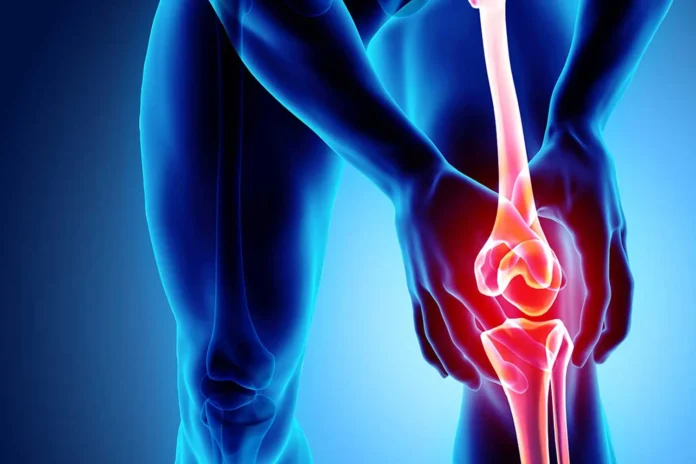
Amateur hikers, cyclists, runners, or even just physically active everyday people quite often have to deal with acute posterolateral knee pain, which is particularly intense during knee flexion and descending from heights. The cause of this condition is frequently Iliotibial Band Syndrome (IT band syndrome).
What is Iliotibial Band Syndrome?
Iliotibial Band Syndrome, often simply called IT band syndrome, is one of the most common musculoskeletal problems among active individuals. The iliotibial band is a thick, fibrous tissue that originates from the pelvic bone, runs down the outer part of the thigh, and inserts onto the tibia below the knee. Its primary function is to stabilize the knee joint during movement. When this tissue becomes overly tight or overloaded, it begins to rub against the lateral femoral epicondyle (the outer protrusion of the thigh bone), causing an acute inflammatory process and severe pain in the lateral segment of the knee.
This syndrome mainly affects athletes, runners, cyclists, and people whose physical activity requires frequent, repetitive flexion and extension of the knee joint. However, a special place in the risk group is occupied by hiking enthusiasts and mountaineers, whose bodies undergo extreme and uneven loads. The pain is often so intense that it prevents the person from moving, which creates a particular danger and discomfort while in the mountains and often becomes a reason for evacuation and, in certain cases, hospitalization.
For hikers, the main trigger for developing IT band syndrome is walking downhill. When walking uphill, the load is distributed differently, while on descending trails, with every step taken, the knee is forced to constantly stabilize the body weight in a semi-flexed position, to which the weight of the backpack is also added. It is precisely when moving in such a position, at approximately 30 degrees of flexion, that the iliotibial band is maximally stretched over the bone, which increases the intensity of friction.
Heavy equipment, gluteal muscles weakened by fatigue, and an incorrect walking gait sharply increase this load, while uneven, inclined surfaces, rocky and slippery trails push the foot toward overpronation, i.e., turning inward. This anatomical change automatically stretches the IT band and increases the risk of injury. The situation is often worsened by incorrectly selected, worn-out, or insufficiently cushioned hiking boots that fail to provide reliable foot fixation. However, the core of the problem is often overly weak glutes, which, during intense load, cannot ensure the fixation of the band when the leg is bent, as well as severely overstrained quadriceps, which pull the band toward themselves during every flexion and extension, causing intense friction on the bony protrusion.
For hiking enthusiasts, the prevention and management of this problem is critically important to avoid getting stuck in the middle of a route. First of all, it is essential to use trekking poles, which significantly reduce the pressure on the knees when walking downhill. Also, as already mentioned, great attention should be paid to the regular strengthening of the gluteal and thigh muscles outside the hiking season, because a strong muscular corset prevents incorrect biomechanical movement of the knee. While on the trail, as soon as a hiker feels slight pain in the posterolateral area of the knee, it is recommended to rest, use ice or cold water compresses, and perform a light self-massage of the affected area so that the pain does not turn into a chronic phase.
According to the recommendations of experienced hikers, to achieve temporary relief during pain, along with rest, it is necessary to solve the main cause of the problem at least a little. Therefore, a strong and deep massage of the tired and overstrained glutes, especially the gluteus medius, is recommended. This action relaxes the band itself and contributes to its fixation to some extent.
Treatment of the Condition
Treatment of IT band syndrome requires a complex approach, and its main goal is to suppress the inflammatory process, alleviate pain, and eliminate the biomechanical causes that triggered this problem. Since the knee experiences constant and intense load during hiking, the treatment process should begin in phases, where the first step is managing acute symptoms, and the subsequent stages serve to prepare the body for future loads.
In the acute phase, when the pain has just started and limits movement, the basis of treatment consists of active rest and unloading the affected leg. This does not mean complete immobility, but rather the temporary cessation of activities that increase pain, such as running, cycling, and hiking, especially on downhill terrain. To reduce inflammation, applying ice compresses to the outer side of the knee several times a day for 15–20 minutes is effective. If necessary, and upon a doctor’s recommendation, non-steroidal anti-inflammatory drugs (NSAIDs) are prescribed in the form of both tablets and topical ointments, which helps to subside swelling in the tissues.
Once the primary acute pain subsides, the main part of the treatment shifts to physiotherapy and kinesiotherapy. People often mistakenly think that the main cause of the problem is the stretching of the iliotibial band itself; however, this tissue is very tough, and its actual “stretching” is almost impossible. The real solution lies in the relaxation of the muscles that connect to this band, specifically in the area of the tensor fasciae latae muscle and the gluteal muscle. For this purpose, using a special massage roller (Foam Roller) is ideal, as it can help relax tight myofascial tissues and improve blood circulation.
The most important and long-term stage of treatment is correcting muscle imbalance. Overloading of the IT band is mostly caused by the weakness of the gluteus medius muscle. When this muscle is weak, the pelvis loses stability during walking or descending a hill, the thigh bone rotates inward, and the iliotibial tract is forced to take excess load upon itself. Therefore, therapeutic exercises are aimed at strengthening the gluteal muscles, hip rotators, and abdominal abs. A stable pelvis and a strong core directly reduce friction in the knee joint.
In addition to physical rehabilitation, great attention in the treatment process is paid to the correction of equipment and walking style. Orthotic insoles or special hiking shoes that prevent the foot from turning inward (overpronation) significantly relieve tension on the leg. Returning to the trail should happen gradually and not immediately after the disappearance of the pain, starting with short and simple routes where the use of trekking poles must become a mandatory rule, so that the knee is given the opportunity for full recovery and adaptation to new loads.