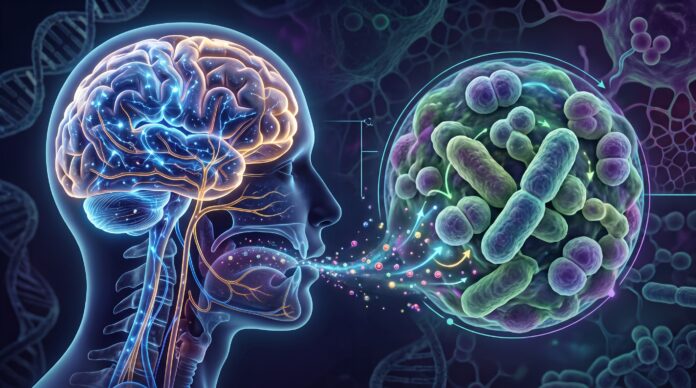
Speed of thinking and cognitive efficiency depend on many factors, including neural connections in the brain and the volume of gray matter. However, according to a new study, the oral microbiome (an ecosystem of microorganisms) may also play a role in this process. A team of scientists from the University of Exeter identified a link between the bacterial composition on the tongue and cognitive functions in people of different ages.
Existing data in the medical literature previously linked the correlation between oral health and brain function primarily to two distinct mechanisms — chronic inflammation and processes related to vascular regulation and metabolism.
Poor oral hygiene and periodontitis (gum disease) are known to trigger systemic, low-grade inflammation in the body, which contributes to the development of neuroinflammatory processes and cognitive decline. At the same time, previous studies have shown that nitrates obtained from plant foods can improve cerebral blood flow and have a positive effect on cognitive performance.
Based on these two known phenomena, British researchers wanted to determine whether there was a direct physiological link combining these processes — specifically, whether specific nitrate-reducing bacteria on the surface of the tongue affect the efficiency of brain function.
How are oral bacteria linked to brain blood circulation?
The basis of the study is the enterosalivary nitrate-nitrite-nitric oxide pathway, which provides a link between oral bacteria and the brain’s blood supply.
Upon consuming nitrate-rich foods (such as beetroot or leafy greens), nitrates are absorbed from the gastrointestinal tract, enter the bloodstream, and accumulate in the salivary glands, from where they are secreted back into the oral cavity along with saliva.
Since the human body lacks sufficient enzymes to convert nitrates into nitrites, it relies on symbiotic bacteria present on the tongue’s surface (Neisseria, Veillonella, Prevotella, and others). Nitrates secreted into the mouth are converted into nitrites by these microbes.
Swallowed nitrites are converted into nitric oxide — a potent vasodilator — in the acidic environment of the stomach and in the systemic circulation. Nitric oxide relaxes vascular smooth muscles, dilates them, and increases blood flow to the brain (cerebral perfusion), which is particularly important for maintaining oxygenation and cognitive functions in an aging body.
Study Design and Geographic Aspect
To test the direct link between oral bacteria and cognitive abilities, scientists studied two groups in Exeter (UK) and Brussels (Belgium) — 15 young and 15 older volunteers in each city. The purpose of expanding the geographic area was to determine whether these links represented a universal biological pattern or a local characteristic.
Participants underwent 10 different tests measuring memory, information processing speed, and concentration. Additionally, scientists collected samples from the tongue surface, blood, and saliva, measured participants’ blood pressure, and studied the composition of microorganisms in the tongue samples using DNA sequencing methods.
Key Findings and Geographic Differences
According to the study results published in the journal PLOS ONE, several significant patterns emerged:
Prevotella histicola: In both countries, participants who exhibited higher levels of this bacterium in the mouth demonstrated faster reaction times when performing cognitive tasks.
Haemophilus parainfluenzae: Results associated with this bacterium varied between countries. In the UK, high levels were associated with faster reactions in reasoning and spatial perception tasks, but slower reactions in emotion recognition. In Belgium, high levels of the bacterium were linked to faster reaction times in visual memory tasks and better performance in working memory tests.
Neisseria flavescens and Age-Related Changes: The nitrate-converting bacterium Neisseria flavescens was found in greater abundance in younger participants, although its levels were not directly linked to cognitive test results. In older participants, levels of certain bacteria associated with gum disease, including Treponema and Tannerella, were higher.
Additionally, older participants in both countries scored lower in information processing speed and certain memory tests.
Redundancy analysis (RDA — a statistical method that assesses how much specific factors explain the variability in data) showed that geographic location was one of the factors associated with differences in oral microbial composition.
What Could Account for Geographic Differences?
According to the authors, several complex factors potentially drive these differences in bacterial composition among residents of different countries — including diet, genetics, ethnicity, environmental conditions, and lifestyle.
In this context, a nitrate-rich diet may play a role, as it can affect the composition and metabolic activity of oral bacteria. However, the authors point out a limitation of the study: participants’ dietary factors were not fully controlled during the experiment. Furthermore, because the study had a relatively small sample size (60 participants in total), the researchers note that larger-scale studies are needed to confirm the identified geographic patterns.
The authors note that despite geographic differences, the study revealed a link between certain oral bacteria and brain functions. However, because the connection varies at the level of specific bacteria, the findings remain exploratory. In the future, when developing therapeutic or dietary recommendations based on the oral microbiome, considering the population-geographic context will be essential.