


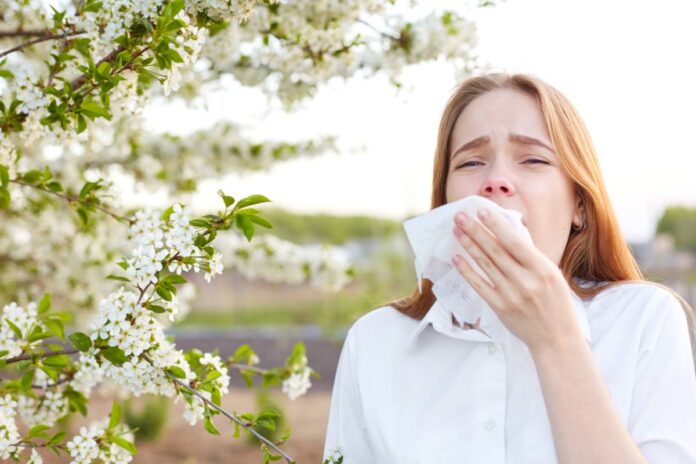
For many people, allergies are a seasonal issue. Spring arrives, plants begin to bloom, and with them come sneezing, nasal congestion, itchy eyes, and other familiar symptoms. Then the season ends, and the problem gradually subsides.
Now, alongside climate change, this well-known calendar may also be shifting.
Rising temperatures affect when plants start to bloom, how long the pollen season lasts, and, in some cases, how much pollen they produce. Add air pollution into the equation, and the resulting picture becomes quite complex.
It is not simply that “warmer weather means more allergies.” Climate change influences several processes simultaneously, and it is their combined impact that can be significant for individuals with allergies and asthma.
The Allergy Calendar May Shift
For a plant, the date on a calendar means nothing. Its development depends on environmental conditions: temperature, precipitation, day length, and other variables.
If the necessary temperatures arrive earlier in spring, certain plants may also begin blooming earlier. A warmer autumn, in turn, can prolong the pollen season for other species.
This is no longer merely a hypothesis. Studies conducted in various regions worldwide demonstrate that pollen seasons are already shifting. In some instances, the season begins earlier; in others, it lasts longer; and for certain plants, the volume of pollen released into the air is also rising.
There is an important caveat here: not all plants and regions respond in the same way. It would be inaccurate to claim that climate change will invariably prolong the allergy season everywhere. The specific plant species, local climate, precipitation patterns, and numerous other factors all play a role.
Yet the overall trend remains clear: climate change affects plant phenological cycles, and as a result, it can alter when and for how long people encounter airborne allergens.
It Is Not Just About Temperature
Another critical factor enters the picture: carbon dioxide.
$\text{CO}_2$ is primarily thought of as a greenhouse gas, but for plants, it is also a fundamental resource for photosynthesis. Consequently, elevated atmospheric concentrations can stimulate plant growth and heighten pollen production.
Experimental and field studies indicate that the combination of elevated temperatures and increased $\text{CO}_2$ levels enables certain allergenic plants to generate more pollen. Some research also suggests that changing environmental conditions can alter the allergenic potency of the pollen itself.
The issue, therefore, extends beyond the duration of the season. The total pollen load may change, and in some cases, the intensity of the reaction triggered by a specific allergen may intensify as well.
Climate change can also shift plant distribution ranges. If climatic conditions in a particular region become more favorable for a given species, it may expand into areas where it was previously rare.
In other words, over time, not only the allergy calendar may change, but its geography as well.
Compounded by Air Pollution
Consider two days with comparable pollen concentrations in the air. On the first day, people breathe relatively clean air; on the second, the pollen is accompanied by fine particulate matter, nitrogen dioxide, ground-level ozone, and other pollutants.
For the respiratory system, these two scenarios are markedly different.
Air pollutants can compromise the protective barrier of the respiratory tract, elevate oxidative stress, and amplify inflammatory responses. Simply put, airways can become more irritated and vulnerable.
A polluted environment can also directly affect the pollen grains themselves. Studies show that ozone, nitrogen oxides, and particulate matter can, under certain conditions, alter pollen morphology and enhance its allergenic properties.
Allergens and air pollution are therefore not two isolated problems. In many instances, their concurrent exposure can intensify allergic reactions.
For Asthma, the Problem Is Even More Critical
The link between air pollution and asthma is well established.
Particulate matter, nitrogen dioxide, ozone, and other pollutants are closely tied to the exacerbation of asthma symptoms. They can heighten airway inflammation and trigger acute episodes.
The scientific literature extends beyond the aggravation of pre-existing conditions. Long-term exposure to certain ambient pollutants—particularly during childhood—is also associated with a higher risk of developing asthma in the first place.
Here, nuance is essential. On an individual level, one cannot attribute asthma solely to polluted air. Asthma is a multifactorial disease governed by a complex interplay of genetic predispositions and environmental exposures.
At the population level, however, air pollution remains one of the primary environmental risk factors for the disease.
Does This Mean Everyone Will Face More Severe Allergies in the Future?
No. Science does not offer such a simplistic answer.
The prevalence of allergic diseases is shaped by genetics, lifestyle, living environment, air quality, childhood microbial exposure, and numerous other variables.
One cannot draw a linear conclusion: the planet warmed, therefore more people developed allergies.
What can be stated with certainty is that climate change is restructuring the human relationship with allergens. People may encounter them earlier, for longer durations, and potentially in higher concentrations.
When coupled with poor air quality, the environment can become significantly more burdensome for individuals living with allergies and asthma.
What About Georgia?
Here, an even more measured perspective is required.
In several countries, pollen levels and seasonal trends have been monitored for decades. Such longitudinal datasets make it possible to trace shifts in blooming periods and evaluate their correlation with temperature and environmental variations.
In Georgia, long-term observational data on pollen seasonality remain comparatively limited. Caution is therefore warranted when extrapolating findings from other regions directly to the local context.
Local flora, microclimates, precipitation, air quality, and regional geography all matter. For this reason, long-term monitoring of airborne pollen and ambient air quality is not merely an ecological endeavor—it is a vital public health priority.
Allergies Are Not Confined to Spring
When discussing climate change, thoughts typically turn to extreme heat, melting glaciers, or rising sea levels. Some of its impacts on human health are far more insidious.
A bloom starting a few days earlier might appear inconsequential. A pollen season extended by a few weeks may seem like a subtle shift.
For someone living with allergies, however, those extra days or weeks translate into prolonged sneezing, nasal congestion, and ocular irritation. For individuals with asthma, such environmental alterations can carry far more severe consequences.
Climate change does not create new allergens. Rather, it transforms the conditions under which people encounter existing ones: when they emerge, how long they linger in the atmosphere, in what volumes they circulate, and what other pollutants are inhaled alongside them.
At first glance, these may seem like minor adjustments. Taken together, they have the power to reshape the allergy season entirely.
