


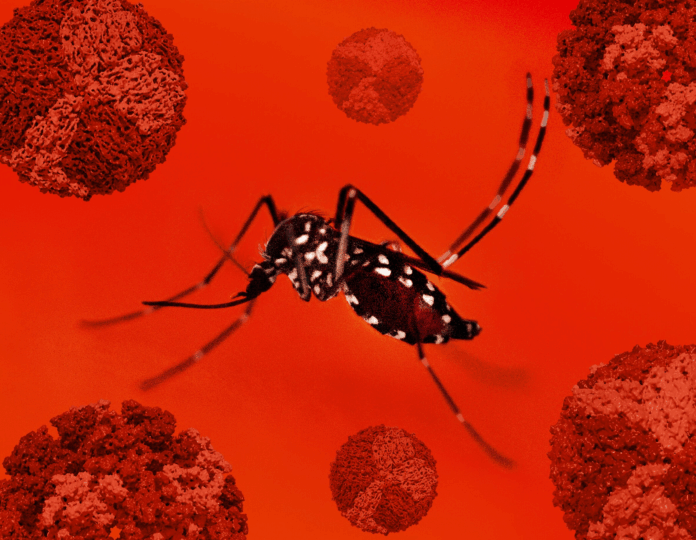
The recent sharp increase in cases of Chikungunya virus (CHIKV) infection, particularly in the Americas, has raised concerns at the World Health Organization (WHO). The WHO states that the risk of the virus spreading globally is high, and this could pose a significant threat to public health worldwide. The virus is spread by mosquitos, raising the risk that it could become another global challenge—especially under conditions of climate change, which facilitates the spread of its vectors to new geographical areas.
What is Chikungunya and How Does it Spread?
Chikungunya is a viral infection caused by the Chikungunya virus (CHIKV). This virus belongs to the Alphavirus genus and is transmitted to humans through the bite of an infected mosquito.
The disease’s name comes from the language of the Makonde people of Tanzania and means, “that which bends up.” This name directly refers to the main symptom characteristic of the virus: severe and debilitating joint pain that often forces patients to stoop. The virus was first documented in Tanzania, East Africa, in 1952.
Chikungunya – A Global Threat and WHO’s Call to Action
Historically, Chikungunya was endemic to regions in Africa, Asia, and the Indian subcontinent. However, in recent decades, its range has expanded significantly, reaching Europe and especially the American continent. Chikungunya is not a widely known disease, yet cases have been reported in 119 countries, posing a serious threat to the health of at least 5.6 billion people. According to Diana Rojas Alvarez of the WHO, this data clearly shows the disease’s global scale and its rapidly increasing spread. In 2023, the Americas saw an unprecedented rise in cases, which became a cause for alarm for the WHO.
The World Health Organization is urging countries to actively monitor the virus’s spread, prepare their healthcare systems for potential epidemics, and take effective measures to control mosquito populations.
Symptoms and Their Impact on Patient Quality of Life
The incubation period for Chikungunya is typically 3 to 7 days. Most infected individuals develop symptoms, though the disease can also be asymptomatic.
Typical symptoms, which develop rapidly, include:
Sudden fever: Temperatures often reach above 39°C (102.2°F).
Severe joint pain: This is the most characteristic and debilitating sign of the disease, which can last for weeks, months, or even years, causing chronic pain and limited mobility.
Muscle pain.
Intense headaches.
Nausea and vomiting.
Severe fatigue.
Skin rash (often maculopapular).
While Chikungunya is rarely fatal, it significantly degrades patients’ quality of life. Severe complications can include neurological damage (such as encephalitis), as well as serious cardiovascular and eye problems.
Treatment Methods and the Importance of Prevention
Currently, there is no specific antiviral drug or approved vaccine to treat Chikungunya virus. Treatment is primarily symptomatic and includes the use of painkillers and fever reducers, as well as rest and hydration to prevent dehydration.
Prevention is especially important, as it is the only effective way to halt the virus’s spread. Preventive measures are mainly focused on mosquito control and protection from bites.
The global spread of the Chikungunya virus indicates that this disease is a serious public health challenge. The situation is further exacerbated by climate change and increased global mobility.
Sources:
World Health Organization (WHO). (n.d.). Chikungunya – Fact Sheets.
ScienceAlert. Outbreak of Chikungunya Virus Poses Global Risk, Warns WHO.
