


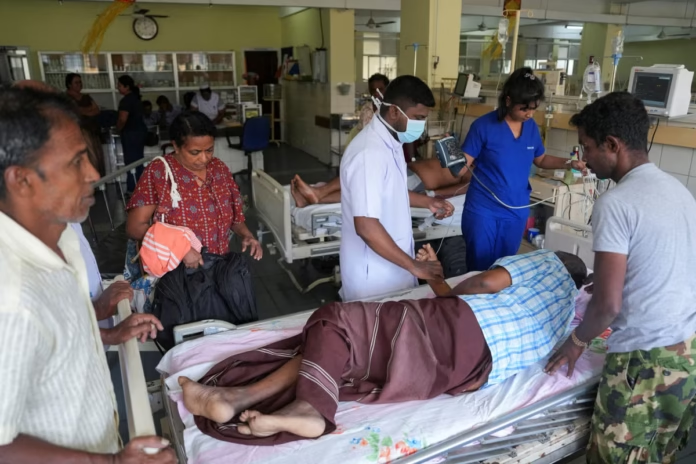
Sri Lanka is battling its largest dengue epidemic of the last decade. This year, the virus has already infected over 77,000 people and claimed 56 lives. To manage the crisis and assist the overwhelmed healthcare system, the country’s government has taken an innovative approach and started using military drones to locate mosquito breeding grounds.
The drones’ main targets are stagnant water accumulated on building roofs and construction sites, which serves as an ideal incubator for the disease-carrying Aedes mosquitoes. The epidemiological outbreak was largely triggered by a cyclone that occurred in December of last year. As part of a special operation, with the help of drones, up to 11,000 potential breeding sites have already been destroyed.
According to experts, the fight against the dengue virus is significantly complicated by the lack of a universal vaccine. The virus exists in four different strains, and recovering from one does not protect a person from the other strains. Furthermore, in the event of reinfection, the disease takes a much more severe and potentially lethal form. Since there is no specific medical treatment, the primary weapons for medics are symptomatic treatment and hospital monitoring.
Although dengue is traditionally characteristic of tropical climates, climate change and global warming are rapidly expanding the geography of the disease. According to World Health Organization (WHO) data, the number of infections has grown from 500,000 recorded cases in 2000 to 14.4 million in 2024. The disease-carrying mosquitoes are now appearing in Europe and the Mediterranean regions, indicating that dengue is becoming not just a local, but a major global healthcare challenge.
