


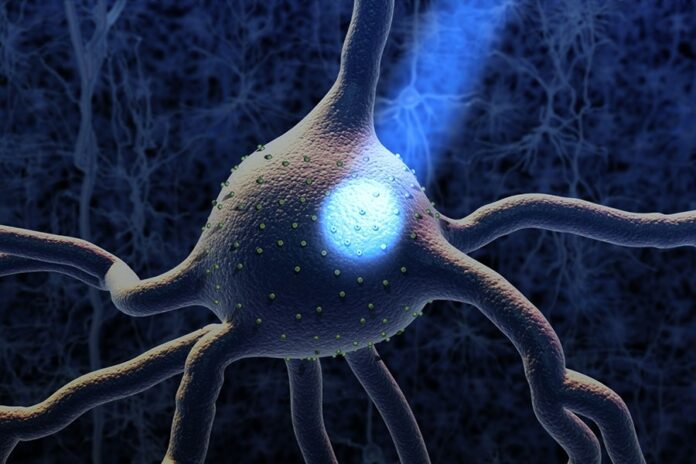
Cardiovascular diseases remain one of the leading causes of mortality in the modern world. The most frequent trigger for sudden cardiac death is the disruption of the heart’s normal, periodic sinus rhythm. The emergence of anomalous, high-frequency electrical foci in the heart causes cardiac arrhythmia, as a result of which the heart can no longer perform its vital function of pumping blood. In this regard, atrial fibrillation is particularly widespread, posing a threat to the health of millions of people. Although traditional methods, such as radiofrequency ablation, medication therapy, and high-voltage electrical defibrillation, effectively combat this condition, they are accompanied by serious drawbacks. Electrical shock is extremely painful and often damages healthy myocardium and surrounding tissues. This is precisely why a revolutionary direction has emerged at the crossroads of medical and engineering sciences — optogenetics, which offers the management and defibrillation of arrhythmias not with painful electrical impulses, but with painless, targeted light therapy.
From a biological standpoint, communication between cells in multicellular organisms relies on three main systems, which are chemical, mechanical, and electrical synapses. The electrical synapse, which is the foundation of heart function, ensures the fastest propagation of impulses between neighboring cells through specialized protein complexes called connexins. Traditional pacemakers act precisely on this electrical network. However, another information channel exists in natural evolution — optical signals. Although intercellular optical synapses are not found in animal organisms, scientists have managed to artificially rectify this deficiency. Optogenetics is a discipline that combines optics and genetic engineering to manage the functioning of living cells through light-sensitive proteins.
In order to make heart muscle cells — cardiomyocytes — sensitive to light, genes encoding special light-sensitive proteins called opsins are introduced into them through genetic manipulation. These proteins naturally occur in certain photosensitive bacteria, algae, and the retina of the animal eye. The most well-studied protein in optogenetics is Channelrhodopsin (Channelrhodopsin-2 or ChR2), which is activated by blue light. When blue light hits a cardiomyocyte modified with this protein, the channels in the cell membrane open instantaneously and positive ions begin to enter the inside of the cell. This process causes depolarization and excitation of the cell, which forms the basis of artificial optical stimulation of the heart. In addition, scientists have discovered and developed other opsins, such as halorhodopsin, which pumps chloride ions into the cell in response to yellow light and, conversely, suppresses the cell’s electrical activity.
One of the greatest challenges in implementing optogenetics in cardiology practice was the low penetration rate of light waves into tissue. Blue light scatters quickly and cannot reach the deep layers of the heart muscle. To solve this problem, genetic engineering created new variants of opsins, such as proteins sensitive to red light (for example, ReaChR and ChRimson). Since red light has a much longer wavelength, it can pass through much thicker biological barriers, making painless stimulation of deep heart structures and effective termination of fibrillation possible.
Experiments conducted at the laboratory level have shown that during atrial fibrillation, when the atria of the heart contract chaotically and inefficiently, a targeted pulse of light can achieve immediate and complete normalization of the rhythm. A traditional defibrillator passes a powerful electrical charge through the entire heart, which is associated with unbearable pain for the patient and chest muscle spasms. With the optogenetic approach, however, only specific, light-sensitive cells are gently activated, which is absolutely unnoticeable and painless for the patient. Researchers at Imperial College and other leading institutions have confirmed that this approach significantly reduces the risk of side effects and eliminates thermal or electrical damage to tissues.
From a technological standpoint, the development of flexible and biocompatible microelectronics was critically important for the realization of this method. Scientists at the University of Arizona and Northwestern University created innovative, fully implantable optoelectronic devices. These are soft, elastic meshes that directly wrap around the surface of the heart (epicardium) and perfectly adapt to the continuous pulsation and shape changes of the organ. These devices are equipped with microscopic light-emitting diodes (LEDs) and operate on the principle of wireless power transmission, which eliminates the need to implant heavy and bulky batteries into the body. Sensors integrated into the mesh monitor the heart’s electrical signals in real time. Upon detecting an anomalous rhythm, the internal microprocessor activates an optical impulse that eliminates the arrhythmia focus within seconds. Tests on rodents have shown that such bio-integrated systems work effectively in freely moving, awake animals without causing any discomfort.
Along with optogenetics, scientists are actively exploring photodynamic therapy as an alternative light-based tool. While optogenetics aims at temporary modulation of cell function, photodynamic therapy is used for permanent blocking (ablation) of pathological electrical pathways in the heart. By introducing special light-sensitive molecules into cells and subsequent targeted laser irradiation, it is possible to safely destroy only those specific cells that contribute to the spread of arrhythmia. This approach is far more precise than traditional catheter ablation.
Despite these fantastic prospects, scientists must overcome several serious barriers before this therapy can be fully implemented in clinical practice. The first and foremost is the safety of genetic engineering, since introducing foreign genes into the human heart and achieving long-term, stable expression of opsins requires the utmost caution. It is also essential to guarantee that light-sensitive proteins do not cause a toxic reaction or immune response over time. Nevertheless, the pace of technological development is promising. Cardiac optogenetics is moving beyond the boundaries of simple laboratory experiments and laying the foundation for the medicine of the future, where the most severe heart diseases will be cured with strictly controlled, painless, and high-tech beams of light.
