


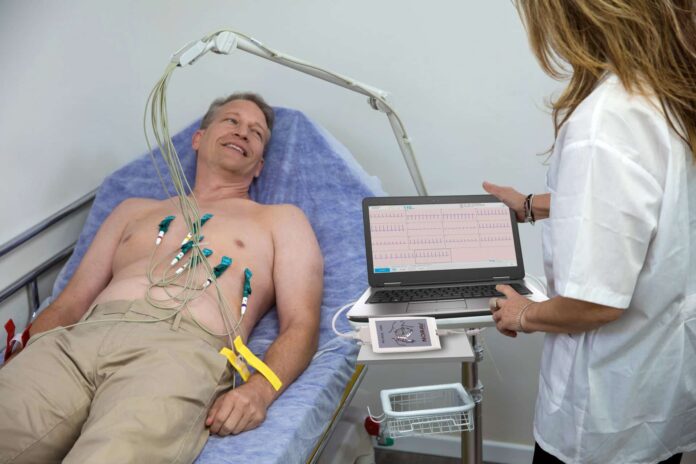
In modern clinical medicine, the integration of artificial intelligence (AI) is increasingly becoming a deciding factor in diagnosing pathologies that remain undetected by traditional methods. A clear example of this is a case where a patient was treated for asthma over a long period, but a cutting-edge algorithm detected a serious heart condition during an electrocardiogram (ECG) analysis.
Research shows that AI programs possess a unique capability to detect microscopic patterns in ECG waveforms that are virtually impossible for the human eye to identify. A crucial breakthrough in this direction is happening right now: one such advanced program is becoming universally and completely freely accessible to doctors.
The clinical potential of this technology has become even more evident against the backdrop of a recent study published in Nature Medicine. The authors describe a sensational case where AI diagnostics led a patient to a heart transplant and saved their life.
The study was conducted as part of a large-scale clinical trial—SAGE (Structural Heart Disease Diagnosis using Artificial Intelligence in the Emergency Department)—which aims to achieve early identification of structural heart disease (SHD) in emergency departments (ED). Structural heart pathologies, which include damage to valves, walls, and chambers, are among the leading causes of cardiovascular mortality.
Although early diagnosis dramatically improves prognosis, these diseases often remain undiagnosed. This is because echocardiography, considered the “gold standard,” requires significant time and financial resources and is not always available—especially for patients who lack access to routine outpatient services.
An AI-based ECG analysis, which is an accessible method, addresses precisely this challenge. The precedent-setting case presented in Nature Medicine proves that even in the presence of atypical clinical symptoms, where doctors missed the disease, artificial intelligence flawlessly detected the hidden pathology.
Superficial and symptomatic diagnostics are becoming a thing of the past, as digital technologies transform clinical medicine from empirical guesswork into an ultra-precise, data-driven science. The widespread and free availability of this program in primary care and emergency departments will reduce the margin of error and ensure the timely management of cardiological risks with scientific precision.
