In today’s rapidly changing world, technological progress and human well-being are inextricably linked. One of the most compelling examples of this connection is the wave of ongoing innovations in healthcare—advancements capable not only of treating diseases, but also of preventing them.
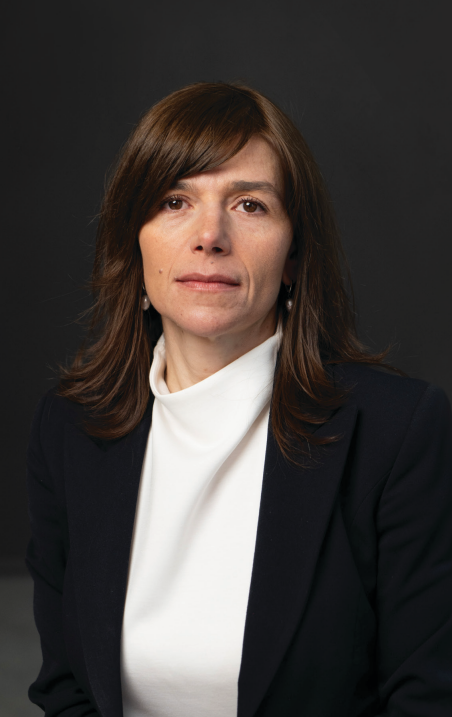
Maia Surmava, a global IT leader whose 25-year career successfully bridges technology, healthcare, insurance, and finance, shares her experience with us. Having led a 500-person team at Discovery Health and currently serving as CEO at Vitality Group, Maia discusses leadership, innovation, and the role of behavioral science in improving people’s lives. She also shares her vision for the future of healthcare technology, artificial intelligence, and Georgia’s potential in this field.
Ms. Maia, your 25-year career spanning IT, healthcare, insurance, and financial services is truly impressive. What was that initial spark that drew you toward technology, especially at a time when the field was not yet on the massive scale it is today?
My journey into the world of technology was completely unplanned. In fact, it happened by chance. I was 19 years old when I moved to Johannesburg, South Africa. A friend recommended a Microsoft certification program, which was very popular at the time. I decided to try my luck in this field, and shortly after, I landed my first job at a small IT company.
What did your career path look like leading up to Discovery Health?
Initially, my first job was in IT technical support, which involved repairing computers. Working at a small company turned out to be genuinely fascinating because I had the freedom to explore technology from every angle—ranging from configuring and installing mail servers and firewalls to developing ERP applications and web portals. Eventually, this path led me to Discovery, where I started working as a Java developer.
Leading a 500-person team at Discovery Health must have brought both great opportunities and significant challenges. Could you share the toughest decision you had to make in that role, and what you learned from the experience?
It would be difficult to single out one specific decision, but I can confidently say that the most important skill I developed is resilience. Challenges and setbacks are inevitable, yet each of them creates a new opportunity. The real test is how we respond to difficulties. Don’t waste energy on things you cannot control; channel that strength toward what you can genuinely influence. When things go wrong, take action if you can. If not, accept it and move forward quickly.
How do you manage to motivate and inspire team members in a constantly changing environment, especially when it comes to driving innovation and adopting new technologies?
We are fortunate to have such a meaningful purpose: making people healthier. It is a mission that makes it easy to fall completely in love with what we do. Whenever we face challenges, we always keep in mind the goals we serve.
Looking back over your long career, which project are you most proud of, and why? What was its real-world impact?
One of my most remarkable experiences was rewriting the Claims and Benefit Management system for Discovery Health. It turned out to be the largest and most ambitious project our team had ever undertaken. Imagine a platform that had to process over 250,000 claims daily, with more than 2.5 million built-in rules for automation.
To test the changes, we had to build a parallel processing environment, as it was impossible to account for every conceivable combination manually. Even the slightest error could have resulted in millions of dollars in losses. Ultimately, our hard work paid off: 98% of claims were processed fully automatically, without any human intervention.
Over the course of your career, how much has the attitude toward women in technology changed, particularly in leadership positions?
Although the tech sector was often perceived as a male-dominated field, I have never felt treated differently because of my gender at any point in my career. Honestly, I think we sometimes impose more limitations on ourselves than others do on us. It is encouraging to see far more women in IT today than when I first started out. The industry is evolving, and the future of technology is clearly being forged in a much more diverse and inclusive environment.
As CEO of Vitality Group, could you tell us about the company’s journey from its founding to the present day, and the role Vitality has played in developing behavioral change platforms globally?
Three decades ago in South Africa, Vitality was part of the largest private health insurance program. The country faced a severe shortage of doctors, and the situation was further compounded by a high burden of disease and a complex regulatory environment, making healthcare delivery nearly impossible.
We believed we could reduce the demand for medical services by incentivizing people to adopt healthier lifestyles. That is precisely why Vitality was created—with the core mission of motivating individuals to change their behavior and make healthier choices.
Today, Vitality partners with major insurance companies across key global markets, including Asia-Pacific, Europe, and North and South America. We operate in 41 markets and positively impact over 42 million people. I lead Vitality’s business operations in the United States.
Vitality is known as a global behavior change platform dedicated to improving health. To be more specific, what technological tools or programs does Vitality offer users to improve their health in everyday life?
According to current data, nearly half of all healthcare spending is driven by everyday behaviors. This means that a vast portion of our health depends on the choices we make. Vitality addresses this exact challenge. We leverage data from over 60 million people, combining behavioral science with actuarial and financial analysis. This allows us to understand what prevents people from adopting healthy habits and how to influence them effectively.
We analyze each individual’s behavior to identify which specific action will yield the greatest improvement in their health. Next, we determine how likely that person is to actually make that change. Based on this data, we create a personalized action plan for each user. Within this plan, we embed a reward system that boosts motivation and maximizes ongoing engagement.
In the Vitality app, building healthy habits feels like a game. You earn points and collect rewards by completing simple tasks. Rather than being a tedious chore, the process becomes highly enjoyable and ultimately leads to a sustainable, healthy lifestyle.
How does Vitality ensure the ethical and secure use of artificial intelligence and massive databases?
We ensure the highest level of security by employing a multi-layered defense system and a proactive approach to privacy. Our systems and processes are fully compliant with GDPR (General Data Protection Regulation) and HIPAA (Health Insurance Portability and Accountability Act) requirements.
Access to data is granted strictly with the user’s explicit consent, meaning individuals retain full control over their personal information. Security and privacy are integrated into every level of our technology and operations, encompassing data de-identification protocols, encryption, and rigorous auditing.
Given Vitality’s global scale, how do you account for diverse cultural and social nuances when rolling out tech products across different markets? Can you recall an instance where you had to adapt your approach due to cultural or other local differences?
In all of our core markets, we have dedicated teams that work closely with local partners to tailor our services to regional needs and cultural norms. The platform is designed with a high degree of configurability, allowing it to adapt seamlessly to diverse market demands.
For instance, reward mechanisms like spinning a wheel or interactive games might be appealing in one region, but could be associated with gambling in another. In such cases, we have developed alternative reward systems that are equally engaging and effective at driving participation, while remaining fully aligned with local laws and cultural expectations.
In your view, at what stage of development is the world currently in terms of healthcare technology?
Over the past decade, healthcare and medical technologies have undergone an exponential transformation, driven by advances in data, connectivity, and digital platforms. Yet despite this rapid evolution, the full potential of artificial intelligence remains largely untapped.
AI capabilities—such as predictive analytics, personalized treatment, and operational efficiency—are significantly reshaping healthcare. From disease prevention to clinical decision-making, the possibilities are boundless, though realizing their full scale is still a matter for the future.
What is your biggest ambition for the company’s growth, particularly in the U.S. market? Where do you see the company in 5 to 10 years?
In the United States, we partner with leading insurance providers to make the Vitality platform accessible to millions of Americans and help them establish healthier lifestyles. Our growth momentum is accelerating, supported by an expanded suite of products focused on improving health and overall quality of life.
Integrating the Vitality program into insurance packages enables our partners to implement Shared-Value Insurance—an innovative approach we pioneered that aligns the interests of individuals, insurers, and society as a whole. This model transforms traditional insurance by placing behavior change at its core. It rewards people for healthy activities, which simultaneously improves health outcomes and reduces insurance costs. Those savings are then passed back to the consumer. This approach makes people healthier and more productive, while shifting the insurer’s role from a passive payer to an active partner.
We are growing rapidly in the U.S. market, and our goal is to become a major player across all core segments.
In your vision, which areas of medical technology will develop the fastest over the next 5 to 10 years?
In the tech world, five to ten years feels like an eternity. The pace of innovation shows no signs of slowing down, and nowhere is this more evident than in artificial intelligence. Although we have already made significant strides, AI’s full potential is still ahead of us. Over the next few years, it will undoubtedly become the primary driving force behind the transformation of healthcare services, making medicine far more precise and personalized.
I am also deeply fascinated by the rapid advancements in genomics and precision medicine. These fields are fundamentally reshaping the future of healthcare. Gene-editing technologies have the potential to revolutionize the treatment of hereditary diseases and give us the ability to correct genetic mutations.
As we explore the human genome more deeply—with artificial intelligence accelerating that discovery—we move closer to an era where medicine is not merely reactive, but predictive and preventive. The convergence of genomics, digital health, and machine learning is unlocking new possibilities for targeted therapies, early diagnostics, and personalized treatments that were unimaginable just a decade ago.
Today, the health tech sector faces numerous challenges, such as the secure use of big data, cybersecurity, government regulations, and so on. What is the single biggest challenge for you in this field?
We pay particular attention to maintaining the balance between robust data security and a seamless user experience. These two priorities often pull in opposite directions, and resolving that tension is critical to building trust without compromising the product’s functionality.
What role do you think behavioral science plays in healthcare technology? How well is this field currently understood, and what potential does it hold for the future?
Often, when it comes to our health, we do not make rational decisions. We know what we should do, yet we don’t do it. The “present self” does not always prioritize the needs of the “future self.” This is precisely where behavioral science can make a profound difference.
By understanding and influencing the underlying drivers of health-related decisions, we can nudge people toward better choices—whether that means adopting a healthier lifestyle, participating in preventive screenings, or adhering to treatment plans during and after care. Effectively applying these principles in real life leads to significant improvements in health outcomes.
How would you assess the potential for developing healthcare technologies in Georgia? Do you see any specific opportunities or challenges in this direction?
Georgia has strong potential to build an advanced ecosystem for artificial intelligence and health data science. To fully unlock this potential, strategic investments in infrastructure are essential—first and foremost, a complete digital transformation of the national healthcare system.
Establishing a centralized, interoperable Electronic Health Record (EHR) system will ensure data quality and continuity over the long term, laying the foundation for meaningful, AI-driven insights. This digital backbone will not only improve clinical efficiency, but also create a rich dataset to fuel future innovation.
Collaborating with international institutions will accelerate this process through knowledge sharing, technical cooperation, and increased global visibility.