


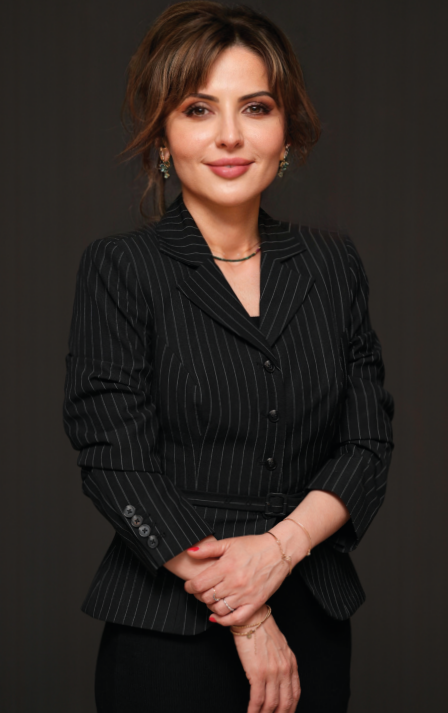
As infectious diseases remain among the most formidable challenges to global public health, sharing international experience and implementing innovative approaches has become more critical than ever. Dr. Ekaterine Chakvetadze, an infectious disease specialist who has practiced in France for several decades, consistently shares her knowledge and practical experience with her homeland. In this interview, she discusses her years in Paris, the nuances of Western medical training, and the role and mission of the international organization GIMPHA. Most importantly, Dr. Chakvetadze describes a method of clinical reasoning that makes practice more precise, systematic, and safer for patients.
Dr. Chakvetadze, tell us about your Parisian journey: how did it begin, and what key milestones shaped your career?
I arrived in France at the end of 2002 after receiving a scholarship from the French Embassy to pursue my residency in Paris. In November, at the start of the academic semester, I began working in the Infectious Diseases Department at Hôpital Tenon (Tenon Hospital).
The department was headed by Professor Willy Rozenbaum, an outstanding clinician and one of the co-discoverers of the Human Immunodeficiency Virus (HIV). He performed the biopsy on the lymph node in which the virus was subsequently identified. Although he was nominated for the Nobel Prize, the prize was ultimately awarded to virologists. An interesting historical detail: Professor Rozenbaum had Georgian roots—his mother was from Georgia, which I believe helped spark his interest in my candidacy. However, initially, I worked strictly as an observer.
This marked the beginning of my integration into Western medical practice. Throughout this process, I realized that a substantial gap existed between theoretical knowledge and practical application. Overcoming the disparity between the foundational education I received in Georgia and the European training system was difficult. However, a welcoming environment and high professional motivation played a decisive role in my adaptation.
My career path developed steadily. A significant advantage was that I always worked clinically as a physician or resident, allowing me to focus entirely on professional growth. Ultimately, the journey proved highly rewarding and successful.
What were the primary challenges you encountered along your career path?
The first and most fundamental challenge was the language barrier. I began learning French relatively late, at the age of 20, and by 24, I found myself in France. The second, equally demanding challenge was essentially relearning clinical medicine. In Georgia, I had completed a six-year theoretical course before leaving for Paris to begin residency. Consequently, I had to develop clinical skills while deepening my theoretical knowledge.
I tried to manage this process so my difficulties remained unnoticed by those around me. Integrating into a completely different environment and culture in a foreign country, while professionally competing with colleagues in a non-native language, demanded immense effort. I view this as a natural process: each country has its own standards, and without meeting them, a foreign specialist’s qualifications cannot be recognized.
Beyond the professional aspect, I initially experienced a profound loneliness because I lacked the immediate support of family and friends. However, I would cite the continuous, intensive need for learning as the greatest challenge.
How did the cultural and academic diversity of Paris influence your approach to medicine and teaching?
Alongside personal growth, living in France proved to be an invaluable professional experience. I did not experience culture shock because our identity includes a European component reflected in shared values. Although people frequently discuss prevailing attitudes toward foreigners, I personally never felt such a barrier. Western Europe is familiar with Eastern European culture and often holds it in high regard.
Paris afforded me a unique opportunity to interact with people of diverse worldviews and to establish new social connections. In the early 2000s, traveling freely and immersing oneself in the cultures of various countries was a great adventure in its own right.
Today it is difficult for me to distinguish between the two systems because I was shaped professionally in France. I did not practice clinically in Georgia. It was in France that I learned work ethics, peer-to-peer communication, and patient-centered approaches. Therefore, drawing direct comparisons is difficult for me.
Given your trajectory in France, what motivated you and your colleagues to found GIMPHA, and what was your vision?
The core idea crystallized at an emotional level. We met about ten years ago when Georgian physicians working abroad were invited to Batumi. At that time, the state’s objective was to attract and bring back medical professionals who had emigrated to the country. For GIMPHA, the decisive factor was that we colleagues working across Europe found one another.
We were united by a shared sentiment: many of us who had left years earlier had lost touch with the Georgian medical community. Professionally, this is a profound loss: being disconnected from developments at home, unfamiliar with local colleagues, and unable to share the experience gained in the West with compatriots.
It was this mutual desire that brought motivated individuals together. This is how the GIMPHA association was established: Alexi Baidoshvili, Zaza Katsarava, and I served as co-founders. Our primary goal was to create a platform to reconnect and use our knowledge for the benefit of our homeland.
GIMPHA actively fosters development in the medical and public health sectors. How do you select the themes for your conferences, particularly given your expertise in infectious diseases?
The GIMPHA team determines conference themes collectively. Each of us leads an area of expertise: for instance, Alexi Baidoshvili leads oncology, Zaza Katsarava manages neurology, and Maia Chikviladze is active in both neurology and pediatrics. New colleagues regularly join, particularly from Germany, bringing expertise in cardiothoracic and neurosurgery.
In my specialty, priorities in infectious and internal medicine shift with the epidemiological landscape. The pandemic demonstrated that an epidemic can escalate into a global threat. In the late 20th century, it was HIV; later, viral hepatitis became a focus, and many forms are now considered manageable. During my in-depth study of infectious diseases, antimicrobial resistance caught my attention. A decade ago, at our very first conference, the central theme of my presentation was bacterial resistance and strategies to combat it. I am proud that the critical significance of this issue is now recognized globally. While COVID-19 revealed the unpredictable nature of viral threats, bacterial resistance remains a persistent, insidious challenge, one in which antibiotics may ultimately become ineffective. This issue remains my primary professional focus and is reviewed from various angles each year with colleagues.
What criteria guide you when selecting speakers?
When selecting speakers, I emphasize both high qualifications and professional dedication. I am proud that the specialists I invite show remarkable loyalty to GIMPHA. The conference has been held annually in Georgia for ten years, and over that time, a solid core of speakers has formed. For example, my colleague and department head, Professor Sylvain Diamantis, has participated in our meetings without interruption for a decade.
I endeavor to introduce new faces every year to expand our professional circle and international networks. Nevertheless, the long-standing commitment of my French colleagues is truly commendable. This has fostered trust: familiar speakers make debates and discussions more open and productive. Notably, approximately 40% of the audience are returning attendees. This continuity has forged strong professional relationships and collaborative platforms, which I find deeply rewarding.
The primary benchmark for selecting speakers is international recognition. For instance, for two years, we hosted Professor Tristan Ferry, one of Europe’s leading specialists in osteoarticular infections. This year, we were joined by Professor Pierre Tattevin, widely regarded as an authority on valvular heart infections, specifically infectious endocarditis. The involvement of professors of this caliber underscores the high academic standards of our conference, and it is gratifying that they have expressed a personal desire to return in the future.
What do you consider to be GIMPHA’s most significant achievement?
GIMPHA’s primary success is its growth: it began with three or four individuals and now unites dozens of active members. These are highly qualified Georgian physicians practicing both in Europe and within Georgia. Our quantitative and qualitative growth stands as a testament to GIMPHA’s sustainability and credibility.
The second major achievement is the large-scale projects implemented by our members. I would like to highlight the exceptional role of Alexi Baidoshvili in introducing modern standards of oncological screening in Georgia. Similarly noteworthy is Zaza Katsarava’s initiative, through which the country’s first thrombolysis project was carried out. Through our participation, innovative medical services are being established, transforming thousands of lives by making timely diagnosis and expert care accessible.
GIMPHA members implement tangible, strategic projects in both academic research and frontline healthcare. All of this serves one purpose: to ensure the population benefits directly from professionals who dedicate their expertise to their homeland.
You frequently speak about nosocomial infections. In your view, what aspect is most often overlooked? What question must be posed before we address the solutions themselves?
It is impossible to view nosocomial infections in isolation, as they are integral to the broader strategy against antimicrobial resistance. The modern approach relies on the ‘One Health’ concept, which recognizes the interconnections between human, animal, and environmental health. It is impossible to safeguard human well-being without accounting for the processes occurring within agriculture and the broader ecosystem.
A nosocomial infection is defined as an infection that appears 48 hours or more after hospital admission. The question arises: what is the source of infection? Contamination can come from environmental surfaces, medical instruments, air, food, or healthcare personnel. The human body hosts vast numbers of microbes; irrational use of medications disrupts this microbiota. For instance, if the prevalence of resistant Staphylococcus is 5% in the community, it can rise to nearly 30% in clinical settings because resistant strains are highly transmissible.
Sources of infection are twofold: exogenous and endogenous. Combating exogenous factors is achievable through strict adherence to hygiene standards and disinfection protocols. The endogenous source, however, is the patient, who may be an asymptomatic carrier of a pathogen. For instance, aspiration pneumonia in intubated patients often develops from their own oral microflora. Catheter-associated infections often result from breaches in aseptic technique or asymptomatic carriage.
In this battle, I consider precise statistics and epidemiological surveillance to be the most vital elements. The reporting of nosocomial infections must not be punitive. A clinic that transparently publishes its data should not be perceived as ‘bad’; conversely, concealing statistics hinders effective planning of preventive measures. For me, the priority in this process remains the battle against resistant bacteria, a topic I have championed for over a decade.
From your perspective, looking beyond standardized protocols, what approaches can effectively mitigate these infections in resource-constrained environments?
The battle against resistant strains has two main dimensions: public and professional.
The public strategy focuses on raising population-level awareness. In France, a large public campaign used the slogan ‘L’antibiotique n’est pas automatique’ (‘Antibiotics are not automatic’). This message shifted public perception; patients are now less likely to demand antibiotics. For example, about 80% of sore throats (pharyngitis) are viral and do not require antibiotics. In Georgia, by contrast, despite legislation prohibiting the over-the-counter sale of antibiotics, the practice of self-medication remains high. When patients take antibiotics on the advice of relatives, it becomes difficult for physicians to manage the clinical course. Raising awareness is essential; if society does not understand the magnitude of the threat, clinicians’ efforts alone will not suffice.
The professional dimension entails the rational stewardship of antibiotics. French hospitals use a mobile infectious disease team model. These teams oversee antibiotic therapy processes across all departments. Because hospitals operate internal pharmacies, drug consumption is fully auditable. The pharmacy knows precisely which drug was dispensed to which ward. The key is not rigid control but a collaborative approach: clinical departments consult mobile infectious disease units to interpret cultures and select optimal regimens. Research shows that more targeted, narrow-spectrum therapies help reduce rates of resistance.
The pandemic illustrated that infectious diseases are an urgent global threat. During COVID-19, high mortality was often driven not only by the virus but by resistant secondary bacterial infections acquired during invasive procedures such as intubation. This underscores the critical importance of the issue for everyone.

How can strengthening international cooperation facilitate the resolution of healthcare issues in developing regions?
As a clinician, I approach this issue with a global perspective and can attest that significant strides are being made in Georgia in this area. The World Health Organization (WHO) and the European Union mandate that all nations maintain rigorous epidemiological surveillance and accurate reporting of antimicrobial resistance. In parallel, progress is evident in the accreditation and standardization of microbiology laboratories. The validity and reliability of testing are paramount; strengthening quality control is essential. At a conference in Tbilisi this past June, I saw how intensive work is underway to implement these standards.
I consider continuous professional development and clinician training to be priorities. For several years now, with the support of the French Government and the French Embassy in Georgia, I have regularly organized visits to Georgia for French colleagues. My objective is to maintain a stable cohort of speakers who can impart not only theoretical knowledge but also practical experience and the Western model of clinical reasoning.
In the medical field, a theoretical foundation alone is insufficient; knowledge must be translated into practice and thoroughly absorbed into clinical intuition. This is why my primary mission is to help synthesize scientific advances and practical skills, particularly for the younger generation entering the profession and shaping the nation’s future healthcare.
Looking ahead, what would you hope to achieve regarding infection control in developing countries, and what concrete steps are required to realize this?
My goal is for the country to have a clear, transparent picture of epidemiology at national, regional, and facility levels. In France, we have access to granular data and know the precise microbiological profile and resistance rates within our specific hospital. This is vital because infectious disease management depends on localized data.
In cardiology, for example, American or European guidelines are largely universal because cardiovascular physiology is consistent across regions. In infectious diseases, however, the situation is radically different: the prevalence of pathogens and their antibiotic susceptibilities are strictly local phenomena.
Consequently, my goal is to establish a fully functional national monitoring system for antimicrobial resistance in Georgia. Accurate data will allow us to develop valid local clinical protocols. Today, directly copying external guidelines is ineffective. Only by grounding our decisions in our own epidemiological reality can we formulate a unified national strategy, which is the sole viable path forward for the development of this field.
You are also heavily involved in pedagogical activities. Your innovative teaching style, particularly the use of schema-based drawings, has garnered significant interest among both students and colleagues. Could you elaborate on this method?
Calling it a ‘method’ might be an overstatement; it is more accurately my personal framework for clinical reasoning, which my residents first highlighted. These are not mere drawings but rather a hierarchical structure that maps out cause-and-effect relationships.
My pedagogical experience shows that in contemporary Western medicine, establishing a diagnosis (except for rare conditions) is usually not insurmountable. Technological progress and the accessibility of diagnostic tools have streamlined this process. However, in my experience, the greatest harm often comes from overlooking minor details. Fatal outcomes are often not due to gross diagnostic failure but to overlooking subtle nuances, ignoring changes in hemoglobin, taking an incomplete history, or missing drug-drug interactions.
To illustrate, I can cite a case where a patient’s clinical course ended fatally due to metformin-induced lactic acidosis. The patient was admitted with a high fever, but metformin was not discontinued. Hyperthermia and concurrent dehydration precipitated a metabolic crisis that led to a fatal outcome. This case demonstrates how critical it is to account for every detail.
Therefore, my approach is rooted in ‘clinical precision.’ I instruct residents that after taking a patient history and before forming diagnostic hypotheses, they must systematically document every laboratory and clinical anomaly. Record every symptom and current medication, then align biological changes with each hypothesis. Only after this rigorous process is completed do we formulate a targeted investigative plan to confirm or refute the hypothesis.
Visualization is an indispensable component of this workflow. If a patient presents with chest pain, fever, and abnormal labs, I map everything out schematically. This structural sorting organizes thought processes and insulates us against errors. For example, I never close a patient’s electronic medical record until I have verified that vital parameters, such as blood pressure, temperature, and oxygen saturation, are thoroughly entered. These serve as automated checks that protect both the physician and the patient.
I am strict about this approach because it helps residents shift from narrating a case like a story toward structured clinical reasoning. Years ago, when we worked with paper charts, my entries were instantly recognizable by their drawings and flowcharts. Today, in the digital era, I apply the same principle. It brings me immense joy when I come across medical charts from other departments and can immediately tell from the structured style that they are the work of one of my residents.
Can you recall a specific example that illustrates this?
One particular incident stands out. In France, residents choose their own rotations and often consult predecessors before deciding. Recently, a young colleague told me they chose my rotation specifically because of the structured reasoning model they’d heard about. While gratifying, we must remember that structure cannot substitute for foundational knowledge. It simply helps us deploy that knowledge systematically. My aim is to show that in clinical practice, precise attention to detail often determines effective patient management.
I also observe that an effective team needs a diverse range of professionals. We require colleagues who are meticulous and detail-oriented, as well as those with a pragmatic vision who can grasp the situation in a broader context. The essence of teamwork lies in mutual respect and accepting differing opinions. We hold morning staff meetings to review patient cases. In these sessions, an external colleague often offers a more objective perspective than the attending physician, who may be emotionally fatigued.
I believe the system must foster an environment where physicians are not placed in unhealthy competition with one another. For example, my compensation is not tied to the volume of patients I see. This is fundamental: when physicians are incentivized to maximize patient volume, they may prioritize metrics over patient welfare.
True collegiality means not interpreting a dissenting medical opinion as a personal slight. I have seen how invaluable a colleague’s perspective can be for my patients, and vice versa. Establishing this culture is a primary challenge, and I am glad we’ve cultivated a harmonious environment in our clinic.
Do you have any plans to publish a textbook or manual based on this instructional method?
A patient first drew my attention to this style of thinking. During a consultation, they noticed I was sketching diagnostic flowcharts in the medical chart. It turned out this patient was the Human Resources Director for a major corporation. They asked where I learned it, noting that corporate management uses similar tools for risk analysis, such as ‘Root Cause Analysis’ or ‘Fault Tree Analysis.’
I replied that no one formally taught me; I developed it independently through clinical practice. Later, they sent me literature on the management methodologies they use. I think it would be fascinating to review this literature and see how my clinical approach aligns with established theories of risk management.
I would be delighted if, in the future, I can find time to systematize this experience. It could be more than a medical textbook: a guide to clinical error prevention and rational reasoning, an invaluable resource for students and young colleagues.
