


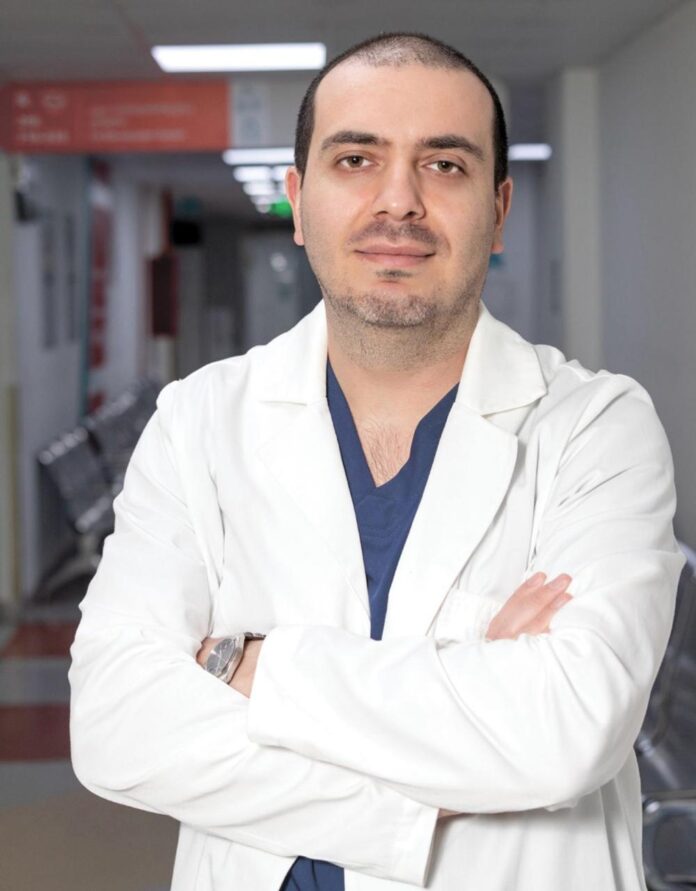
The Congress of Neurosurgeons, which will be held this October in California, has announced the winners of the 2025 Neurosurgery Publications “Best Paper of the Year.” The award was given to the most influential articles that challenged established concepts, promoted paradigm shifts, and encouraged surgeons to rethink strategies for patient care, databases, and clinical research outcomes. It is a matter of pride that among the winning papers is one co-authored by Georgian neurosurgeon Zviad Malazonia, alongside Mustafa Baskaya and Abdullah Keleş.
In the 21st century, neurosurgery should not be a privilege reserved only for high-income populations or for those born in the “right” countries. Unfortunately, however, access to neurosurgical procedures remains limited for populations in developing countries.
Worldwide, millions of patients still do not receive the necessary neurosurgical interventions. The root of this major global problem can be simply stated: the lack of specialists, the shortage of practical training courses, and the high cost of neurosurgical laboratories. These barriers significantly hinder the career growth of young and future neurosurgeons, ultimately impacting patient populations negatively. Well-equipped neurosurgical labs are mostly found in highly developed nations, further contributing to the shortage of qualified neurosurgeons in developing countries.
To address this problem, in 2020, under the leadership of Professor Mustafa Baskaya, the University of Wisconsin launched the Madison Microneurosurgery Initiative (MMI). As part of this project, the organization secured resources to deliver 10 online training sessions and 7 free hands-on courses in various developing countries. Participants received direct training from American neurosurgeons in vascular anastomosis and nerve microsurgical reconstruction. A total of 113 neurosurgeons successfully completed the program.
Through the same initiative, 28 medical centers across 18 countries — including Turkey, Azerbaijan, and Georgia — were provided with modern microsurgical training laboratories equipped with stereomicroscopes, lighting systems, and surgical instruments.
The project’s impact is already evident in clinical practice. For example:
- In Chad, a neurosurgeon trained through this program successfully performed arteriovenous fistula procedures for hemodialysis, sparing hundreds of patients from having to travel abroad for medical treatment.
- In Georgia, after the training, neurosurgeons successfully carried out cerebral bypass surgeries.
- In Turkey, nerve reconstruction was performed following a complex case.
As published in Neurosurgery Publications, the Madison Microneurosurgery Initiative has enabled specialists from developing countries to acquire essential professional skills. Within this program, young neurosurgeons had the opportunity to deepen their theoretical and practical knowledge through the “bypass” course, after which a unique neurosurgical operation for the rare disease “Moyamoya” was performed and implemented for the first time at the Caucasus Medical Center.
A neurosurgeon should not be constrained by geographical barriers, since patients everywhere require the same standard of neurosurgical care as those in leading U.S. and European institutions. Therefore, it is crucial that young Georgian neurosurgeons have access to the same practical knowledge and experience that is applied in the world’s most advanced countries.
State structures, private organizations, and academic institutions must recognize that neurosurgical training is essential for the growth and development of future specialists. In the modern era, no dedicated young neurosurgeon should face obstacles in gaining the knowledge and experience necessary to provide patients with comprehensive, high-quality care.
