


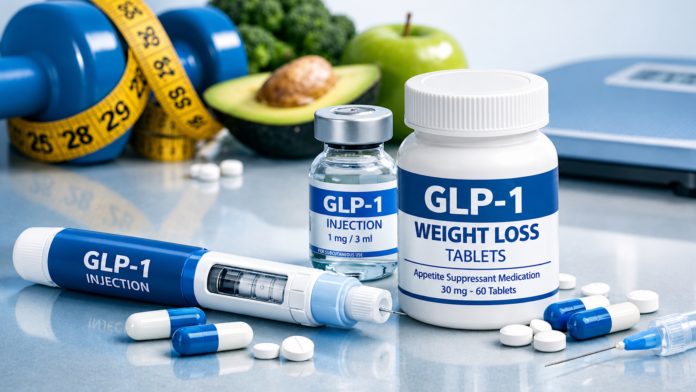
In recent years, glucagon-like peptide-1 (GLP-1) receptor agonists, including semaglutide (Ozempic®, Wegovy®)and tirzepatide (Mounjaro®), have become among the most widely used medications for the treatment of obesity and type 2 diabetes. Alongside their high clinical efficacy, interest has increasingly focused not only on their therapeutic benefits but also on their safety profile. Consequently, the number of clinical studies and real-world evidence evaluating potential adverse effects associated with GLP-1 receptor agonists has grown substantially. Although some adverse events have been extensively investigated in large-scale clinical trials, evidence regarding certain rare or newly reported potential side effects remains limited, and causal relationships have not yet been definitively established.
The most common and well-documented adverse effects of GLP-1 receptor agonists are related to functional changes in the gastrointestinal system. Nausea, vomiting, diarrhea, constipation, and abdominal discomfort represent the most frequently reported adverse effects associated with these medications. These symptoms are directly linked to the drugs’ mechanisms of action, which include delayed gastric emptying, prolonged movement of food through the gastrointestinal tract, and regulation of neurohormonal signaling between the gastrointestinal system and the central nervous system. These adverse events are classified as “very common” side effects in the official prescribing information for these medications. In most cases, the intensity of these symptoms gradually decreases with continued treatment.
During ongoing evaluation of the safety profile of GLP-1 medications, particular attention has been given to their potential effects on the visual system. Several studies have suggested that, among patients with type 2 diabetes, the use of these medications may be associated with an increased risk of age-related macular degeneration (AMD) (a chronic, progressive eye disease that affects the central part of the retina—the macula—and may lead to impaired or lost central vision). Additionally, published data have suggested a possible association between GLP-1 receptor agonist use and the development of non-arteritic anterior ischemic optic neuropathy (NAION). This condition represents an acute ischemic injury of the optic nerve that may result in sudden and irreversible vision impairment.
Although some manufacturers (for example, Wegovy) have already included non-arteritic anterior ischemic optic neuropathy (NAION) in patient information materials as a possible adverse event, experts emphasize that such cases are extremely rare and that current evidence remains insufficient to establish a definitive causal relationship.
Unplanned pregnancies occurring during the use of GLP-1 medications have also become a subject of further investigation. Although there is currently no evidence directly confirming that these medications affect contraceptive effectiveness or reproductive function, several biologically plausible hypotheses have been proposed. One hypothesis suggests that delayed gastric emptying may alter the absorption process of oral contraceptives, while weight reduction and improvements in metabolic health—particularly among women with polycystic ovary syndrome (PCOS)—may contribute to increased fertility. However, this issue remains an active area of research. Pregnant women were excluded from the initial clinical trials; therefore, available data regarding the safety of these medications during pregnancy remain limited. For this reason, international regulatory authorities recommend that GLP-1 medications should not be used during pregnancy or during the stage of planning pregnancy.
The term “Ozempic face” has become widely used on social media to describe reduced facial volume, skin laxity, deeper wrinkles, and more pronounced signs of facial aging following rapid weight loss. Although this phenomenon is not classified as an official adverse effect of these medications, plastic and reconstructive surgeons note that such changes may represent a natural consequence of rapid weight reduction. Therefore, this effect is not considered unique to GLP-1 medications and may occur after any intervention associated with substantial weight loss, including bariatric surgery and strict dietary regimens.
Hair loss is also considered among the potential adverse effects associated with GLP-1 medication use. Recent studies suggest that GLP-1 receptor agonist use among patients with type 2 diabetes may be associated with an increased risk of developing alopecia. In addition, hair loss is already listed as a common adverse reaction in the official prescribing information for Wegovy and Mounjaro. Nevertheless, some experts suggest that the primary contributing factor may not be the medication itself, but rather metabolic changes associated with rapid weight loss, deficiencies in micronutrients and protein intake, and the body’s physiological stress response.
The condition most frequently described in this context is telogen effluvium, which is characterized by diffuse and temporary hair shedding. It develops when stress, hormonal changes, or various illnesses cause a significant proportion of hair follicles to prematurely enter the resting (telogen) phase of the hair growth cycle. This condition results in thinning of hair across the scalp but rarely causes complete baldness, and in most cases, hair growth gradually returns after the underlying trigger is resolved.
More recently, another informal term—“Ozempic foot”—has emerged to describe more visible bony contours of the feet, reduced soft tissue volume, and, in some cases, the development of foot pain. Although this phenomenon is not recognized as an officially established adverse effect of GLP-1 medications, clinical observations from podiatrists suggest that rapid weight loss may lead to thinning of the fat pads in the feet. Reduced volume of these fat pads may decrease the shock-absorbing function of the heel and forefoot, potentially contributing to foot discomfort. Similar changes have also been described following bariatric surgery, where some patients experience reduced soft tissue volume in the feet and changes in shoe size.
Current scientific evidence indicates that adverse effects associated with GLP-1 receptor agonists vary considerably in terms of frequency, level of investigation, and reliability of available data. Gastrointestinal symptoms remain the most thoroughly studied adverse effects, with a well-established association with these medications. In contrast, potential effects related to vision changes, hair loss, reproductive function, and physical appearance require further investigation through high-quality clinical studies. It is important that patients use these medications only under medical supervision and promptly consult healthcare professionals if they experience any new or unusual symptoms, allowing early assessment and, if necessary, adjustment of the treatment strategy.
Source: www.theguardian.com
