


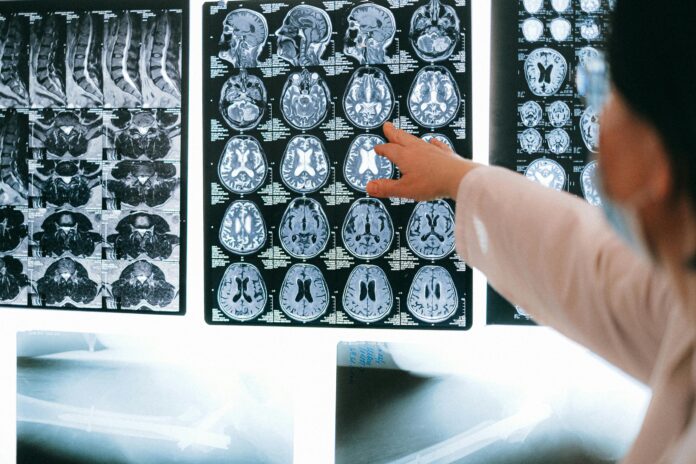
A new study published in the journal Neuroscience has introduced an AI-based predictive model that utilizes Magnetic Resonance Imaging (MRI) for the early identification of Alzheimer’s disease. The model demonstrated an accuracy of 92.87% in differentiating between healthy individuals, patients with Mild Cognitive Impairment (MCI), and those with Alzheimer’s disease.
Alzheimer’s disease is a progressive neurodegenerative pathology characterized by the decline of cognitive functions—particularly episodic memory—neuronal tissue loss, and brain atrophy. Traditional diagnostic approaches often rely on clinical assessments and the manifestation of symptoms, which limits the potential for early intervention. Early diagnosis is critically important for improving therapeutic efficacy.
To develop the model, scientists from the Worcester Polytechnic Institute analyzed MRI scans of 815 patients aged 69–84. The team employed a machine learning model to measure brain volume across 95 different regions. The algorithm then compared this data to identify neuroanatomical features that distinguish a healthy brain from one affected by cognitive impairment or Alzheimer’s.
The results highlighted several brain regions where structural changes are most closely linked to the disease. Specifically, pronounced atrophy was observed in the hippocampus, amygdala, and entorhinal cortex—regions that play a critical role in memory consolidation and emotional regulation.
Notably, right hippocampal atrophy identified in the 69–76 age group may represent one of the early biomarkers of the pathology. This suggests that this particular structure is characterized by high sensitivity to neurodegenerative processes during the preclinical stage.
Furthermore, the study confirmed sex-based differences in structural brain damage. In the female cohort, a significant reduction in volume was recorded in the left middle temporal cortex—an area associated with verbal communication, memory encoding, and visual perception. In men, structural changes were more intensely localized in the right entorhinal cortex.
Researchers suggest that these identified differences are linked to sex hormone dynamics and their influence on structural brain integrity. This underscores the priority of implementing personalized medicine principles in the diagnosis and treatment of Alzheimer’s, accounting for each patient’s unique biological characteristics.
The findings indicate that using artificial intelligence to identify neuroanatomical biomarkers is a promising direction for improving the early diagnosis of Alzheimer’s disease. However, the authors emphasize the need for further validation of the model across broader and more demographically diverse populations. Longitudinal studies are also essential to properly assess the model’s predictive value in the preclinical stage.
