


September 23 marks International Day of Sign Languages. The goal of this day is to highlight the role of sign language as a fundamental human right and a crucial tool for inclusion. Sign language plays a decisive role in effective communication, especially in the healthcare sector, where mutual understanding between patients and medical staff is critically important.
In many universities around the world, sign language courses are taught to prepare students for communication with people with hearing impairments. For example, in the U.S. and Europe, programs in American Sign Language (ASL)and other sign languages are offered as elective courses to students, which helps future professionals improve their cultural awareness and practical skills.
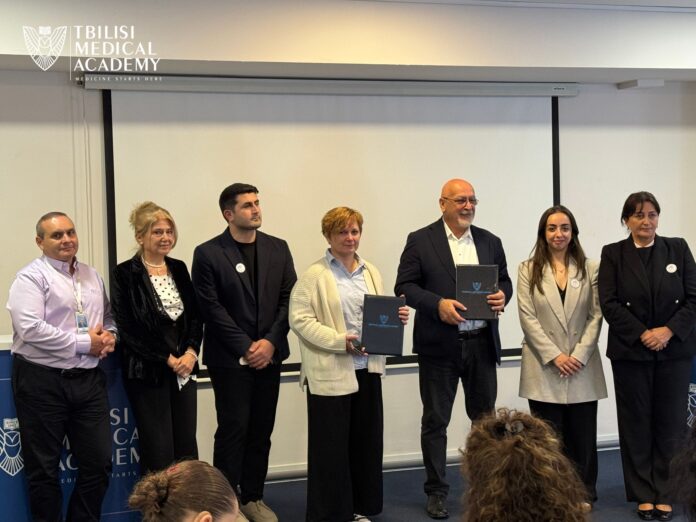
In Georgia, Tbilisi Medical Academy (TMA) celebrated International Day of Sign Languages and emphasized the importance of pioneering such a project. The academy is the first medical university in the country to include sign language as an elective course in its curriculum. The head of TMA’s single-cycle educational program, Tsisana Lomashvili, noted that sign language improves effective and equitable communication in healthcare. In collaboration with the Georgian Union of the Deaf, TMA developed three elective courses: “Sign Language 1, 2, and 3,” which help students improve their communication skills and increase their sensitivity to the needs of patients.
Within the framework of the event, a memorandum of cooperation was signed between TMA and the Georgian Union of the Deaf. Its goal is to popularize the study of sign language and improve communication with people with hearing impairments. Representatives of the Georgian Union of the Deaf, President Amiran Batatunashvili and Vice President Maia Metonidze, emphasized that direct communication between doctors and deaf patients ensures confidentiality and promotes deeper trust.
The co-organizer of the event was the Georgian Students’ Association of Public Health (GSAPH), which is led by TMA graduate Ana Gabriichidze. The association actively cooperates with Tbilisi Medical Academy and the Georgian Union of the Deaf to create an inclusive environment.
This initiative by Tbilisi Medical Academy sets a precedent for inclusivity in education in Georgia and is in line with the global trend in which sign language is recognized as a fundamental human right and an essential communication skill in healthcare.
Source: TMA
