


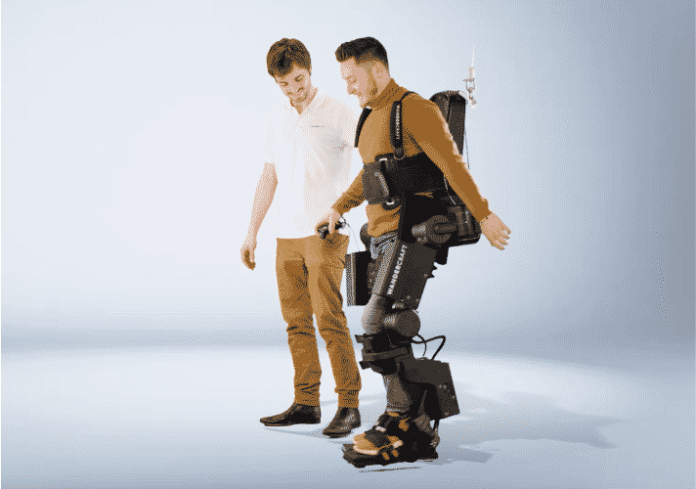
The U.S. Food and Drug Administration (FDA) has cleared the first self-balancing personal exoskeleton, named Eve (developed by Wandercraft), for adults with spinal cord injuries.
This innovative device allows wheelchair users to stand up, walk, and perform daily activities hands-free using a remote control. The exoskeleton is designed for use on flat surfaces in indoor spaces and immediate outdoor areas. For safety reasons, operating the device requires supervision from a specially trained companion.
Clinical trials conducted across three different medical centers showed that patients and their companions were able to master controlling the exoskeleton successfully. As a result of functional and practical testing, participants reported significant improvements in their overall quality of life. Specifically, they experienced enhanced psychological well-being and greater endurance during daily routines, a reduction in lower limb spasticity (muscle tightness), and improved sitting balance. Some patients also noted improvements in sleep quality as well as bladder and bowel function.
As Dr. Gail Forrest, Director of the Center for Spinal Stimulation at the Kessler Foundation, explains, the methodology used makes the study’s results particularly significant: “What makes these findings valuable is that the technology was evaluated not only in terms of engineering efficiency, but also on how safely users and their companions were able to integrate it into real-life, daily activities.”
