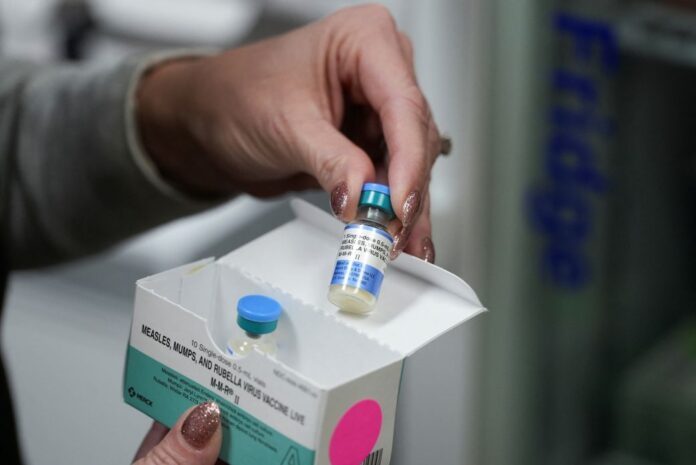
Against the backdrop of declining vaccination rates and a record surge in infections, the United States has lost its measles elimination status. Following a decision by an independent expert commission of the Pan American Health Organization (PAHO), the US no longer meets the criteria that allowed it to maintain this status since 2000.
Under international standards, an infection is considered endemic when the same strain is continuously transmitted from person to person within a country for at least one year. The current measles outbreak in the US has crossed this threshold. According to data from the Utah Department of Health’s public health laboratory, the same measles strain circulated in the state from June 2025 to June 2026, causing more than 600 cases. Continuous chains of transmission have also been documented in New York, Pennsylvania, Wisconsin, and South Carolina.
More than 5,400 cases have been reported across the country this year, the highest figure since 1991. According to the Centers for Disease Control and Prevention (CDC), the vast majority of those infected were unvaccinated or had an unknown vaccination status. Alongside the rapid spread of the virus, hospitalization rates are also high: one in every nine patients required hospital treatment, while 10 cases were fatal.
Peter Hotez, co-director of the Center for Vaccine Development at Texas Children’s Hospital, described the loss of this status as “incredibly embarrassing.”
Experts stress that measles is not a harmless infection limited to a rash and fever. According to William Moss, a professor at the Johns Hopkins Bloomberg School of Public Health, the virus can cause so-called immune amnesia — erasing the immune system’s memory and leaving the body vulnerable to other pathogens, including those that cause pneumonia. In rare cases, the infection can also lead to severe, fatal neurological complications years later, known as subacute sclerosing panencephalitis (SSPE).
Two doses of the measles, mumps, and rubella (MMR) vaccine reduce the risk of infection by 97%. Nevertheless, declining public confidence in vaccines and the refusal of vaccination without a medical reason have allowed the virus to spread rapidly through unvaccinated communities.
Experts believe that regaining measles elimination status will be a difficult process for the United States. Notably, Canada lost the same status last year following a prolonged outbreak, while Mexico is facing the same threat.