


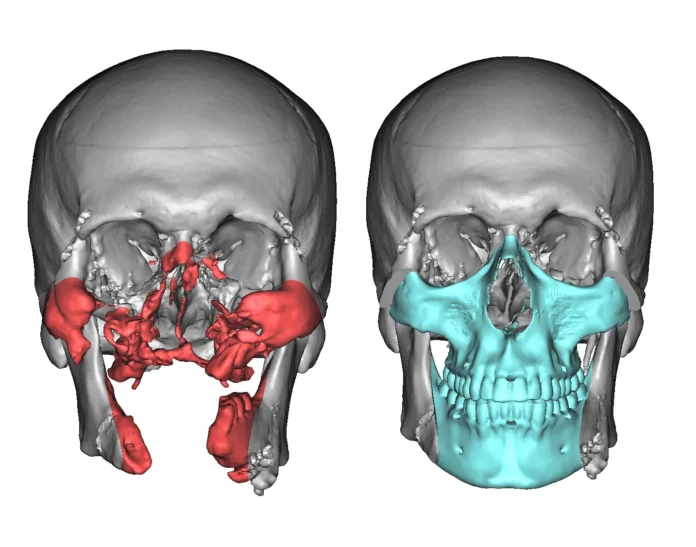
Modern medicine is constantly expanding the boundaries of what was considered completely unimaginable just a few decades ago. The world’s first face transplant using tissue from a donor who underwent euthanasia—a topic previously considered taboo—is unfolding before our eyes. In 2025–2026, one of the most significant procedures in reconstructive surgery took place in Spain: for the first time in the world, a face transplant was performed from a donor who ended their life through euthanasia. The operation was carried out at the Vall d’Hebron University Hospital in Barcelona.
This historic surgery is regarded as a major step forward in the development of transplantology, as well as reconstructive and microsurgery.
Patient History
The operation was performed on a Spanish woman who, in 2024, developed a severe bacterial infection following an insect bite while vacationing in the Canary Islands. The infection spread rapidly, causing necrosis of the facial tissues, resulting in the patient effectively losing a large portion of her face.
Due to the infection, the patient suffered from severe functional impairments, such as:
-
Disruption of eating, speaking, and respiratory functions.
-
Near-total loss of nasal tissue.
-
Complete alteration of physical appearance.
The patient spent several months in the intensive care unit fighting for her life. Ultimately, doctors decided that a face transplant was the only viable path for her functional and social rehabilitation.
A Unique Donor
The donation of facial tissue came from a patient who passed away via medically assisted death (euthanasia) and whose final wish was to help a stranger. According to transplant coordinators, this decision is an example of extreme altruism, as the donor dedicated their last wish to caring for another human being.
The Procedure
The surgery was performed by a multidisciplinary team of approximately 100 medical professionals. The team included:
-
Plastic and reconstructive surgeons
-
Microsurgeons
-
Anesthesiologists
-
Immunologists
-
Psychiatrists
-
Transplant specialists
The operation lasted approximately 24 hours, highlighting its extreme complexity. Surgeons transplanted the central part of the face, including: skin and soft tissues, muscles, nerves, arteries, and veins, and in some instances, bone structures.
Using microsurgical techniques, doctors connected blood vessels and nerves, which is essential for the viability and functional recovery of the transplanted tissues.
Postoperative Results
Following the surgery, the patient spent several weeks in the hospital undergoing rehabilitation. According to doctors, she gradually regained vital functions:
-
The ability to eat independently.
-
Improvement in speech.
-
Partial recovery of facial sensitivity and movement.
Global Significance
To date, only about 50 operations of this magnitude have been performed worldwide, and only about 20 specialized centers are capable of conducting them. This new operation marks another vital milestone, demonstrating that organ donation after euthanasia may increase the number of donors and save more patients.
The surgery not only restored the patient’s quality of life but also opened new possibilities for the advancement of transplantology, microsurgery, and reconstructive surgery. This case once again proves that medical progress is often built on innovative science, highly skilled surgery, and human altruism.
source:
