


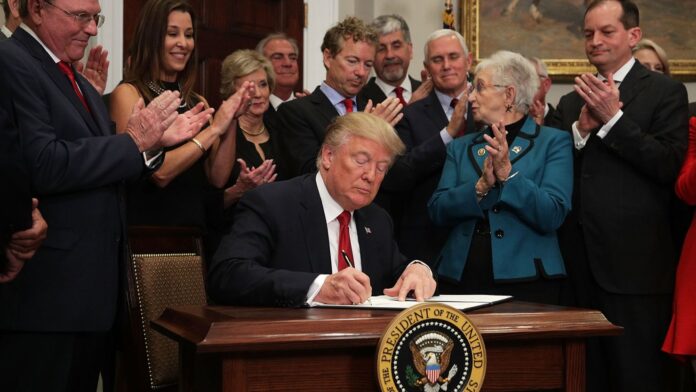
Starting in January 2026, more than 20 million low- and middle-income citizens in the United States face a significant increase in health insurance costs. This change is linked to the decision by President Donald Trump and the Republican Party to discontinue government subsidies provided under the Affordable Care Act (ACA), also known as “Obamacare.” This step marks a new transitional phase in the country’s healthcare system and budget formation.
Why is the System Changing?
According to the administration and proponents of the reform, eliminating subsidies is a necessary step for the country’s economic stability. Their position can be broken down into several key points:
-
Reducing the Budget Deficit: The federal treasury will save hundreds of billions of dollars, which, according to the Republican Party, will slow the growth of the national debt.
-
Tax Relief: A portion of the saved funds may be redirected to finance other tax incentives, thereby improving the business environment.
-
Market Deregulation: Proponents believe that without subsidies, the insurance market will become more competitive, leading to a natural regulation of prices in the long term.
How Does the American System Work?
Unlike many European countries, the United States does not have a single nationalized healthcare service. Instead, the system is divided into three main categories with radically different funding sources:
1. Employer-Sponsored Insurance
For the majority of Americans, the primary way to obtain health insurance is through their employer. Under this model, large and medium-sized companies are mandated or incentivized to offer insurance packages to their employees. The funding scheme here is quite favorable: the employer covers a large portion of the costs—often 70% to 80%—while the remaining small share is automatically deducted from the employee’s salary. It is important to note that the planned 2026 subsidy cuts will not directly affect this group, as their insurance is based on private corporate contracts rather than state aid.
2. Government Programs (Medicare & Medicaid)
The second major component of the system consists of government programs that create a “safety net” for those who are not active in the labor market or are in extreme poverty. Medicare is a federal program specifically designed for individuals over 65 and people with disabilities; it is known for its stability and does not depend on political subsidies. Medicaid, on the other hand, is intended for very low-income citizens and large families, funded jointly by the states and the federal government. While these programs are largely protected from the current reform, the overall trend of reducing budget deficits may have an indirect impact on them in the future.
3. The Individual Market and “Obamacare” (ACA Marketplace)
The Trump administration’s decision specifically targets the individual market and the so-called “Obamacare” segment. This sector was created for those who qualify for neither employer-sponsored insurance nor age-based programs. This group primarily includes the self-employed, freelancers, farmers, and small business owners whose employers are not required to provide insurance. Since individual insurance in America is extremely expensive, the government provided subsidies (tax credits) that significantly reduced the actual premium, often by as much as $400. The 2026 reform puts exactly this group at risk.
Challenges for the Middle Class and Small Businesses
Despite macroeconomic arguments, opponents and experts point to the looming social burden. Unlike those insured by large employers or covered by Medicare, costs for ACA marketplace consumers will rise sharply.
For example, for farmers and small entrepreneurs, monthly premiums could jump from $500 to $1,300. This forces citizens to choose between medical insurance and investing in their business development. According to forecasts, if alternative mechanisms are not implemented, up to 14 million people could be left without insurance over the next decade.
What is the Solution?
At this stage, the federal government and the insurance sector are holding consultations. They are considering the creation of more flexible, relatively low-cost insurance packages that would protect citizens in critical cases while reducing government spending.
The conflict over these budget decisions led to a 43-day government shutdown at the end of last year, indicating that finding a middle ground between the parties will be the country’s primary political challenge for 2026.
