


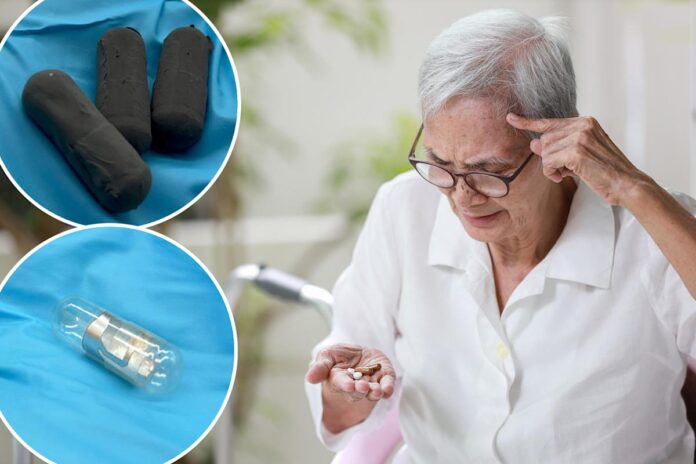
Engineers at the Massachusetts Institute of Technology (MIT) have developed an innovative “smart pill” capable of sending signals from within the body to confirm that medication has been taken. This technology aims to solve one of healthcare’s primary and most difficult challenges: medical non-adherence.
What problem does the “smart pill” solve?
Medicine faces a serious challenge. A doctor may prescribe the best possible treatment, but its effectiveness drops to zero if a patient forgets to take the medicine or stops the course prematurely. Statistically, ignoring treatment regimens leads to hundreds of thousands of preventable deaths annually and costs the healthcare system billions of dollars.
This problem is particularly severe in high-risk groups. For example, for organ transplant patients, missing even a single dose of immunosuppressants can lead to organ rejection. MIT’s new technology insures against these human errors. The smart pill allows doctors and caregivers to know with certainty that a patient has indeed taken their life-saving medication.
How does the system work?
The innovative technology is based on a biodegradable radio-frequency (RF) antenna integrated directly into the medication capsule and covered with a special protective layer. This coating, made of cellulose, molybdenum, or tungsten, blocks signal transmission until the patient swallows the pill. Once it reaches the stomach, the coating dissolves, and the antenna sends a confirmation to an external device (such as a smartphone) within approximately 10 minutes.
To explain in more detail:
-
Integration: The “smart” system is not a standalone medication. It is a miniature electronic component placed inside the medicinal capsule. The patient swallows it along with their regular medicine, making the process as simple as possible.
-
Activation: Once the capsule enters the stomach and its protective shell dissolves, the internal antenna unfolds and reflects the radio-frequency signal received from an external receiver (such as a wristband) worn by the patient.
-
Transmission: This external device instantly records the pill’s activation and transmits the information via the internet to the doctor’s platform. In this way, the doctor accurately monitors whether the medication has actually entered the patient’s body.
The system’s safety is a priority. The antenna consists of zinc and cellulose and completely dissolves in the body within a week. The only non-biodegradable part—a microscopic chip—leaves the digestive tract naturally without any complications.
Future Perspectives
Tests conducted on animals have shown that the system successfully transmits signals from the stomach to an external receiver within a 60-centimeter radius. Scientists plan to begin clinical trials on humans to implement the “smart pill” into daily medical practice.
According to MIT researcher Giovanni Traverso, the new smart pill is vital for high-risk patients, including organ transplant recipients, those with chronic infections (such as tuberculosis or HIV), and individuals with neuropsychiatric disorders who find it particularly difficult to adhere to a strict schedule.
