


The integration of digital technology has left the medical field without borders. Today, when managing complex or chronic pathologies, leading clinics no longer make decisions based solely on individual experience. Against this backdrop, the “Second Opinion” has become a routine, high-standard protocol in Western healthcare.
In Georgia, access to this global expertise is provided by the telemedicine platform Medveritas Global. This is a space built on U.S. medical regulations, offering Georgian patients the opportunity to establish direct and secure connections with leading American experts.
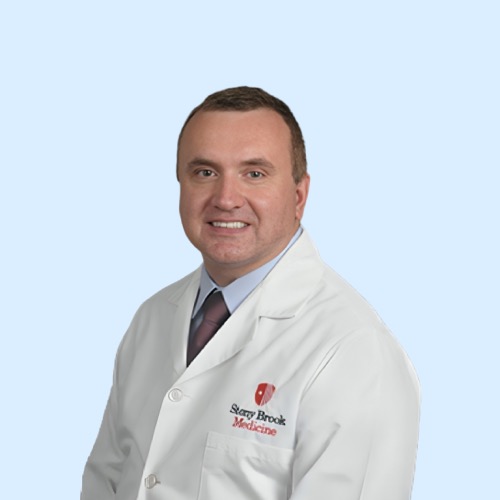
We discuss how this system works in practice with one of Medveritas Global’s leading experts, Lasha Gogokhia.
After graduating from Tbilisi State Medical University, Mr. Lasha continued his career in the United States. Following his residency at Yale University, he specialized in gastroenterology at Cornell University (Cornell University / New York-Presbyterian Hospital), where he also completed a highly advanced sub-specialization in Inflammatory Bowel Disease (IBD).
Today, he practices at Stony Brook University in New York, where he balances clinical practice with significant academic positions: he is an Assistant Professor in the Department of Gastroenterology and Hepatology, Associate Director of the university’s IBD Center, and Director of Clinical Research.
We often hear that American medicine leads the world. From your perspective, what drives such a high standard—is it only technological superiority or a different approach altogether?
Clinical approaches are generally identical, as Georgian specialists follow the same international guidelines that we use. The primary and radical difference between America and Georgia (as well as many other countries) lies in the virtually unlimited access to the latest technologies and medications.
For example, in my narrow professional field, we currently have about 12 innovative drugs for treating Crohn’s disease and ulcerative colitis, whereas in Georgia, only one or at most two are available. Consequently, when providing specific prescriptions, I always have to consider the specifics of the local market. I constantly explain to patients that, along with a recommendation, the decision of the treating physician is paramount. If the medication I select is physically unavailable in Georgia, the consultation becomes entirely useless.
Beyond medications, the second most important factor is, of course, high-tech diagnostics. Certain complex pathologies require specific tests and specialized technological modes (such as specialized MRI). Although basic diagnostic tools are largely available in Georgia, the advantage of the American system still lies in the instantaneous integration of the latest medical achievements.
High-level sub-specialization is considered another distinctive feature. While there is a shortage of narrow-profile experts in Georgia, given the local scale, a vast number of inter-specialization doctors may not even be necessary, as these diseases do not occur with high population frequency.
A “Second Opinion” is often associated with doubt, yet it is standard practice in the medical field. Given the mission of Medveritas Global, why do you think involving international expertise is crucial?
A “Second Opinion” is a routine medical practice widely used in the West and throughout the world. In cases of complex or multi-system pathologies, the need often arises for not just a second, but even a third opinion. When a patient presents with a primary disease alongside several comorbid conditions, confirming a diagnosis single-handedly becomes difficult and requires a multidisciplinary approach. Therefore, selecting the optimal therapy for the patient while considering every clinical circumstance is the ultimate goal of this process.
An equally important second aspect relates to rare and difficult clinical cases. For example, a general gastroenterologist managing a specific pathology might turn to an expert with a narrow specialization in Inflammatory Bowel Disease (IBD). In my daily practice, sharing clinical insights with colleagues is a standard part of the workflow. Beyond my primary profession—gastroenterology and hepatology—my sub-specialization is precisely in Inflammatory Bowel Disease (IBD).
In this process, my role is to support local colleagues, which involves verifying diagnoses, optimizing medicinal/surgical tactics, and adapting treatment to local medical resources. I believe that the regular involvement of international expertise and the integration of this experience will significantly benefit Georgia and raise the quality of patient care.
From your perspective, how does this process help the clinician themselves, and how can we avoid the perception that a patient is undermining a doctor’s competence?
Patient management is a long-term, continuous process, while obtaining a “second opinion” is usually a one-time or periodic event. Consequently, the primary responsibility for conducting daily treatment rests with the primary treating physician. During a consultation, the expert’s role is merely to share a clinical perspective; the treating physician continues to supervise the patient.
For example, if a patient is diagnosed with Crohn’s disease and requires treatment with a specific medication (e.g., Infliximab), the process is managed entirely by the local specialist. Since Infliximab is an immunosuppressant, complex laboratory and instrumental monitoring are required before prescribing the drug and throughout the course of therapy. These complex tests and observations are conducted directly by the treating physician.
Therefore, the involvement of an expert serves, for the most part, to confirm or adjust the strategy already outlined by the treating physician. The need for a “second opinion” arises precisely when a doctor has a preliminary hypothesis and wishes to obtain additional clinical arguments. As such, this process does not imply questioning a colleague’s competence but rather supporting them and strengthening the medical decision.
How accurate is the digital format as a guarantee for a correct diagnosis in gastroenterology, where the interpretation of clinical data plays the leading role?
Telemedicine plays a vital role in the management of gastroenterological pathologies. Modern technology has reached such a level that the necessity for physical examinations has drastically decreased. To be honest, aside from acute, emergency cases, I struggle to remember the last time I needed to perform a manual abdominal palpation on a patient in daily practice.
While direct contact with the patient and objective assessment always have value, the digital approach is perfectly sufficient for the “second opinion” format. When a primary treating physician in Georgia examines the patient themselves, assesses their general condition, and provides us with complete, structured clinical information, remote expertise becomes maximally effective. Consequently, digital data exchange and telemedicine are absolutely adequate, valid, and widely established methods in international practice today.
Your specialization includes Inflammatory Bowel Disease (IBD). Why is this field considered one of the greatest clinical challenges, and what specific obstacles do Georgian patients face in fighting these diseases?
Inflammatory bowel pathologies—whether Crohn’s disease, ulcerative colitis, or other colitides/gastroenteritides caused by immune dysregulation—are diseases of the modern era. They are far more common today than in the past. This trend is driven by many factors. First, we have much better diagnostic tests today than before. Furthermore, there is a view that the overconsumption of antibiotics and environmental factors significantly increase the risk of these diseases. For these reasons, the prevalence of autoimmune pathologies in general has markedly increased compared to figures from just a few years ago.
Accordingly, there are quite many patients with inflammatory bowel diseases in Georgia as well. We have brilliant local doctors and gastroenterologists who are excellent at identifying and managing these pathologies. However, due to the extreme lack of access to the latest medications, the possibility of comprehensive treatment in our country is limited. Many essential drugs simply do not exist on the local market, and those that are available are so expensive that purchasing them is entirely inconceivable for a person with an average Georgian income.
A second difficulty lies in the fact that an autoimmune pathology is a chronic process, and its management is actually required throughout one’s life, over many years. The patient is constantly under the influence of the disease, which requires continuous therapy. It is the quantitative increase in these cases that created the need for narrow specialization and the advanced training of doctors in specific directions. Although general gastroenterology—both endoscopic and therapeutic—makes up a large part of my daily practice, my main clinical interest and focus remain Inflammatory Bowel Diseases. For patients of this profile, the existence of appropriate centers alongside narrow-specialization doctors is essential.
You mentioned that the rise in IBD cases created a need for narrow specialization. Shifting to the Georgian reality—how acute is the need for advanced physician training there today?
The process of sub-specialization is essential. In America, this path typically involves a year of clinical training during which fellows (doctors seeking narrow specialization/clinical training) have the opportunity to study the daily, complex management of patients—both medicinal and surgical. We must also consider the surgical aspect: IBD surgery requires a completely different clinical experience. In Georgia, only a few individuals have this specific expertise because performing operations of this profile is quite difficult. The appropriate qualification is strictly limited in the country and is physically lacking among many surgeons, including colorectal specialists.
Since IBD is a multidisciplinary pathology, a gastroenterologist alone cannot ensure its full diagnosis and management. Endoscopists, pathologists, radiologists, and surgeons must be involved collectively in this process. Unlike the American model, where the gastroenterologist is often the endoscopist as well, these fields are separated in the Georgian reality. Furthermore, morphological verification remains a serious challenge. Adequately assessing a biopsy taken during endoscopy and establishing an accurate morphological diagnosis is quite difficult. This, of course, does not question the competence of colleagues—it is simply a reality that in medicine, gastrointestinal pathology is considered an entirely separate, independent direction.
This is precisely why the existence of a specialized center for the optimal management of IBD is a vital necessity in Georgia. Although inflammatory bowel diseases were previously considered rare pathologies, statistics today have changed radically. The number of patients has increased so much that due to the lack of appropriate services, they are forced to seek help abroad or reach a correct diagnosis only after navigating long and difficult clinical labyrinths. Given the sharp increase in cases and the complexity of treatment, establishing such a multidisciplinary center in Georgia would be an extremely productive and necessary step.
Patients often spend years treating symptoms when the real cause is “hidden” autoimmune pathologies (Celiac disease, microscopic colitis, etc.). Why is it difficult to identify them with standard tests, and how does a “second opinion” change the lives of these types of patients?
The difficulty of diagnosis is primarily driven by the need for specific, narrow specialization. To identify and correctly interpret inflammatory bowel diseases, a pathologist must have the expertise to properly read the morphological material of a biopsy. For instance, when I review a morphological report and find only a general description—such as increased levels of neutrophils—this is quite non-specific. To establish a diagnosis of Crohn’s disease, ulcerative colitis, Celiac disease, or other autoimmune pathologies, I need precise information from the pathologist, specifically the verification of signs of chronic inflammation. If specific morphological criteria are not confirmed in the biopsy, starting treatment is impossible. Such a non-specific picture, even an increase in neutrophils, might simply characterize acute gastroenteritis caused by food poisoning. Consequently, the main barrier to diagnosis in some cases lies in the scarcity of the required expertise.
There are many highly qualified gastroenterologists in Georgia whom I trust completely and who know well how to manage various pathologies. However, since these are multidisciplinary diseases, they require a complex approach and close collaboration with specialists of different profiles. The difficulty lies in the fact that finding experts with the narrow qualifications needed for this collaborative work is often hard on the local market. Against the backdrop of this clinical deficit, remote consultations and the “second opinion” acquire immense importance for improving the quality of life of patients.
