


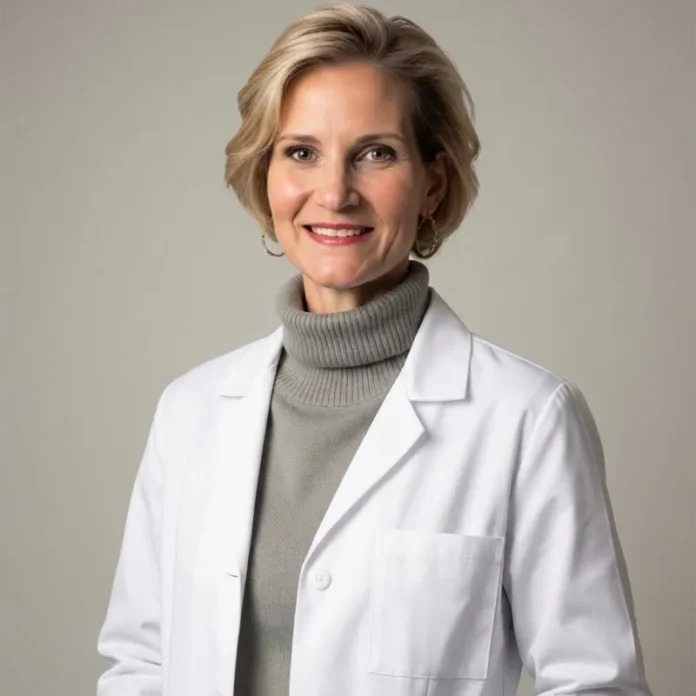
To explore different perspectives and better understand the true value of telemedicine, over the past two months we have spoken with numerous representatives of the medical community. Throughout this process, the team at MedVeritas Global has provided exceptional support. As the representatives of Georgia’s first official telemedicine platform, their primary mission is to ensure that every patient receives the highest standard of medical care. For the MedScriptum team, it was a great honor to interview another distinguished physician partnered with MedVeritas Global Dr. Karla Loken, one of the leading figures in the U.S. healthcare system. Dr. Loken is a board-certified obstetrician and gynecologist, a Fellow of the American College of Osteopathic Obstetricians and Gynecologists, Vice President of Clinical Operations at HerMD, and a physician with more than twenty years of experience in women’s healthcare.
You have such vast experience throughout your career. Could you tell us a little about yourself, your professional journey, and the mission that drives you? What is your vision as a physician?
Personally, my mission has always been to advocate, educate, and innovate, particularly in women’s health and in diseases that disproportionately affect women.
I was validly involved in the telehealth clinical platform, which allowed me to connect with patient care from a different perspective. Throughout that time, I maintained my board certification and stayed current with clinical guidelines. Much of my work involved helping medical device and diagnostic companies generate the clinical evidence needed to bring new innovations through regulatory pathways and into clinical guidelines. Over the years, my career has focused on helping companies navigate FDA approval, designing strong clinical studies, and determining whether new technologies truly provide value to patients and healthcare providers. I’ve also served as a fractional Chief Medical Officer for several startup companies developing medical devices and diagnostic technologies. In addition, I run a consulting business that supports healthcare innovation, although I no longer practice clinically.
When The founder of MedVeritas, Tamar, approached me about joining, she said, “You have such a broad background in clinical guidelines and evidence-based medicine. You’d be a perfect fit, especially for women’s health.”
As she explained the company’s mission, I immediately knew I wanted to be part of it. I thought it was an extraordinary idea, and I wanted to help support and grow that vision.
You mentioned your work with the FDA and helping companies bring new innovations to patients. Could you tell us more about that?
What has always fascinated me is that, living in the United States, it’s easy to take for granted that many medical innovations become available here first. You don’t always realize how long patients in other countries may have to wait before they gain access to those same technologies, and I think that’s unfortunate.
My role is to advise companies on how to design high-quality clinical studies, collect the right evidence, and prepare effectively for FDA review. It’s about making sure they’re asking the right scientific questions from the beginning so they can ultimately answer the FDA’s questions with strong data.
Another important aspect is helping companies understand that receiving FDA clearance or being included in clinical guidelines doesn’t automatically mean physicians will use their product or that patients will benefit from it.
introducing a new intrauterine device (IUD) isn’t just about proving it’s safe and effective. Patients need to know it exists, physicians need to understand when to recommend it, and healthcare systems need to incorporate it into everyday practice. Even today, there are IUDs available in Europe that differ from those available in the United States.
So, much of my work is about bridging the gap between innovation, clinical evidence, regulatory approval, and ultimately real-world patient care.
The United States is widely considered a global leader in medical technology and research. From your perspective, what has made the U.S. such a leader in healthcare innovation?
That’s a great question. I think there are several reasons. One of them is that the U.S. healthcare system is built around a capitalist model, which creates a strong pathway for commercializing new products. That encourages investment and innovation.
However, I don’t necessarily believe that innovation itself comes only from the United States. I work with companies and researchers from Australia, Israel, Europe, and many other countries. Outstanding ideas and groundbreaking research are happening all over the world.
What the United States does exceptionally well is developing centers of excellence, institutions like Mayo Clinic, Cleveland Clinic, Harvard, and Brigham and Women’s Hospital. These organizations have earned worldwide recognition through decades of outstanding clinical care, research, and education. Their reputations attract exceptional clinicians, researchers, and investment.
That said, I’ve seen phenomenal research coming from countries like the Netherlands and Italy. Some of the highest-quality studies I’ve ever reviewed have originated outside the United States.
Interestingly, I’m always looking outside the U.S. for technologies that could benefit patients. Sometimes innovative devices reach the European market before they do ours, or certain technologies are particularly well suited for healthcare systems with fewer resources.
Innovation doesn’t belong to one country. Great ideas can come from anywhere. that is our job to bring it to our patients.
Earlier, you mentioned that even when a new technology is approved in the United States, it can take several years before patients in other countries gain access to it. One tool that seems to be helping bridge that gap is telemedicine. Based on your experience, what do you see as its greatest strengths?
I think telemedicine is an excellent tool, particularly for evaluating symptoms and helping determine the appropriate next step in a patient’s care. In many ways, it’s an outstanding triage system.
There are telemedicine companies that do this extremely well. They stay within the appropriate scope of virtual care and combine video consultations with home diagnostic tools.
Where I believe telemedicine truly excels is in helping patients understand their symptoms, organizing their medical information, and guiding them toward the most appropriate care. Sometimes that means reassuring a patient that they’re already receiving excellent treatment locally. Other times it may mean recommending that they seek a specialist or obtain a second opinion.
One of the greatest strengths of MedVeritas is exactly that. We can evaluate the entire clinical picture, quantify symptoms, and help patients understand whether they truly need to travel for specialized care or whether they’re already receiving treatment that meets international standards.
For me, that’s where telemedicine has enormous potential, particularly in providing thoughtful, evidence-based second opinions.
The pandemic forced healthcare systems to adopt virtual care much more rapidly than they otherwise would have. At the time, I was working with Eli Lilly, and I witnessed firsthand the incredible expansion of home diagnostic testing. We saw rapid testing become widely available, along with home pulse oximeters, thermometers, blood pressure monitors, and many other monitoring devices. Those technologies allowed physicians to safely follow patients while they recovered at home.
One of the things you that really stands out to me is the value of second opinions. for a lot of patients, seeking a second opinion used to be almost taboo. people believed they should trust only one doctor, and consulting another physician might be seen as questioning that doctor’s expertise.
I think one of the biggest lessons a person can learn, especially after becoming a patient is that you only know what you know. As patients, we have to advocate for ourselves. There’s an enormous amount of medical information available online, but interpreting that information correctly is incredibly important. That’s where experienced clinicians can make a real difference.
Seeking a second opinion shouldn’t be viewed as disrespectful. In fact, I believe it often strengthens the relationship between a patient and their physician.
This is where I believe MedVeritas can make a meaningful contribution. We can act as a trusted, experienced resource that helps patients better understand their diagnosis and treatment while supporting, not replacing their own medical team.
We’re not simply providing generic internet answers. Our clinicians have years of experience and understand how to interpret evidence, integrate clinical guidelines, and apply that knowledge to individual patients.
Our goal is never to convince patients that their doctors are wrong. Likewise, we’re not trying to encourage medical tourism. We don’t want patients to feel that they must travel to Turkey, the United States, or another country simply because they believe better care exists elsewhere. Ideally, patients should be able to receive excellent care close to home.
Of course, there are rare situations where specialized expertise is genuinely needed. For example, someone with a very rare gynecologic cancer or severe endometriosis might benefit from consulting an internationally recognized specialist. The advantage today is that many of those consultations can happen virtually. For instance, one of the leading endometriosis surgeons in the United States offers international virtual consultations through Mayo Clinic. Patients can speak directly with an expert before deciding whether traveling for surgery is truly necessary.
Every recommendation ultimately depends on the individual patient, their diagnosis, medical history, personal circumstances, and even practical considerations.
Given your experience, you’ve spent more than twenty years in medicine, how do you see AI shaping the future of healthcare?
I think artificial intelligence is going to become an extremely valuable tool, but it should remain exactly that –a tool.
The quality of the information AI provides depends greatly on the prompts we give it. If I want the latest evidence on a particular disease, I need to specify that I want the most current research, include recent guideline updates, and define the time frame I’m interested in. Better questions lead to better answers.
I’ve worked with several digital health companies, and I’ve seen AI generate incorrect recommendations. That’s where physicians remain essential. Our role is to review the information critically and determine whether it’s clinically accurate.
For that reason, I don’t believe AI will replace doctors. I do think it will change how we work and improve many aspects of our workflow, but medicine will always require human judgment, experience, and compassion.
I believe AI can help standardize many healthcare processes. For example, it can assist with medical documentation, analyze reports of adverse events from around the world, and identify safety signals much earlier than traditional systems. We also use digital imaging systems that let us compare findings over time. For example, if I photographed a patient’s cervix three years ago, I can easily retrieve those images during a follow-up visit and compare them side by side to evaluate any changes. That’s not necessarily artificial intelligence, but it’s an important digital tool.
Looking ahead, I think AI will become increasingly valuable for preventive care. It could automatically remind patients when they’re due for a mammogram, cervical cancer screening, or another preventive examination. Those kinds of reminders could significantly improve screening rates and early diagnosis.
My final question the future generation of physicians. Based on your experience, what advice would you give to young doctors who are just beginning their careers?
he most important advice I can give is to take care of your own health—both physical and mental—throughout your medical education and your career.
Medicine is demanding. It’s easy to become so focused on caring for others that you neglect yourself. But the truth is, you have to be well in order to take good care of your patients. Looking after your own well-being isn’t selfish; it’s an essential part of becoming a good physician.
I would also encourage young doctors to embrace innovation while remaining thoughtful and cautious. Medicine is advancing at an extraordinary pace, and we’re seeing incredible developments in artificial intelligence, digital health, diagnostics, and new therapies. Those innovations will undoubtedly improve patient care. At the same time, don’t forget to learn from the physicians who came before you.
Medicine is both a science and an art.The science can be taught in textbooks and classrooms. The art is something you develop over years of listening to patients, observing experienced clinicians, and learning from every successand every mistake.
Dr. Karla Loken consistently emphasized that evidence-based medicine, scientific integrity, and compassion must remain at the heart of every advancement. Technology can shorten distances, expand access to expertise, and support physicians in making better-informed decisions, but it can never replace the empathy, clinical judgment, and human connection that define exceptional medical care.
Perhaps the most powerful takeaway from this interview is that quality healthcare should not depend on geography. Every patient deserves access to reliable information, expert guidance, and the confidence that they are receiving the most appropriate care. Platforms such as MedVeritas Global can provide such care, care that you can trust.
