


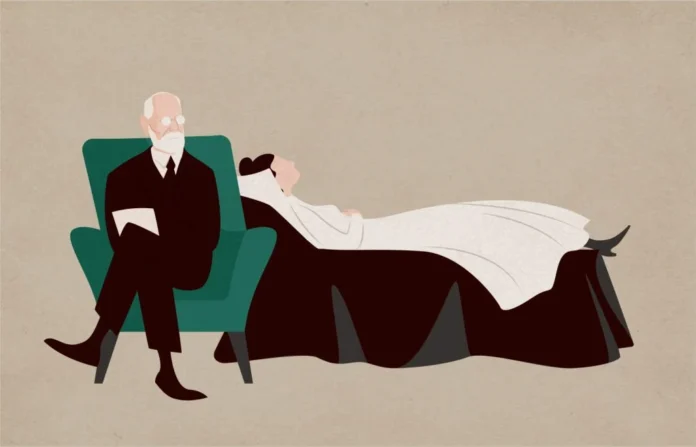
According to the renowned neuropsychologist Mark Solms, a professor at the University of Cape Town, modern neuroscience has confirmed the validity of the vast majority of Sigmund Freud’s theories. According to the scientist, over the past century, neuroscientists—completely independent of Freud himself—have rediscovered and empirically validated numerous fundamental ideas of psychoanalysis.
As Solms notes, in the Victorian era, the “unconscious mind” was considered an oxymoron, whereas today it is a universally recognized fact in neuroscience that the vast majority of our cognitive activity occurs unconsciously. Furthermore, the existence of various memory systems (short-term, declarative, and non-declarative), which modern science accepts, was accurately predicted by Freud as early as 1896. Modern research also confirms Freud’s view on the significance of early childhood trauma and the idea that our behavior is primarily driven by emotions and desires.
Modern neuroscience also explains the Freudian phenomenon of “repression.” According to Solms’s explanation, the term is viewed today as defensive “predictions” developed by the brain in childhood, which settle in non-declarative (unconscious) memory and operate automatically and unconsciously. Because these mechanisms are unconscious, a person does not realize why they experience negative emotions. The goal of psychoanalysis is precisely to bring these mechanisms to consciousness so that the patient can break free from automatic, harmful behaviors.
Solms emphasizes that psychoanalysis physically alters brain structure, a finding supported by fMRI (functional magnetic resonance imaging) studies. During treatment, the control of decision-making shifts from deep, automatic brain centers (basal ganglia) toward the cortex. Moreover, unlike Cognitive Behavioral Therapy (CBT), psychoanalysis exhibits a so-called “sleeper effect”—the improvement in a patient’s condition continues even after therapy ends, indicating that the root cause of the problem has been addressed.
In the scientist’s view, the Freudian approach might also help solve neuroscience’s greatest puzzle—the origin of consciousness (the so-called “Hard problem”). While modern science searches for consciousness within the cerebral cortex and complex intellectual processes, Freud focused his attention on the brainstem and basic emotions (affect). According to Solms, to unravel the mystery of consciousness, science must return to these primary feelings and instincts.
წყარო: iai
