


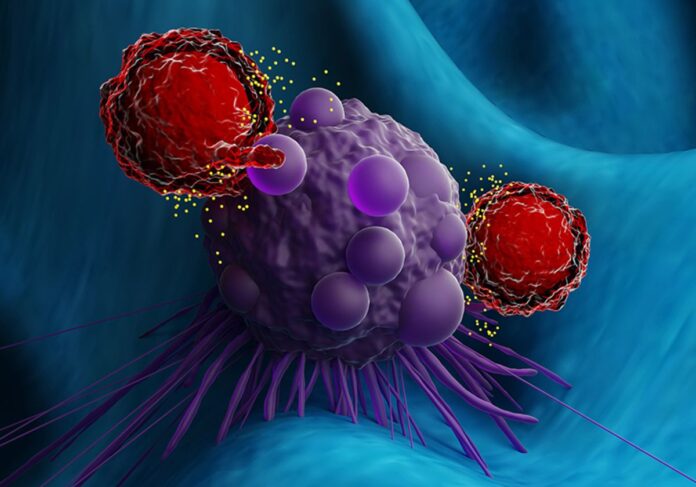
UCLA researchers have developed a stem cell-based platform that produces off-the-shelf T cells capable of attacking solid tumors through two different mechanisms—while avoiding a dangerous side effect that has limited donor-derived therapies.
In a study published in Cell Reports Medicine, the team engineered blood stem cells from donated cord blood to target NY-ESO-1, a protein found in many solid tumors. The resulting cells, called AlloESO-T cells, kept tumors in check and extended survival in mouse models of ovarian cancer and melanoma without triggering graft-versus-host disease.
The Innovation
Current T cell receptor (TCR) therapy requires each dose to be custom-made from a patient’s own T cells—a process taking weeks and costing six figures. Donor-derived alternatives could be manufactured in advance but carry graft-versus-host disease risk.
The UCLA approach starts with cord blood stem cells rather than mature T cells. By introducing the cancer-targeting receptor at the stem cell stage, the cells don’t develop their own natural receptors as they mature—eliminating the need for extra gene editing to prevent attacks on healthy tissue.
“Stem cells are undifferentiated—they’re not yet mature T cells with a fixed receptor already in place,” said co-first author Yichen (John) Zhu. “When we differentiate our engineered stem cells into T cells, essentially all of the resulting cells carry the same receptor and go after the same tumor target.”

Dual Attack Mechanism
The AlloESO-T cells carry two detection systems:
Engineered TCR targeting NY-ESO-1 protein fragments displayed on tumor cell surfaces
Natural killer cell receptors that detect stress signals many tumor cells display
This backup system addresses antigen escape—when tumor cells lose or hide the target antigen.
“Solid tumors are very diverse,” Zhu said. “Some tumor cells lose or hide the antigen a therapy is designed to find. When that happens, a therapy built around a single target loses its grip. Our stem cell-derived cells still have a second mechanism to kill those tumor cells.”
Results
In mouse models:
Ovarian cancer: Single dose led to durable tumor control and extended survival; comparison group developed graft-versus-host disease
Melanoma: AlloESO-T cells slowed cancer and delayed return; comparison cells offered only fleeting control
After infusion, AlloESO-T cells multiplied roughly 100-fold, traveled to tumors, and stayed active for weeks while largely sparing healthy organs. Conventionally engineered cells spread through liver and lungs, triggering toxicity.
Scale and Cost
“From a small number of cord blood stem cells, we can generate trillions of therapeutic cells—enough for thousands of doses—within about six weeks,” said co-senior author Yanruide (Charlie) Li. “At an estimated $5,000 per dose, this approach would be far more accessible than today’s therapies.”
The team plans to scale up through the UCLA Health Center for Advanced Biotherapies, potentially moving toward clinical trials faster than starting from scratch.
Source: UCLA Health
