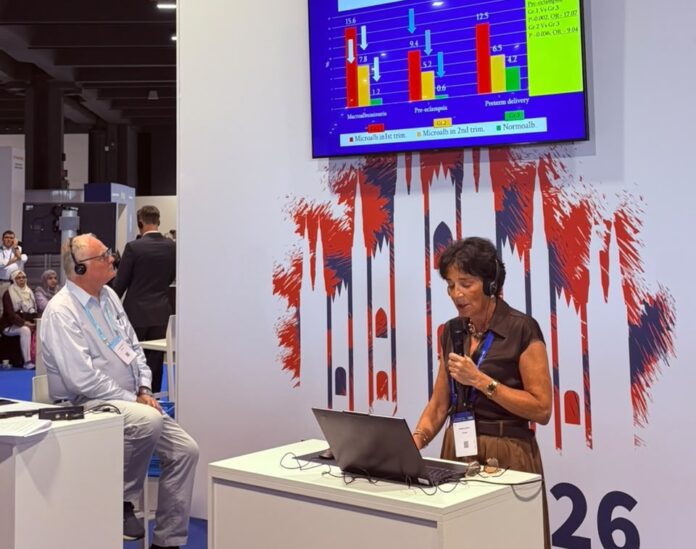

What was your presentation about, and what key findings did the study reveal?
I believe I presented a compelling topic. I have been working on this issue—diabetes and pregnancy—for 30 years now. The core focus of my report was as follows: the study involved 307 pregnant women with a long history of type 1 diabetes—the duration of the disease averaged 12–20 years, making this a particularly severe and complex clinical cohort. It is worth noting that for all these women, it was their first pregnancy.
We divided the patients into three groups:
– Group one: patients found to have microalbuminuria in the first trimester, meaning they had preexisting diabetic nephropathy prior to pregnancy.
– Group two: women who developed microalbuminuria during the second trimester.
– Group three: patients with normoalbuminuria—meaning no signs of microalbuminuria were recorded throughout the entire pregnancy.
Managing such patients is exceptionally challenging because maintaining absolute normoglycemia is essential throughout the entire gestation period so that the fetus, simply put, cannot “tell” that the mother has diabetes. For this very reason, we required rigorous monitoring: patients checked their blood sugar 7–8 times a day with a standard glucometer, sometimes even during the night—measuring glucose levels at 5 or 6 in the morning. Some also used continuous glucose monitors, which made our analysis far easier. Our objective was to establish virtually identical glycemic control across all three groups.
As for the study’s findings, when microalbuminuria was detected as early as the first trimester, the rates of preeclampsia, the risk of preterm delivery, and the proportion of low-birth-weight infants (known as Small for Gestational Age, or SGA) spiked sharply.
Macrosomia (high birth weight) was observed across all groups, yet the lowest rate was recorded precisely in the first group, where microalbuminuria was present from the outset. The reason is that microalbuminuria impairs normal placental development, which can leave fetal weight lower than in the other cohorts. Moreover, fetal mortality was five times higher among women presenting with microalbuminuria in the first trimester.
Overall, how would you evaluate your experience at the congress, and what key trends or developments emerged on a broader scale?
This congress is Europe’s premier event in the field of diabetes. First and foremost, remarkably little research is generally conducted on pregnant women. While studies abound on standard patients with type 1 and type 2 diabetes, data regarding pregnancy remain severely limited. Although established guidelines saw no radical shifts, the congress highlighted several highly intriguing innovations and emerging directions.
First and foremost, the spotlight was on incretins. As is well known, next-generation drugs are now used in managing type 2 diabetes—such as Ozempic, as well as the dual incretin Mounjaro. A new medication has now emerged that targets three incretins simultaneously. Although it is not yet widely adopted in clinical practice and trials remain ongoing, researchers presented crucial data regarding pregnancy planning. According to studies, patients with type 2 diabetes who were planning a pregnancy were administered these drugs, provided treatment was discontinued two to three months prior to conception. The findings confirmed that when discontinued properly, no adverse effects were observed on either the fetus or the mother.
The takeaway is clear: while women preparing for pregnancy may use Mounjaro and Ozempic, the medication must strictly be discontinued two to three months before conception. There was also an attempt to conduct a small-scale study regarding lactation; however, it was temporarily suspended due to low patient enrollment and inconclusive results.
Another key and particularly compelling focus was the use of artificial intelligence (AI) in diabetes management. Naturally, the field is not yet fully automated—every human body and rhythm of life is unique, no two days are alike, and patient behavior cannot be predicted with absolute certainty. Even so, the findings show immense promise. Consider this: continuous 24-hour glucose monitoring systems—widely available in Georgia as well—feed real-time data directly to an AI engine. The system analyzes this information and calculates precise insulin doses at any given moment. While certain limitations remain, this is unmistakably the future of our field.
Gestational diabetes—which first appears during pregnancy and is typically easier to manage since patients do not present with the long-term complications of diabetes mellitus—also took center stage. One highlighted strategy involved slashing calories and carbohydrates in the diet. Although it achieved ideal glycemic control, it also led to an alarming, critical drop in fetal weight. The approach was subsequently abandoned, establishing that pregnant women with gestational diabetes should follow the exact same dietary guidelines as healthy expectant mothers; such severe caloric restriction is unacceptable.
What did this presentation mean for Georgia, and overall, how important is the involvement of Georgian physicians in international congresses of such scale?
This is already my eighth oral presentation at EASD congresses. To be honest, I do not view it as some extraordinary, massive event, though I am certainly proud—I care deeply about this topic and have been working on it for decades.
As for the participation of Georgian colleagues, such events are vital for our country, yet oral presentations delivered from the EASD podium by Georgians remain quite rare. Years ago, Marina Gordeladze achieved similar success (we also had another colleague from Batumi the year before last), and I believe that is about all.
For me, this is primarily a matter of professional prestige. I love my field and constantly reflect on one crucial factor: since large-scale clinical trials in pregnant women are virtually non-existent, my work carries not so much fundamental scientific weight as it does significant “clinical value”—especially given that we lack the resources for expensive genetic testing and must operate based on practical reality.
Besides, the emotional factor is of paramount importance. We know that diabetes is a chronic condition, but during pregnancy, when diabetes is not strictly controlled, the outcome very often involves perinatal mortality, severe fetal defects, and malformations. Consequently, when a healthy baby is born through your efforts and proper management, it is an unimaginably powerful and rewarding feeling.
Reflecting on the Georgian context, I would also recall my own past: long ago, in 1986, I completed six months of training at Israel’s premier clinics. It was a very difficult period back then, but with the support and assistance of Novo Nordisk, we managed to provide patients with top-quality insulins and glucometers free of charge, as there was a critical shortage of all these supplies in the country at the time. Today, the landscape is different—everything is available, yet there is no funding whatsoever anymore, so doctors and patients are coping with this individually and on their own.